Technology · AI
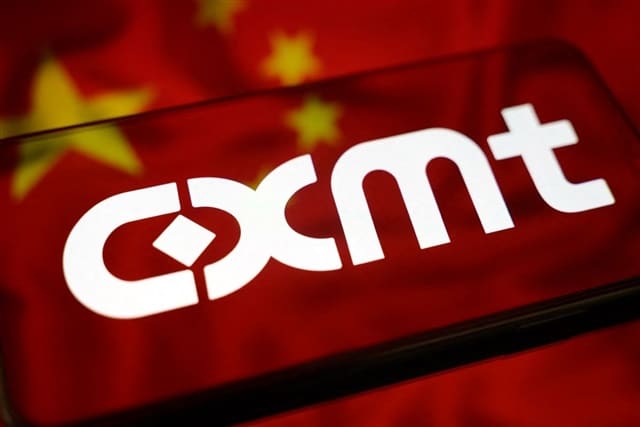
China's CXMT Claims 7.67% of Global DRAM Market Ahead of $4.4B IPO
The Hefei-based chipmaker's public listing signals a strategic pivot from capacity expansion to mainstream product competition and advanced process development through 2028.
KEY TAKEAWAYS
- ·ChangXin Memory Technologies holds 7.67% of the global DRAM market and plans a $4.4 billion IPO to fund process upgrades through 2028.
- ·The Hefei chipmaker is shifting from capacity building to mainstream DDR5 and DDR6 competition, recently securing Haesung DS as a substrate supplier.
- ·CXMT's growth challenges include U.S. export controls on lithography tools and reliance on China's domestic market, which represents half of global DRAM demand.
Market Position Solidifies
ChangXin Memory Technologies (CXMT) has secured 7.67% of the global DRAM market, the company disclosed ahead of its planned $4.4 billion initial public offering. The Hefei-based memory manufacturer's market share represents a notable milestone for China's semiconductor industry, which has invested heavily in memory chip self-sufficiency over the past decade.
The IPO, expected to rank among the largest semiconductor listings in Asia this year, comes as CXMT transitions from a capacity-building phase to direct competition in mainstream DRAM products. The company has outlined a technology roadmap extending through 2028 that targets process nodes and product categories currently dominated by Samsung, SK hynix, and Micron.
Strategic Shift in China's Memory Ambitions
CXMT's evolution reflects a broader recalibration of China's DRAM strategy. Early efforts concentrated on achieving domestic production volume, often through older process technologies and lower-margin products. The company now aims to compete across mainstream DDR5 and future DDR6 specifications, segments that command higher average selling prices and serve data center, PC, and mobile markets.
The firm recently secured Haesung DS as a substrate supplier for DDR5 products, a move that signals readiness for volume production at competitive specifications. Haesung is also evaluating panel production for DDR6, indicating CXMT's timeline aligns with industry roadmaps for next-generation memory standards expected to enter mass production in the 2027-2028 window.
Industry analysts note that CXMT's ability to source advanced substrates from established Korean suppliers marks a departure from earlier reliance on purely domestic supply chains. This hybrid approach balances Beijing's self-reliance objectives with the practical need for proven materials and components that meet international quality benchmarks.
Technology Roadmap and Competitive Pressure
CXMT's 2028 roadmap includes process upgrades designed to narrow the gap with incumbent leaders. While the company has not disclosed specific nanometer targets, its customer engagements and supplier partnerships suggest a focus on sub-20nm and eventually sub-15nm DRAM processes, critical for cost competitiveness in high-volume segments.
The IPO proceeds are expected to fund advanced fab equipment purchases, research and development, and talent acquisition. CXMT has already expanded its Hefei campus and is building additional clean-room capacity to support projected demand growth in China's domestic server and automotive markets.
Samsung, SK hynix, and Micron collectively control more than 90% of global DRAM revenue, and all three have responded to Chinese competition by accelerating their own roadmaps. Samsung recently announced plans to boost DRAM capacity at its Hwaseong site by converting older NAND production lines, a move interpreted as a defensive play to maintain pricing power and volume leadership.
Implications for Global Supply Chains
CXMT's rising market share introduces a fourth significant player into a historically concentrated industry. For hyperscale cloud providers and OEMs operating in China, a viable domestic DRAM supplier offers supply chain diversification and potential cost advantages, particularly for products consumed within the country.
However, export prospects remain constrained. U.S. and allied export controls limit CXMT's access to cutting-edge lithography tools, and geopolitical scrutiny over Chinese semiconductor firms complicates its ability to serve Western customers directly. The company's growth trajectory will likely depend on capturing a larger share of China's domestic consumption, which accounts for roughly half of global DRAM demand.
The $4.4 billion IPO will test investor appetite for Chinese memory manufacturers amid ongoing trade tensions and technology restrictions. If successful, the listing could provide a template for other domestic chipmakers seeking public market access to fund expansion and technology development.
CXMT's 7.67% market share, while modest compared to the incumbents, represents a foothold that was absent five years ago. Whether the company can sustain momentum and climb into double-digit share will depend on execution of its 2028 roadmap, continued access to critical materials and equipment, and the willingness of global customers to diversify their memory supply base.
RELATED STORIES
Kioxia Pushes Flash Memory to Replace DRAM Amid Market Squeeze
Jun-ho Seo · 3 min
Sharpa Secures $668 Million at $3.3 Billion Valuation in Tech Giant-Backed Round
Cheng Wei-Lun · 2 min

China's Auto Chip Race Shifts to Volume as Horizon Robotics Crosses 15 Million Units
Jun-ho Seo · 3 min

China Scrubs 5.6 Million AI-Generated Posts in Platform Cleanup
Cheng Wei-Lun · 3 min
Spot something wrong? Email editor@briefasia.com. We log every correction publicly.