Finance · Markets
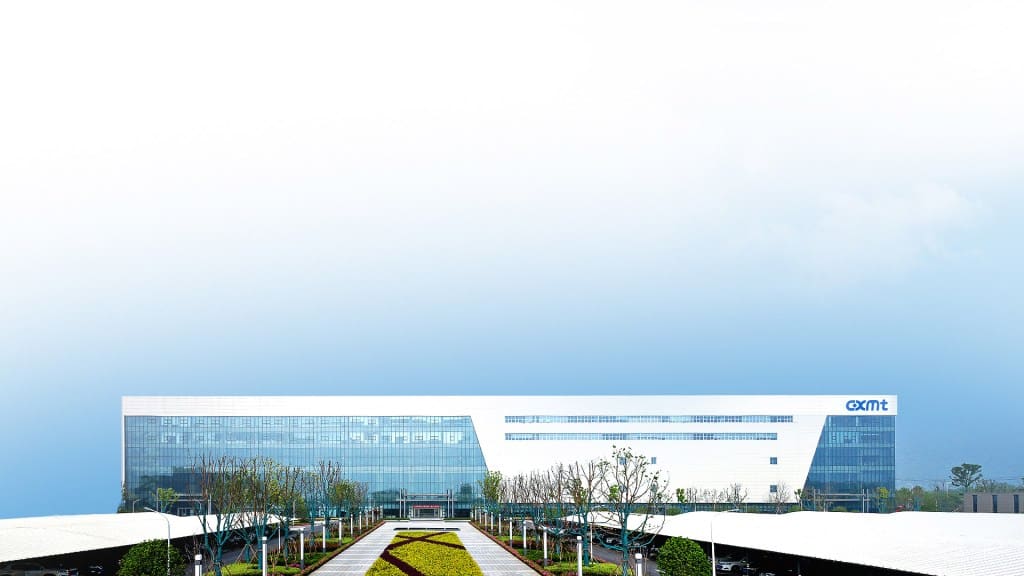
China's CXMT Dethrones Tencent as Most Valuable Listed Company
The DRAM chipmaker's market cap surged past RMB 3.5 trillion following its Shanghai debut, signaling investor appetite for domestic semiconductor plays amid global supply chain tensions.
KEY TAKEAWAYS
- ·CXMT Corporation reached a market capitalization of RMB 3.54 trillion on August 13, surpassing Tencent's RMB 3.45 trillion to become China's most valuable listed company.
- ·The DRAM maker debuted on Shanghai's STAR Market on July 27 at RMB 8.66 per share and opened at RMB 49.50, a 471.59 percent surge that valued the company above RMB 3.31 trillion.
- ·The valuation shift reflects investor appetite for domestic semiconductor plays as China pursues chip self-sufficiency amid global export controls and supply chain tensions.
A Chipmaker's Meteoric Rise
CXMT Corporation claimed the title of China's most valuable listed company on August 13, displacing internet giant Tencent from the top spot. The DRAM manufacturer's market capitalization reached approximately RMB 3.54 trillion, edging past Tencent's roughly HK$4.01 trillion, equivalent to about RMB 3.45 trillion.
The milestone caps a remarkable debut for CXMT, which listed on Shanghai's STAR Market on July 27. The company priced its shares at RMB 8.66 each but opened trading at RMB 49.50, a jump of 471.59 percent that immediately pushed its market value above RMB 3.31 trillion. The stock climbed even higher during intraday trading, briefly touching RMB 55 and bringing its market capitalization close to RMB 3.7 trillion before settling.
The Semiconductor Premium
CXMT's ascent reflects a broader shift in Chinese equity markets, where semiconductor manufacturers are commanding valuations that rival or exceed those of established technology giants. While Tencent built its empire on gaming, social media, and cloud services over two decades, CXMT has captured investor enthusiasm in a matter of weeks through its position in memory chip production.
The company specializes in DRAM, or dynamic random-access memory, a critical component in everything from smartphones to data centers. China has prioritized self-sufficiency in semiconductor manufacturing as part of its broader industrial policy, particularly after export controls imposed by the United States and its allies restricted access to advanced chip-making equipment and technology.
Market Context
Tencent had long held the distinction of being China's most valuable publicly traded company, a position it secured through dominant franchises in WeChat, Honor of Kings, and a sprawling investment portfolio spanning electric vehicles, fintech, and enterprise software. Its market capitalization has fluctuated in recent years amid regulatory crackdowns on the technology sector and slowing growth in its core gaming business.
CXMT's IPO arrived at a moment when Chinese authorities are actively encouraging domestic semiconductor investment. The STAR Market, launched in 2019 as Shanghai's answer to Nasdaq, was designed to channel capital toward high-tech industries, with a particular emphasis on companies working in strategic sectors such as chips, artificial intelligence, and biotechnology.
What Comes Next
The valuation gap between CXMT and Tencent remains narrow, and daily market movements could easily reverse their positions. Investors will be watching whether CXMT can sustain its momentum as the initial IPO euphoria fades and the company faces the scrutiny that comes with being a market leader.
For CXMT, the challenge will be translating its public market success into operational performance. DRAM manufacturing is capital-intensive and highly competitive, with established players like Samsung, SK Hynix, and Micron dominating global market share. The company will need to demonstrate that it can scale production, achieve competitive yields, and navigate the geopolitical headwinds that have complicated semiconductor supply chains.
The leadership change at the top of China's market capitalization rankings underscores a structural shift in how investors are pricing strategic technology assets. As Beijing doubles down on semiconductor independence, companies positioned at the center of that effort are drawing capital at a pace that even the country's most successful consumer internet platforms cannot match. Whether that enthusiasm translates into long-term value creation will depend on execution in an industry where technical and commercial risks are formidable.
RELATED STORIES

Unitree Robotics Frenzy Highlights China's Tech Hunger Amid Mixed Market Signals
Cheng Wei-Lun · 3 min

China's Quant Funds Face Scrutiny as Market Turmoil Fuels Volatility Debate
Cheng Wei-Lun · 4 min
China's Rookie Fund Managers Face Baptism by Fire in AI Correction
Cheng Wei-Lun · 3 min

Hong Kong Lists Shanghai Free-Trade Zone Bond as Yuan Hub Competition Intensifies
Cheng Wei-Lun · 3 min
Spot something wrong? Email editor@briefasia.com. We log every correction publicly.