Asia · Trending
China's Consumer Prices Rise at Slowest Pace in Seven Months
July inflation data underscores persistent weakness in domestic demand despite robust export performance and government pledges of fiscal stimulus
KEY TAKEAWAYS
- ·China's consumer price index increased 0.5% year-on-year in July, below the 0.8% forecast and the slowest gain since January, while producer prices rose 3.5%, down from 4.1% in June.
- ·Weak domestic consumption continues to drag on inflation despite strong export performance, particularly in AI-related technology products that have boosted manufacturing activity.
- ·Beijing's Politburo signaled stronger fiscal spending in late July to lift domestic demand, though economists expect several months before effects become visible.
Price Growth Undershoots Expectations
China's inflation metrics disappointed in July, with the consumer price index advancing just 0.5% from a year earlier, the National Bureau of Statistics reported on August 9. The figure fell short of the 0.8% consensus estimate compiled by Bloomberg and represented the weakest expansion since the start of the year.
Factory-gate prices told a similar story. The producer price index, which tracks costs at the initial point of sale, rose 3.5% year-on-year in July, down from 4.1% the previous month and beneath the 3.8% market forecast. The deceleration in both headline and wholesale inflation signals that deflationary forces remain entrenched across China's economy, complicating Beijing's efforts to sustain momentum in the world's second-largest economy.
The subdued price environment reflects a deeper structural challenge: domestic consumption remains anemic despite pockets of strength in export-oriented manufacturing and select technology sectors. Household spending has lagged for years, and the gap between production capacity and internal demand continues to widen.
Consumption Gap Weighs on Growth Outlook
Economists have long argued that China's growth model needs recalibration. The traditional pillars of expansion, including real estate development and infrastructure buildouts, have lost their potency. Property markets remain mired in a multi-year downturn, with developers struggling under debt loads and buyers hesitant to commit capital. Infrastructure investment, while still substantial, no longer delivers the multiplier effects it once did.
The alternative, a pivot toward consumer-led growth, has proven elusive. Retail sales have shown sporadic improvement but lack the sustained vigor needed to offset weakness elsewhere. Services consumption has picked up in some urban centers, yet overall household expenditure remains constrained by income uncertainty, high savings rates, and a cautious post-pandemic mindset.
This consumption shortfall has direct implications for inflation dynamics. When households hold back spending, retailers and service providers face limited pricing power. Goods sit on shelves longer, and discounting becomes more frequent. The result is the kind of tepid price growth captured in July's data.
Manufacturing Holds Up on Export Demand
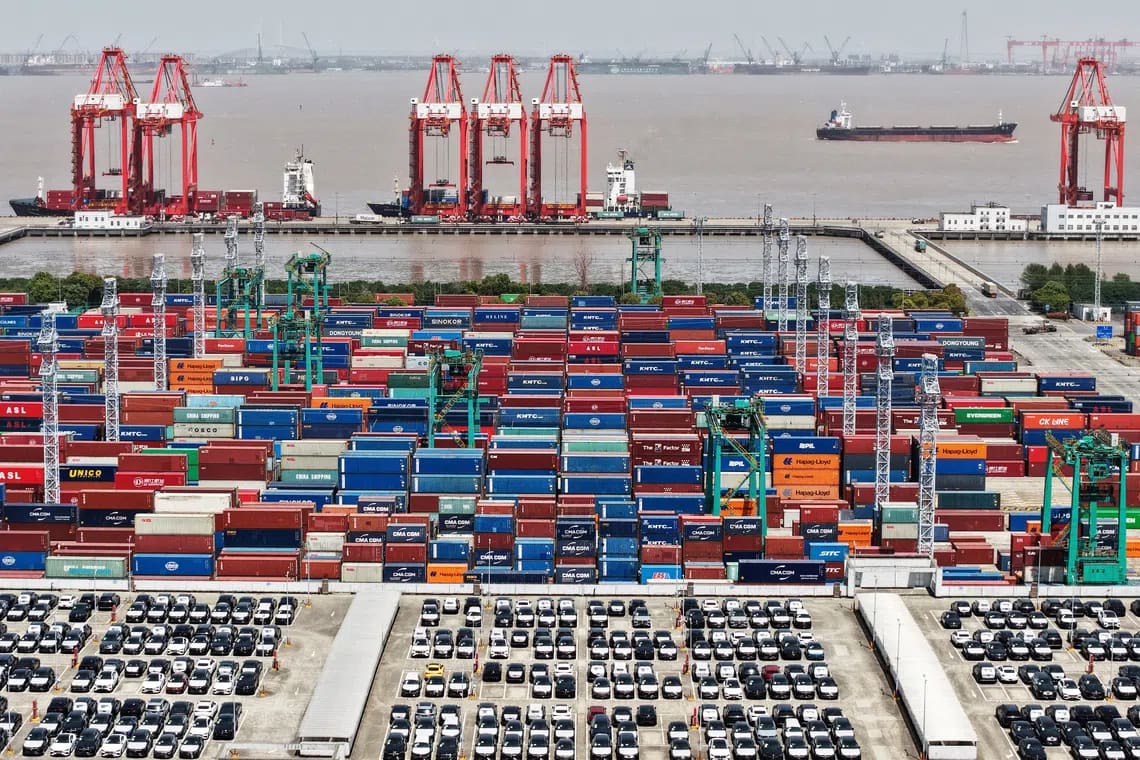
China's manufacturing sector has found relief in external markets. Trade figures released two days before the inflation report showed both exports and imports surging in July, driven largely by overseas appetite for artificial intelligence hardware and related technology products. Semiconductors, advanced computing components, and AI-enabled devices have seen strong demand from buyers in North America, Europe, and parts of Asia.
This export boom has provided a critical buffer for factories that might otherwise face idling capacity. Production lines focused on technology goods are running at elevated utilization rates, and employment in these segments has held relatively steady. The AI supply chain, in particular, has emerged as a bright spot, with Chinese manufacturers capturing significant share in the assembly and testing of chips and modules destined for data centers and cloud infrastructure worldwide.
Yet this export strength has done little to lift domestic price levels. The goods flowing out of Chinese ports are priced for competitive international markets, and the revenue they generate does not immediately translate into higher wages or increased consumer spending at home. The disconnect between export vitality and internal demand remains one of the defining features of China's current economic landscape.
Policy Response Takes Shape
The ruling Communist Party's Politburo convened in late July and signaled a willingness to deploy stronger fiscal measures. Zhiwei Zhang, president and chief economist at Pinpoint Asset Management, noted that the meeting pointed toward increased government spending as the primary policy lever. He added that it would take several months to gauge whether these measures could meaningfully lift domestic demand.
Fiscal stimulus in China typically involves a mix of infrastructure spending, subsidies for strategic industries, and targeted support for local governments. Recent initiatives have included funding for renewable energy projects, electric vehicle incentives, and investments in digital infrastructure. The government has also explored ways to encourage household consumption, including vouchers for appliances and electronics, though the scale of such programs has been modest relative to the size of the economy.
Monetary policy has played a supporting role, with the People's Bank of China maintaining accommodative settings. Interest rates have been kept low, and liquidity conditions in the banking system remain ample. However, credit growth has been uneven, with lending to households and small businesses lagging behind loans to state-owned enterprises and infrastructure projects.
Regional Implications and Forward View
The slowdown in Chinese inflation carries implications across Asia. Countries with export ties to China, including South Korea, Taiwan, and Vietnam, are watching closely. A prolonged period of weak domestic demand in China could dampen appetite for intermediate goods and components sourced from regional suppliers. At the same time, China's export competitiveness, bolstered by stable input costs, may intensify competition in third markets.
For policymakers in Beijing, the challenge is to engineer a rebalancing that lifts consumption without triggering financial instability. The property sector's troubles have already strained local government finances and tested the resilience of the banking system. Any fiscal expansion will need to be carefully calibrated to avoid adding to debt burdens that are already elevated by historical standards.
The coming months will provide more clarity on whether the government's policy pivot can gain traction. Infrastructure projects take time to ramp up, and consumer confidence does not shift overnight. Until household spending shows sustained improvement, deflationary pressures are likely to persist, keeping inflation metrics subdued and complicating the path to a more balanced growth trajectory.
RELATED STORIES

Manila Eyes Nickel Processing to Escape China's Price Control
Priyanka V. Rao · 4 min

BYD, Geely and Chery Crack Global Auto Top Ten
Cheng Wei-Lun · 3 min
Shein Retreats From Vietnam Warehouse Bet as China Manufacturing Proves Irreplaceable
Cheng Wei-Lun · 4 min
Midea Ships 200,000 Portable Air Conditioners to Europe in Six Months
Cheng Wei-Lun · 3 min
Spot something wrong? Email editor@briefasia.com. We log every correction publicly.