Technology · AI
China's AI Challengers Close Gap on US Frontier Models
Moonshot's Kimi K3 and Alibaba's Qwen3.8-Max-Preview signal accelerating competition in large language models, raising questions about Washington's export controls and Beijing's open-source strategy.
KEY TAKEAWAYS
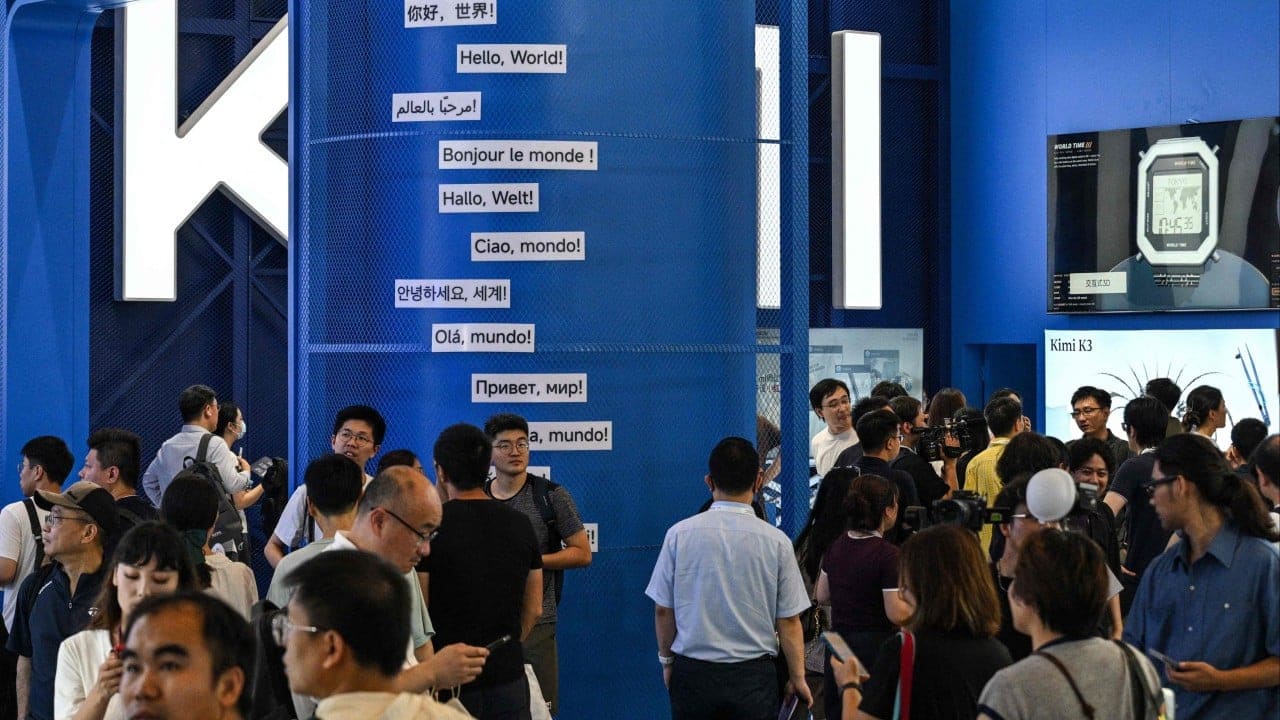
- ·Moonshot AI and Alibaba released Kimi K3 and Qwen3.8-Max-Preview in late July 2026, matching or approaching GPT-4o performance at significantly lower cost.
- ·Chinese developers are leveraging open-source licensing and aggressive pricing to gain traction across Southeast Asia, the Middle East, and Latin America.
- ·US semiconductor export controls have proven less effective than anticipated, as Chinese labs adapt through algorithmic efficiency, alternative chips, and stockpiled inventory.
Two New Contenders
Chinese AI developers unveiled two advanced large language models in late July 2026, reigniting debate over the speed at which the mainland is closing the artificial intelligence gap with Silicon Valley. Moonshot AI, a Beijing-based start-up, released Kimi K3, while e-commerce and cloud giant Alibaba introduced Qwen3.8-Max-Preview. Industry observers have dubbed the pair a "second DeepSeek moment," invoking the January 2025 shock when an earlier Chinese model matched GPT-4 performance at a fraction of the training cost.
The simultaneous launches mark a tactical shift. Rather than a single breakthrough generating headlines, Chinese developers are now producing multiple competitive models in quick succession, each targeting different segments of the enterprise and developer markets. Both Kimi K3 and Qwen3.8-Max-Preview reportedly demonstrate reasoning capabilities and benchmark scores that approach or, in some tests, rival OpenAI's GPT-4o and Anthropic's Claude 3.5.
Pricing and Open-Source Dynamics
Pricing remains a flashpoint. Chinese AI inference services continue to undercut US providers by margins that range from 50 to 90 percent, depending on token volume and model tier. Moonshot and Alibaba have signaled they will maintain aggressive pricing for API access, a strategy that appeals to cost-sensitive developers across Southeast Asia, the Middle East, and Latin America.
Equally significant is the open-source dimension. Alibaba's Qwen family has long been available under permissive licenses, allowing researchers and enterprises to fine-tune and deploy the models on-premises without recurring fees. Moonshot has indicated that certain weights and architectures of Kimi K3 will be released to academic institutions, further expanding the footprint of Chinese-origin AI outside centralized platforms.
This approach contrasts sharply with the closed, API-only model favored by OpenAI and Google. While US labs argue that controlled access protects safety and intellectual property, Beijing-backed developers are betting that ubiquity and ecosystem lock-in will prove more durable competitive advantages in the long run.
Export Controls and the Hardware Question
Washington's semiconductor export restrictions, tightened progressively since October 2022, were designed to slow Chinese progress by choking off access to cutting-edge GPUs. The latest wave of models suggests those controls have been less effective than anticipated. Chinese labs have adapted through a combination of algorithmic efficiency gains, alternative chip architectures, stockpiled inventory, and gray-market procurement channels.
Huawei's Ascend 910C processor, though still trailing Nvidia's H100 in raw throughput, has been integrated into several large-scale training clusters. Domestic foundries are ramping production of 7-nanometer and 5-nanometer logic, sufficient for inference workloads and, with clever software optimization, for certain training tasks. The result is a more resilient supply chain than US policymakers had forecast.
Regional Implications
The emergence of competitive Chinese models has immediate consequences for Asia's AI adoption landscape. Enterprises in Vietnam, Indonesia, Thailand, and the Philippines face a straightforward calculus: pay premium rates for US-hosted APIs subject to content moderation and data residency concerns, or deploy locally tuned Chinese models at lower cost with fewer geopolitical strings attached.
Singapore and South Korea, both home to significant AI research communities, are watching closely. Developers in those markets increasingly experiment with hybrid stacks, using Chinese models for prototyping and cost-sensitive tasks while reserving frontier US models for mission-critical applications. This bifurcation mirrors the broader technology decoupling underway in cloud infrastructure, 5G networks, and enterprise software.
Japan's AI strategy, which has emphasized domestic model development through partnerships with NEC, Fujitsu, and SoftBank, now faces a more crowded field. Tokyo policymakers must weigh the benefits of leveraging Chinese economies of scale against concerns over data sovereignty and alignment with US technology alliances.
What Comes Next
The tempo of Chinese AI releases shows no sign of slowing. ByteDance, Baidu, and Tencent are all rumored to have next-generation models in late-stage testing, with launches expected before year-end. The competitive pressure will likely push US labs to accelerate their own release cycles, compress pricing, or both.
Meanwhile, regulatory frameworks in both Beijing and Washington remain in flux. China's Cyberspace Administration has imposed registration and content-screening requirements on generative AI services, while the US Congress debates export control expansions and potential licensing regimes for frontier models. The interplay between innovation velocity and policy intervention will shape not only the AI race but also the structure of the global technology industry for the next decade.
For now, the message from Moonshot and Alibaba is clear: Chinese developers are no longer playing catch-up in isolated bursts. They are sustaining a high-frequency launch cadence, backed by capital, talent, and a strategic commitment to open-source distribution. The United States retains leads in certain benchmark categories and in the scale of its AI investment ecosystem, but the gap is narrowing faster than many anticipated.
RELATED STORIES

China Scrubs 5.6 Million AI-Generated Posts in Platform Cleanup
Cheng Wei-Lun · 3 min
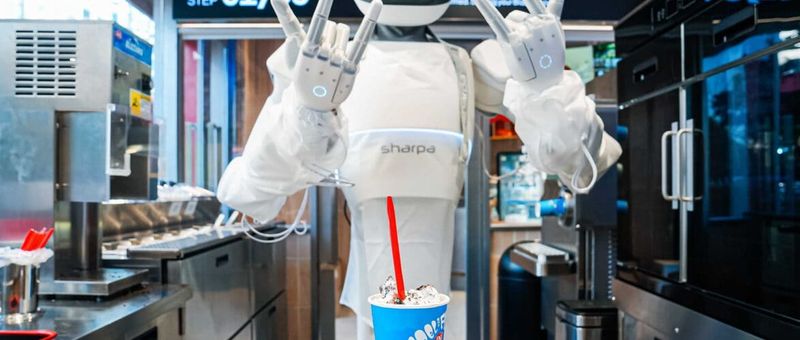
Sharpa Secures $668 Million at $3.3 Billion Valuation in Tech Giant-Backed Round
Cheng Wei-Lun · 2 min

China's Auto Chip Race Shifts to Volume as Horizon Robotics Crosses 15 Million Units
Jun-ho Seo · 3 min
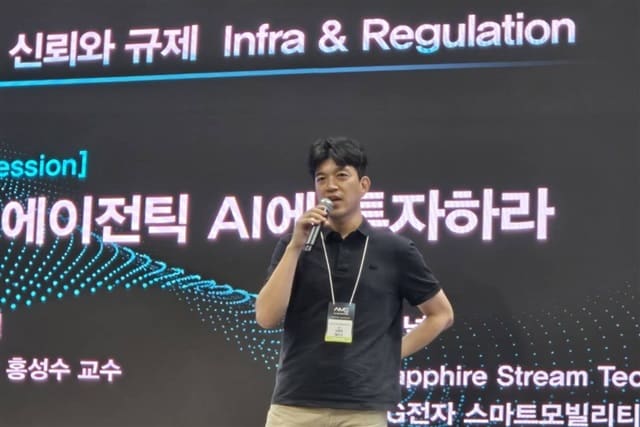
LG Pivots to AI-Defined Vehicle Platform as Korea Chases China's Self-Driving Lead
Jun-ho Seo · 3 min
Spot something wrong? Email editor@briefasia.com. We log every correction publicly.