Asia · Trade
Cambodia Records $44 Billion Trade Turnover in Seven-Month Surge
The kingdom's exports and imports both climbed more than 21 percent year-on-year, driven by robust growth with China and the United States despite a widening trade gap.
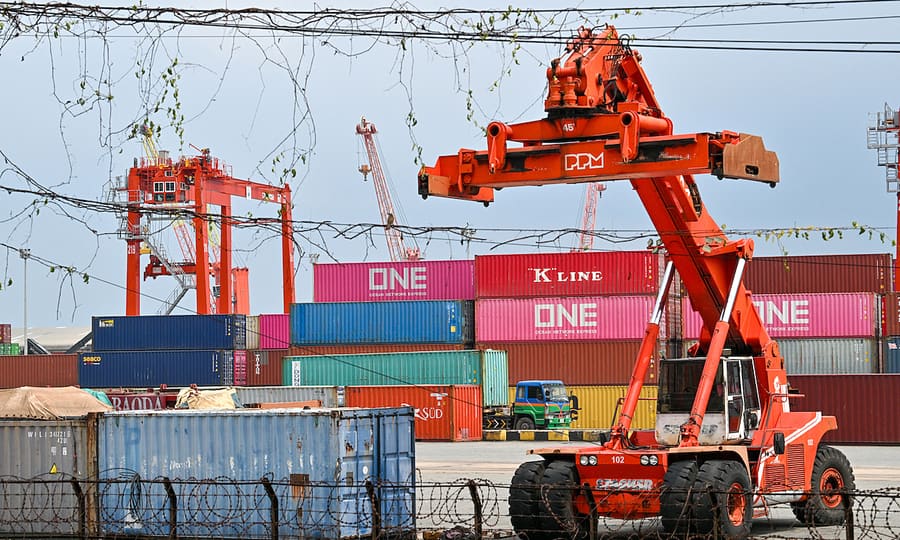
KEY TAKEAWAYS
- ·Cambodia's total trade reached $44.07 billion in the first seven months of 2026, up 21.3 percent year-on-year, with exports and imports both rising above 21 percent.
- ·Exports to the United States surged 30.6 percent to $9.05 billion, driven by garments and footwear, while trade with China expanded 23.9 percent to $13.63 billion.
- ·The kingdom's trade deficit widened to $2.44 billion from $1.99 billion a year earlier, reflecting reliance on imported inputs to sustain export-oriented manufacturing.
Trade Momentum Accelerates
Cambodia's total trade reached $44.07 billion during the first seven months of 2026, marking a 21.3 percent increase from the same period a year earlier. The General Department of Customs and Excise released the figures on August 10, revealing parallel expansion across both sides of the ledger.
Exports climbed 21.3 percent to $20.81 billion, while imports rose 21.4 percent to $23.26 billion. The near-identical growth rates left the kingdom with a trade deficit of $2.44 billion, wider than the $1.99 billion shortfall recorded in the first seven months of 2025.
The numbers underscore Cambodia's deepening integration into regional supply chains and its position as a manufacturing hub for garments, footwear, and light industrial goods destined for Western markets. They also reflect the country's reliance on imported intermediate goods and machinery to sustain production.
China Retains Top Partner Spot
Trade with China, Cambodia's largest partner by value, expanded 23.9 percent to $13.63 billion. Cambodian exports to the mainland grew 24.2 percent to $1.1 billion, driven by agricultural commodities and processed goods. Imports from China, which include machinery, textiles, electronics, and construction materials, rose 23.8 percent to $12.52 billion.
The lopsided flow means China accounted for roughly half of Cambodia's trade deficit during the period. Yet the relationship remains central to Phnom Penh's industrial strategy, supplying the inputs that feed export-oriented factories clustered around the capital and the coastal province of Preah Sihanouk.
U.S. Trade Surges on Garment Demand
The United States remained Cambodia's largest source of trade surplus. Bilateral trade jumped 32.2 percent to $9.42 billion, with Cambodian exports to the U.S. climbing 30.6 percent to $9.05 billion. Garments, footwear, and travel goods made up the bulk of the shipments, reflecting sustained American consumer demand and the kingdom's competitive labor costs.
Imports from the U.S. more than doubled, surging 87 percent to $377 million. The sharp rise signals expanding appetite for American machinery, technology products, and agricultural goods, though the base remains small. The U.S. trade relationship is asymmetric by design: Cambodia ships finished consumer goods westward and sources capital equipment and inputs largely from Asia.
Vietnam Links Expand Steadily
Trade with Vietnam, Cambodia's neighbor and a key logistics gateway, grew 8.2 percent to $5.35 billion. Cambodian exports to Vietnam increased 12.4 percent to $2.73 billion, while imports rose 4.2 percent to $2.62 billion. The figures reflect cross-border movement of agricultural products, construction materials, and intermediate goods that flow along the Mekong corridor and Highway 1.
Vietnam serves as both a supplier and a buyer for Cambodia, with Vietnamese firms active in construction, retail, and agriculture inside the kingdom. The relatively balanced trade flow contrasts with Cambodia's deficits with China and surpluses with the U.S., pointing to a more reciprocal economic relationship shaped by geography and complementary production structures.
Structural Imbalances Persist
The widening trade deficit highlights a structural feature of Cambodia's economy: it imports capital goods and inputs to produce labor-intensive exports. The model has delivered rapid GDP growth and job creation over the past decade, but it leaves the kingdom vulnerable to shifts in global demand and supply-chain disruptions.
Policymakers in Phnom Penh have signaled interest in diversifying the export base beyond garments and footwear, targeting electronics assembly, food processing, and tourism services. Yet the infrastructure and skills required for that transition remain works in progress, and the garment sector continues to employ hundreds of thousands of workers, making any pivot a medium-term project.
The seven-month data suggests that for now, the existing model retains momentum. Export factories are operating near capacity, logistics corridors are handling record volumes, and foreign buyers remain committed to Cambodian suppliers. Whether that momentum can be sustained through the remainder of 2026 will depend on consumer spending in the U.S. and Europe, the trajectory of regional trade agreements, and the kingdom's ability to manage rising labor and energy costs without losing competitiveness.
RELATED STORIES
Vietnam's Durian Shipments to China Jump 43% as Harvest Season Peaks
Tran Quoc Bao · 3 min
Vietnam Courts Chinese Investors Ahead of Major 2026 Trade Show
Tran Quoc Bao · 2 min

Vietnam's Raw Cashew Imports Hit Record $3 Billion in Seven Months
Priyanka V. Rao · 2 min
Vietnam Textile Exports Climb to $27 Billion as Upstream Production Gains Momentum
Priyanka V. Rao · 3 min
Spot something wrong? Email editor@briefasia.com. We log every correction publicly.