Asia · Business
BYD Posts Third Consecutive Monthly Sales Gain as Overseas Push Accelerates
The Chinese EV maker shipped 419,211 vehicles in July, with international markets now driving momentum as domestic demand cools
KEY TAKEAWAYS
- ·BYD sold 419,211 vehicles globally in July, a 21.8 per cent increase from the prior year, marking three consecutive months of growth.
- ·Overseas shipments jumped 124.3 per cent year-on-year to 179,841 units, reflecting aggressive expansion into Southeast Asia, Latin America, and the Middle East.
- ·Domestic market conditions remain challenging as price competition intensifies and consumer demand softens, prompting the company to prioritize international sales channels.
Exports Become Growth Engine
BYD's global vehicle sales climbed 21.8 per cent year-on-year to 419,211 units in July, according to the company, marking the third consecutive month of growth for the Shenzhen-based automaker. The expansion came as international markets increasingly compensated for slower momentum at home.
Overseas shipments of passenger vehicles and pickups surged 124.3 per cent from the prior year to 179,841 units last month, according to BYD. That performance underscores how aggressively the company is pivoting toward export markets while navigating headwinds in China, where price competition has intensified and consumer sentiment remains uneven.
The figures illustrate a broader recalibration among Chinese EV manufacturers. As the domestic market matures and subsidies fade, companies are racing to establish footholds in Southeast Asia, Latin America, the Middle East, and select European markets where regulatory barriers remain navigable. BYD has opened assembly plants, forged dealer networks, and adapted models to local tastes faster than most rivals.
Regional Expansion Strategy
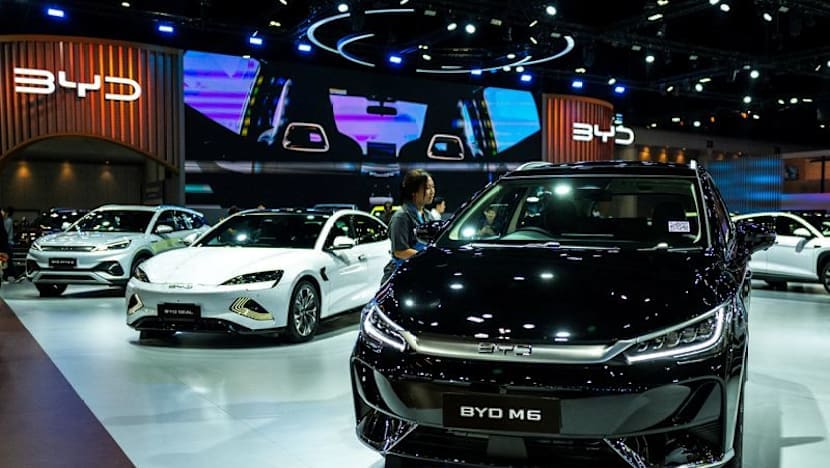
BYD's international push spans multiple corridors. The company has ramped up shipments to Thailand, where it showcased vehicles at the Bangkok International Motor Show earlier this year, and to Indonesia, Brazil, and the United Arab Emirates. In several markets, BYD is leveraging price competitiveness and a broad product lineup that ranges from compact sedans to commercial vans.
The automaker's ability to scale production and control key components of the supply chain, including batteries, has allowed it to maintain margins even as it undercuts incumbents on price. That vertical integration distinguishes BYD from pure-play EV startups and gives it flexibility to adjust pricing by region without eroding profitability.
Yet the path forward is not without friction. European regulators have signaled concern over Chinese EV imports, and tariff discussions remain fluid. BYD's management has responded by exploring local manufacturing partnerships and assembly operations that could insulate the company from trade restrictions while creating jobs in target markets.
Domestic Headwinds Persist
Back in China, the picture is more complex. Price wars among domestic brands have compressed margins industry-wide, and consumer demand has softened in the wake of economic uncertainty. BYD's home-market sales, while still substantial, have not kept pace with the blistering growth seen abroad.
The company continues to hold a commanding share of China's new-energy vehicle segment, which includes both battery-electric and plug-in hybrid models. But sustaining that lead requires constant product refreshes, aggressive marketing, and competitive financing offers. Rivals including Geely, NIO, and XPeng are all vying for the same customer base, and Tesla remains a formidable competitor in the premium segment.
BYD's hybrid models have proven particularly popular domestically, offering consumers a hedge against range anxiety while still qualifying for favorable policy treatment. That dual-powertrain strategy has allowed the company to capture buyers not yet ready to commit to pure battery-electric vehicles.
What Comes Next
The July sales data reinforces BYD's position as one of the world's largest EV manufacturers by volume, a status the company has worked methodically to achieve over the past decade. Whether it can sustain triple-digit export growth remains an open question, contingent on regulatory developments, currency fluctuations, and the pace at which foreign competitors respond.
Investors and industry observers will watch closely for signs that overseas momentum can offset any further cooling in China. BYD's third-quarter results, due later this year, will offer a clearer view of whether the export-led strategy is translating into profitability or simply volume for its own sake. For now, the company's ability to move metal across borders is keeping growth on track.
RELATED STORIES
India's Chinese Import Bill Climbs Despite Self-Reliance Push
Priyanka V. Rao · 3 min
GAC and FAW Explore Merger of Toyota Joint Ventures in China
Cheng Wei-Lun · 3 min

BYD Sets Sights on 2 Million Overseas Sales in 2026 After Brazil, Europe Surge
Cheng Wei-Lun · 3 min

China's August Inflation Accelerates on Energy and Typhoon Disruption
Tran Quoc Bao · 2 min
Spot something wrong? Email editor@briefasia.com. We log every correction publicly.