Technology · Products
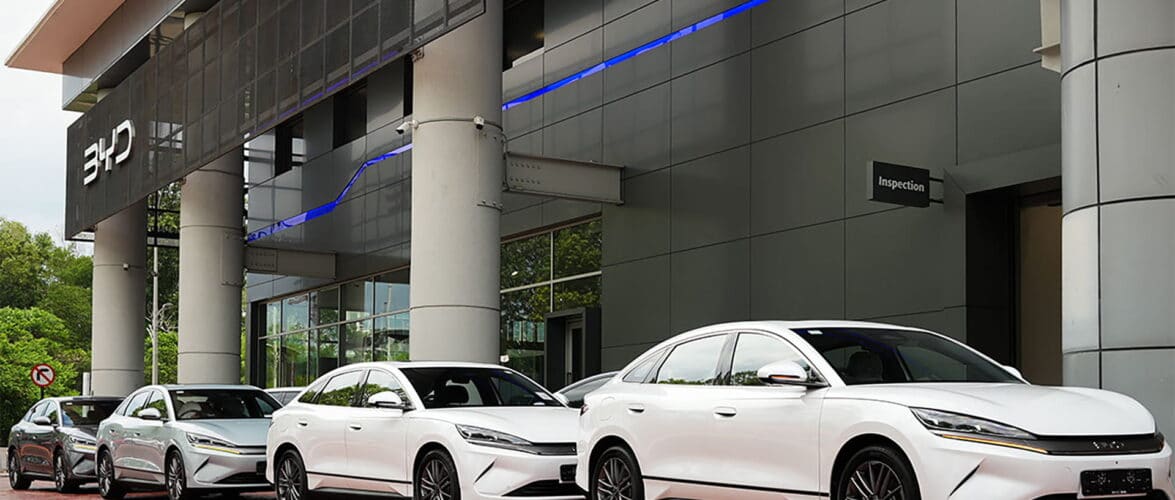
BYD Pivots to Partnership Model for Malaysia Production
The Chinese EV maker has abandoned its standalone factory plan in favour of working with a local assembler, signalling a shift in its Southeast Asian expansion strategy.
KEY TAKEAWAYS
- ·BYD has abandoned its plan to build a standalone assembly plant in Tanjung Malim, Perak, and is now in advanced talks with a local Malaysian partner.
- ·The shift from a wholly owned facility to a partnership model reflects a recalibration of BYD's regional expansion strategy in Southeast Asia.
- ·The partnership route could accelerate time to market and leverage existing local production capacity, though details on volume targets and partner identity remain undisclosed.
Strategic Reversal
BYD has walked away from its plan to construct a standalone assembly facility in Malaysia, choosing instead to pursue a partnership with a local manufacturer. Jacob Ma, managing director of BYD Malaysia, confirmed the shift at a briefing on 10 September.
The original proposal, unveiled in August 2025, envisaged a wholly owned plant in Tanjung Malim, Perak state. That site is now off the table. Ma indicated that the company is in late-stage discussions with a Malaysian assembler, though he declined to name the potential partner or specify a timeline for finalising the arrangement.
The pivot reflects a recalibration of BYD's regional footprint. While the company has pursued direct ownership in some markets, the Malaysian decision suggests it is willing to trade control for speed and local expertise when circumstances warrant.
Context in Southeast Asia
Malaysia has emerged as a competitive hub for automotive assembly in Southeast Asia, thanks to a combination of established supply chains, competitive labour costs, and government incentives aimed at electrification. Several global automakers already operate joint ventures or contract manufacturing arrangements in the country, a model that reduces upfront capital outlays and regulatory friction.
BYD's initial announcement of a greenfield plant had been interpreted as a signal of confidence in Malaysia's long-term potential. The reversal, however, does not necessarily indicate a retreat. Partnership models can accelerate time to market and leverage existing production capacity, particularly when a foreign entrant lacks deep familiarity with local regulatory and logistics frameworks.
The company has not disclosed whether the partnership route will alter its production volume targets or model lineup for the Malaysian market. Industry observers note that BYD's broader Southeast Asian strategy has been characterised by pragmatism, with the firm adjusting its approach country by country based on tariff structures, local content requirements, and competitive dynamics.
Implications for Local Industry
The shift to a partnership model opens the door for an existing Malaysian assembler to capture a share of BYD's regional growth. Several contract manufacturers in the country have excess capacity and are actively seeking partnerships with foreign brands, particularly in the electric vehicle segment.
For the Malaysian government, which has been courting EV investment as part of its industrial policy, the partnership approach may still deliver job creation and technology transfer, albeit with a different ownership structure. Local content mandates and export potential will be key factors in determining the arrangement's economic impact.
The Tanjung Malim site, which was slated to anchor BYD's Malaysian operations, now reverts to the pool of available industrial land. Whether another automotive player or a different sector will claim the location remains an open question.
BYD's decision underscores the fluidity of foreign investment commitments in the automotive sector, where companies routinely reassess capital allocation in response to shifting market conditions, policy changes, and internal strategic reviews. The partnership model, while less visible than a flagship plant, may prove more resilient if it allows BYD to scale production without overextending its balance sheet in a still-maturing EV market.
RELATED STORIES
BYD Sets Sights on 2 Million Overseas Sales in 2026 After Brazil, Europe Surge
Cheng Wei-Lun · 3 min
Seres Assumes Full Control of Aito Brand as Huawei Steps Back
Jun-ho Seo · 3 min
China Targets 84% Share of AR-HUD Production by 2031
Cheng Wei-Lun · 3 min

Li Auto Expands Battery Roster with CALB as Third Supplier
Siti Nuraini · 2 min
Spot something wrong? Email editor@briefasia.com. We log every correction publicly.