Finance · Markets
British American Tobacco Malaysia Posts Sharp Earnings Drop Amid Restructuring Push
The tobacco company's second-quarter profit fell 79% as transition costs and a persistent illicit cigarette market weigh on the Malaysian unit's performance.
KEY TAKEAWAYS
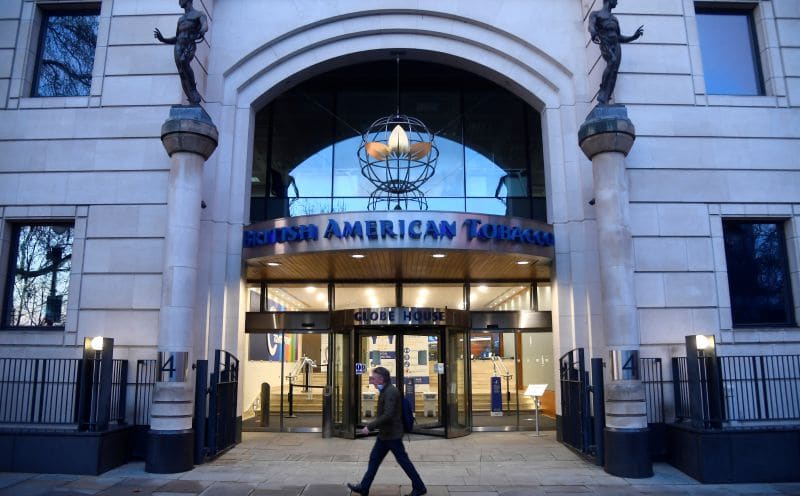
- ·British American Tobacco Malaysia reported a second-quarter net profit of 10.64 million ringgit, down 79 percent from 50.95 million ringgit a year earlier, with revenue falling to 515.29 million ringgit.
- ·Operating expenses surged 48.4 percent year on year due to transition costs and business restructuring tied to a new distribution model.
- ·Illicit cigarettes still represent 56.2 percent of Malaysia's tobacco market volume as of May 2026, above the 54.5 percent recorded at year-end 2025.
Profit Collapse Reflects Transition Strain
British American Tobacco Malaysia saw its second-quarter net profit shrink to 10.64 million ringgit for the three months ending June 30, 2026, down from 50.95 million ringgit in the same period a year earlier. The 79 percent contraction underscores the financial strain of a market transition the company has been navigating since the start of the year.
Revenue fell to 515.29 million ringgit from 624.75 million ringgit in the prior-year quarter. The company attributed the earnings pressure to a near 50 percent surge in operating costs, which it linked to expenses tied to business restructuring and a shift to a new distribution model. For the first half of the year, the Malaysian unit swung to a net loss of 24.51 million ringgit, reversing a profit of 74.22 million ringgit recorded in the same six-month stretch of 2025. Revenue over that period dropped to 675.59 million ringgit from 946.74 million ringgit.
The figures illustrate the dual headwinds confronting multinational tobacco operators in Southeast Asia: rising compliance and transformation costs on one side, and stubborn competition from illicit channels on the other. Malaysia's legal cigarette market has long contended with one of the region's highest rates of contraband penetration, a dynamic that squeezes volume and pricing power for licensed players.
Distribution Overhaul Drives Costs Higher
Operating expenses climbed 48.4 percent year on year in the second quarter, a jump the company said reflects transition-related outlays and the complexity of overhauling its route-to-market infrastructure. British American Tobacco Malaysia has been rolling out a revised distribution framework designed to improve visibility and control over its supply chain, a move that requires upfront investment in logistics, technology, and partner onboarding.
While the company has not broken out the exact composition of these costs, industry analysts note that such transitions typically involve spending on warehouse consolidation, digital tracking systems, and renegotiated terms with wholesale and retail partners. The restructuring also coincides with broader efforts across the group's Asia-Pacific portfolio to centralize procurement and harmonize operating models, adding another layer of complexity to the Malaysian unit's cost base.
Managing director Nedal Salem said the company remains focused on stabilizing performance through brand-building, cost discipline, and operational efficiency as the new model takes hold. The emphasis on gradual recovery suggests the company does not expect an immediate rebound, instead preparing investors for a multi-quarter adjustment period.
Illicit Trade Still Above Year-End Baseline
Even as the company grapples with internal restructuring, external market conditions remain challenging. Data from a May 2026 study on illicit cigarettes showed that contraband accounted for 56.2 percent of total tobacco volume in Malaysia, down slightly from 56.7 percent in the first quarter but still above the 54.5 percent recorded at the close of 2025.
The persistence of illicit trade at elevated levels reflects both supply-side factors, including porous borders and weak enforcement in certain distribution corridors, and demand-side dynamics driven by affordability gaps. Legal cigarettes in Malaysia carry substantial excise duties, creating a price differential that makes smuggled and counterfeit products attractive to price-sensitive consumers.
Salem characterized tackling the tobacco black market as a national priority for 2026, calling for a comprehensive strategy that addresses both the availability of illegal products through stronger disruption of supply networks and the demand fueled by pricing disparities. The company said it is working with government agencies and industry bodies to enhance enforcement and close loopholes that allow contraband to circulate.
Regional Context and Policy Pressure
Malaysia's tobacco market dynamics mirror broader trends across Southeast Asia, where governments face a balancing act between public-health objectives and the fiscal reality of excise revenue. Countries including Indonesia, the Philippines, and Thailand have all raised cigarette taxes in recent years, prompting legal manufacturers to warn that steep increases can backfire by driving consumers toward unregulated channels.
In Malaysia, the government has signaled interest in further tax measures as part of its broader revenue-raising agenda, but enforcement capacity remains a constraint. Customs authorities have stepped up raids and seized millions of contraband sticks over the past year, yet the sheer volume of illicit trade suggests that supply chains remain resilient and adaptive.
For British American Tobacco Malaysia, the challenge is to navigate this environment while absorbing the costs of its own internal transformation. The company's emphasis on brand awareness and penetration suggests it is betting that a more efficient distribution network, combined with targeted marketing, can help it claw back share from both illicit competitors and rival legal brands.
Outlook Hinges on Execution and Enforcement
The path to recovery will depend on two variables largely outside the company's direct control: the speed at which its new distribution model delivers efficiency gains, and the effectiveness of government action against contraband. If operating expenses begin to normalize in the second half of the year and illicit trade continues its gradual decline, the company could see margin pressure ease.
However, any further deterioration in the black-market share or unexpected delays in the route-to-market rollout would likely prolong the earnings slump. Investors will be watching third-quarter results closely for signs that the worst of the transition costs have passed and that revenue stabilization is taking hold.
British American Tobacco Malaysia's experience also serves as a reminder of the operational complexity facing consumer-goods multinationals in emerging Asia. Regulatory shifts, enforcement gaps, and the need to modernize legacy infrastructure all impose costs that can weigh on near-term performance, even as companies pursue strategies intended to strengthen their long-term competitive position.
For now, the company's message is one of cautious optimism: it expects performance to stabilize and gradually improve as the new model matures, but it is not yet declaring victory. The next six months will reveal whether that confidence is justified.
RELATED STORIES
Ringgit Strengthens as Malaysia's Stable Rates Signal Policy Flexibility
Mariel D. Santos · 3 min

Malaysia Hospital Group A1Health Prepares US$1.7 Billion IPO for Early 2027
Tran Quoc Bao · 2 min
Malaysian Equities Climb in Morning Session as Regional Investors Weigh Oil Price Rally
Anand Sundaram · 3 min
Malaysia's KLCI Index to Add 20 Stocks in Phased Expansion
Jun-ho Seo · 2 min
Spot something wrong? Email editor@briefasia.com. We log every correction publicly.