Sustainability · Energy
Brent Crude Hits $96 as Middle East Conflict Tightens Global Supply Routes
US strikes on Iran and Houthi attacks on Red Sea tankers push oil to six-week highs, renewing inflation fears across Asian markets
KEY TAKEAWAYS
- ·Brent crude rose 2 percent to $96 per barrel Thursday after US strikes on Iran and Houthi attacks on Red Sea oil tankers, reaching six-week highs.
- ·Closure of the Strait of Hormuz and Bab el-Mandeb would disrupt shipping routes for over 25 percent of global oil and gas, with five months of conflict already depleting stockpiles.
- ·Markets now price in 42 basis points of Fed rate hikes for 2026, with a September increase fully anticipated, as oil-driven inflation concerns return.
Supply Chokepoints Under Fire
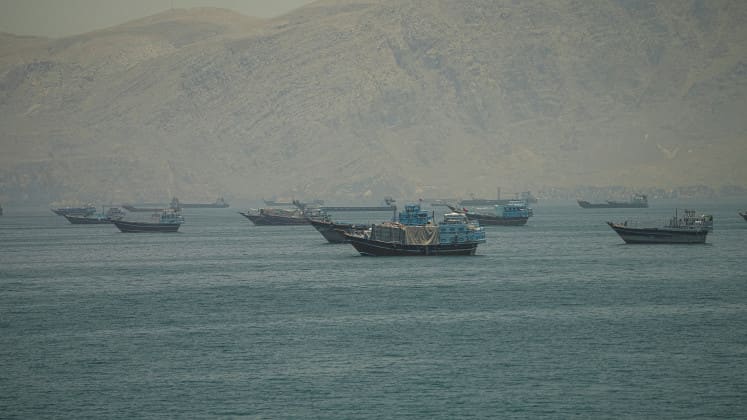
Brent crude futures climbed 2 percent to $96 per barrel in early Asian trading Thursday, reaching six-week highs as military escalation across the Middle East intensified pressure on critical energy shipping routes. Fresh US strikes targeted Iranian positions while Yemen's Houthi forces attacked oil tankers transiting the Red Sea, compounding supply anxieties that have gripped markets for nearly five months.
The dual chokepoints of the Strait of Hormuz and Bab el-Mandeb now face simultaneous disruption risks. Analysts estimate that closure of both passages would affect shipping routes for over 25 percent of global oil and gas flows, a scenario that would reshape energy logistics across Asia and Europe.
Global stockpiles have declined steadily since the conflict intensified in early 2026, with no immediate resolution in sight. The sustained military activity has depleted inventories faster than anticipated, leaving little buffer against further supply shocks.
Inflation Pressure Returns
The oil price spike triggered a sharp repricing in US Treasury markets. Short-term yields jumped to 17-week highs as traders recalibrated expectations around Federal Reserve policy. Markets now price in 42 basis points of rate increases for 2026, with a September hike fully anticipated.
Thierry Wizman, global FX and rates strategist at Macquarie Group, noted that renewed oil strength has revived concerns about growth trajectories. Five months of conflict have fed inflation globally, particularly in energy-import-dependent economies across Southeast Asia and Northeast Asia.
The yen remained under pressure, trading at 163.1 per dollar despite earlier speculation that the Bank of Japan might accelerate rate hikes. Currency strategists at OCBC noted that intervention risks or domestic asset demand shifts could limit yen weakness temporarily, but fundamental support would require a faster BOJ tightening cycle than currently signaled.
Asia's Divergent Response
Equity markets across the region split along sectoral lines. South Korea's KOSPI surged more than 3 percent Thursday, driven by semiconductor manufacturers SK Hynix and Samsung Electronics. Japan's Nikkei added 1 percent, while the broader MSCI Asia-Pacific index outside Japan gained approximately 1 percent in early trade.
The rally followed earnings reports from Alphabet and Tesla that revealed continued heavy spending on artificial intelligence infrastructure. Alphabet raised its 2026 capital expenditure guidance to between $195 billion and $205 billion, with a significant portion expected to flow to Asian chip suppliers.
Gary Tan, portfolio manager at Allspring Global Investments, said stronger cloud growth validates higher AI capital expenditure, reinforcing that the hyperscaler spending cycle retains momentum. The infrastructure buildout is now transitioning toward disruption applications, with hyperscalers deploying AI to challenge incumbent platforms in search and e-commerce.
Yet the optimism in technology sectors contrasts sharply with caution around energy-intensive industries. Nick Twidale, chief market strategist at ATFX Global in Sydney, observed that positive earnings signals compete directly with escalating Middle East tensions, creating a cautious trading environment.
What Comes Next
The oil price trajectory hinges on whether military activity near the Strait of Hormuz and Red Sea shipping lanes escalates further or stabilizes. Any sustained closure of either route would force rerouting through longer, costlier passages, embedding higher energy costs into supply chains already strained by inventory drawdowns.
For Asia's export-driven economies, the dual pressure of rising input costs and potential Fed tightening narrows policy room. Central banks from Seoul to Jakarta face the prospect of importing inflation through energy while managing capital flow volatility tied to US rate expectations.
Japan's currency dynamics add another layer. Without a credible shift in BOJ policy pace, the yen's role as a funding currency persists, amplifying carry trade flows that could reverse abruptly if risk sentiment deteriorates further. Verbal warnings from Tokyo have done little to alter trader behavior, leaving intervention as the remaining tool, though its effectiveness remains limited without policy backing.
The technology sector's spending spree offers a counterbalance, channeling investment into Asian manufacturing hubs and supporting equity valuations even as macro headwinds build. Whether that support holds depends on earnings proving that AI infrastructure translates into profit growth, a question that will dominate the rest of this earnings season.
RELATED STORIES

Brent Crude Climbs Past $93 as US Sanctions Threat Tightens Iran Oil Flows
Priyanka V. Rao · 3 min

Oil Climbs as Trump Sanctions Threat Tightens Iran Supply Outlook
Priyanka V. Rao · 3 min
US Naval Blockade Threat Lifts Oil Prices Amid Iran Strait Tensions
Priyanka V. Rao · 3 min
Oil Climbs on US Blockade Threat to Iran as Strait of Hormuz Traffic Slows
Priyanka V. Rao · 3 min
Spot something wrong? Email editor@briefasia.com. We log every correction publicly.