Asia · Trade
Beijing Raises Alarm Over US Trade Curbs as Bilateral Talks Resume
Vice Premier He Lifeng pressed US officials on tariffs and export controls during the first high-level trade call since May's Beijing summit, with rare earth deliveries and supply chain tensions still unresolved.
KEY TAKEAWAYS
- ·Chinese Vice Premier He Lifeng expressed serious concern over US trade restrictions during a Thursday call with Treasury Secretary Scott Bessent and Trade Representative Jamieson Greer, the first cabinet-level trade discussion since May's Trump-Xi summit.
- ·Washington stressed that China must fully meet commitments on rare earth deliveries and $17 billion in agricultural purchases pledged at the May summit, which US officials say remain only partially fulfilled.
- ·The call serves as preparation for a potential September meeting between Trump and Xi, with both sides agreeing to use bilateral channels to address disputes over tariffs, export controls, and supply chain policies.
Fresh Friction After Tariff Truce
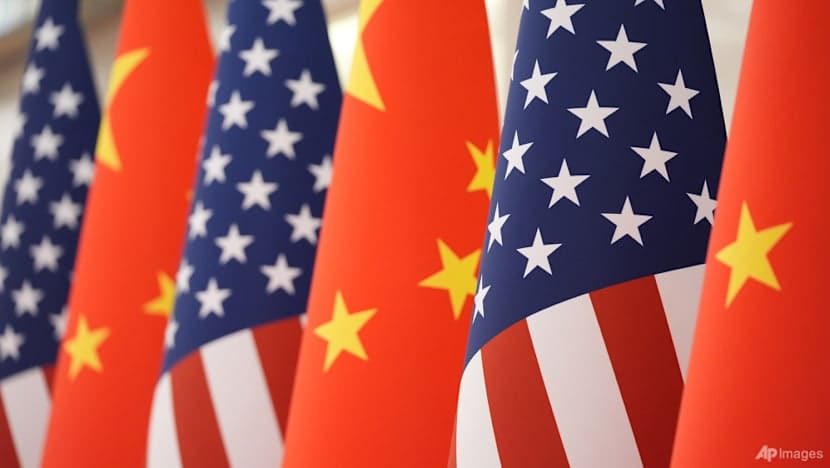
Chinese Vice Premier He Lifeng told US Treasury Secretary Scott Bessent and Trade Representative Jamieson Greer on Thursday that Beijing holds "serious concern" over Washington's latest trade restrictions, marking the first direct cabinet-level trade discussion since President Donald Trump's May visit to Beijing.
The video call came one week after the US imposed fresh tariffs on China and 59 other countries over alleged forced labor concerns, a move that Beijing swiftly condemned as risking a renewed trade war. Washington also banned imports of humanoid and quadruped robots manufactured abroad in a separate measure targeting Chinese robotics firms.
Xinhua, the state news agency, described the exchange as "candid, in-depth and constructive," with negotiators discussing how to maintain stable economic ties and address mutual grievances in the months ahead. Bessent confirmed the call on social media, saying Washington stressed that it expects China to fully meet commitments on rare earth deliveries and purchases of US agricultural products.
Unfinished Business From the Beijing Summit
The Thursday conversation was the first between He, Bessent, and Greer since Trump's summit with President Xi Jinping in May, a meeting that produced pledges from China to order 200 Boeing aircraft and buy an additional $17 billion in US non-soybean agricultural goods. Trump administration officials have said those commitments remain only partially fulfilled, particularly regarding rare earth minerals promised under a November 2025 truce.
Bessent framed the call as preparation for a possible September meeting between Trump and Xi. Trump extended the invitation during his Beijing trip, though no date has been confirmed.
The talks also addressed implementation of newly established Trade and Investment Boards, bilateral forums launched at the May summit to manage disputes and pursue what Bessent called "a more balanced, fair, and constructive US-China economic relationship."
Escalating Export Controls
China has tightened export controls on US rare earth mining and processing companies since May, citing alleged links to the US military and restricting access to dual-use technologies. The measures came in response to Washington labeling Chinese electric vehicle makers BYD and NIO as military-linked entities, along with Alibaba and Baidu.
Beijing also enacted regulations in the run-up to the summit that lay the groundwork for punishing US and other foreign firms that shift supply chains out of China. A source familiar with the negotiations said Washington views these commercial decrees and export restrictions as problematic and has raised concerns repeatedly through trade channels, giving China time to reverse course.
"China has continued to escalate and cause chaos," the source said, speaking on condition of anonymity. "China's continued escalations will have consequences."
The Rare Earth Leverage
Rare earth elements remain a flashpoint. China controls roughly 70 percent of global mining and more than 90 percent of refining capacity for the 17 minerals essential to semiconductors, defense systems, and renewable energy technology. Washington has sought to diversify supply chains since 2021, but progress has been slow and expensive.
The November 2025 truce included Chinese commitments to maintain rare earth exports to the US, but administration officials say deliveries have lagged. Beijing, meanwhile, has accused Washington of weaponizing trade policy to suppress Chinese technology firms.
What Comes Next
Both sides agreed to use bilateral consultation channels to strengthen communication and expand cooperation, according to Xinhua. Yet the gap between rhetoric and action remains wide. Washington wants faster fulfillment of purchase commitments and rollback of export controls; Beijing wants relief from tariffs and an end to entity list designations.
The September meeting, if it happens, will test whether the frameworks established in May can produce tangible progress or whether the world's two largest economies are sliding back into the cycle of retaliation that defined much of 2025. For now, the call signals that both sides prefer negotiation to escalation, even as each accumulates leverage for the next round.
RELATED STORIES
China Imposes Anti-Dumping Measures on Japanese Semiconductor Chemical Imports
Jun-ho Seo · 3 min
India's Chinese Import Bill Climbs Despite Self-Reliance Push
Priyanka V. Rao · 3 min
China's August Inflation Accelerates on Energy and Typhoon Disruption
Tran Quoc Bao · 2 min

GAC and FAW Explore Merger of Toyota Joint Ventures in China
Cheng Wei-Lun · 3 min
Spot something wrong? Email editor@briefasia.com. We log every correction publicly.