Technology · Policy
Beijing Pushes Back on US AI Theft Accusations
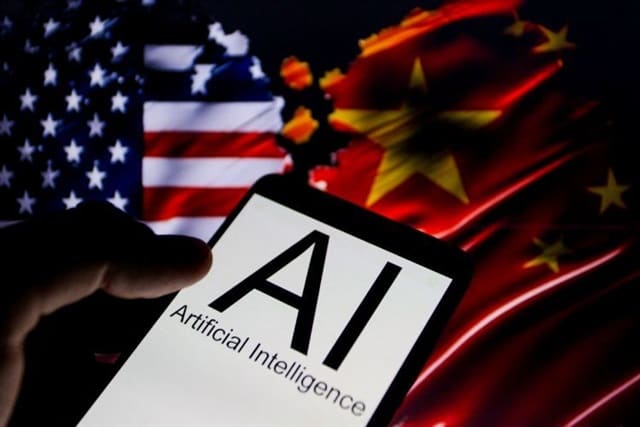
China's Ministry of Commerce counters Washington's model distillation claims, pointing to American companies' use of Chinese AI systems
KEY TAKEAWAYS
- ·China's Ministry of Commerce rejected US allegations that Chinese AI companies used model distillation to steal capabilities from American systems, with Washington considering investigations and sanctions.
- ·Beijing countered that American firms similarly distill Chinese AI models, introducing reciprocal accusations that complicate Washington's intellectual property theft narrative.
- ·The dispute creates compliance challenges for Asia's technology hubs and cloud providers offering both US and Chinese AI models amid potential sanctions expansion.
Reciprocal Accusations
China's Ministry of Commerce has dismissed US government allegations that Chinese artificial intelligence companies are stealing intellectual property from American AI models through distillation techniques. The rejection comes as Washington signals potential investigations and sanctions targeting Chinese firms over what US officials describe as unauthorized capability extraction from advanced AI systems.
The ministry's response introduces a counter-narrative: American companies engage in the same practice with Chinese models. This tit-for-tat dynamic marks a new front in the technology rivalry between the world's two largest economies, moving beyond semiconductor export controls and data security disputes into the contested territory of machine learning methodologies.
The Distillation Question
Model distillation is a widely used technique in artificial intelligence development where a smaller, more efficient model learns to replicate the behavior of a larger, more complex system. The process involves training a "student" model to mimic the outputs of a "teacher" model, effectively compressing knowledge while maintaining performance. The practice itself is not inherently illicit; research labs and companies worldwide employ distillation to optimize deployment costs and inference speed.
The dispute centers on whether Chinese entities have used distillation to reverse-engineer proprietary capabilities from closed US models without authorization. American officials have raised concerns that Chinese developers may be querying US commercial AI systems at scale to train competing models that capture unique functionalities developed at significant research expense.
Asia's AI Landscape
The escalation carries implications across Asia's technology corridors. Singapore, Tokyo, and Seoul host subsidiaries and research outposts of both American and Chinese AI companies, creating potential compliance challenges if Washington pursues sanctions. South Korean chipmakers supply memory and logic components to data centers on both sides of the Pacific; any expansion of export restrictions tied to alleged model theft could complicate supply arrangements.
Chinese AI firms including Alibaba Cloud, Baidu, and ByteDance have released competitive large language models over the past two years, some demonstrating capabilities that rival or exceed certain benchmarks set by US counterparts in non-English languages and region-specific tasks. Whether these advances stem from independent research, open-source foundations, or distillation from proprietary systems remains a technical and legal gray area that Washington now seeks to clarify through investigation.
What Washington Is Considering
US officials have not yet specified which agencies would lead investigations or what legal framework would underpin sanctions. Potential avenues include Commerce Department entity list additions, Treasury Department financial restrictions, or Justice Department prosecutions under economic espionage statutes. The challenge lies in proving unauthorized distillation; API call logs and model behavior comparisons would likely form the evidentiary basis, but establishing intent and demonstrating harm to US competitiveness requires detailed forensic analysis.
Previous technology disputes between Washington and Beijing have followed a pattern: US allegations, Chinese denials, incremental restrictions, and fragmented global markets. The AI distillation controversy appears poised to follow a similar trajectory, with the added complexity that distillation techniques are openly documented in academic literature and widely taught in university curricula.
Regional Positioning
For Asia's technology ecosystem, the dispute underscores the growing difficulty of maintaining neutrality. Cloud providers in Southeast Asia that offer access to both US and Chinese AI models may face pressure to audit usage patterns and enforce stricter terms of service. Investment flows into regional AI startups could slow as venture funds assess geopolitical risk and potential sanctions exposure.
The Ministry of Commerce's assertion that American firms distill Chinese models introduces symmetry into the debate, complicating Washington's narrative of unilateral theft. If both sides engage in similar practices, the question shifts from whether distillation is occurring to whether existing intellectual property frameworks adequately govern machine learning techniques that blur the line between learning from public outputs and appropriating proprietary knowledge.
The coming months will clarify whether the US moves forward with formal investigations and what evidence surfaces. For now, the exchange adds another layer of uncertainty to cross-border AI collaboration and commercial deployment across the Pacific.
RELATED STORIES
Hong Kong Debuts Robot-Run Convenience Store in Commercial Automation Push
Cheng Wei-Lun · 3 min
China Scrubs 5.6 Million AI-Generated Posts in Platform Cleanup
Cheng Wei-Lun · 3 min
LG Pivots to AI-Defined Vehicle Platform as Korea Chases China's Self-Driving Lead
Jun-ho Seo · 3 min

China's Auto Chip Race Shifts to Volume as Horizon Robotics Crosses 15 Million Units
Jun-ho Seo · 3 min
Spot something wrong? Email editor@briefasia.com. We log every correction publicly.