Finance · Markets
Bank of Japan Holds Rates at 1%, Flags Inflation Overshoot Risk
Central bank adopts most hawkish stance yet, warning underlying inflation could breach target as board member dissents in favor of immediate hike
KEY TAKEAWAYS
- ·The Bank of Japan held short-term interest rates at 1% but warned underlying inflation could exceed its 2% target for the first time, with board member Hajime Takata dissenting in favor of an immediate hike to 1.25%.
- ·The central bank cited robust global AI demand and firms' increasing willingness to raise prices and wages as key inflation drivers, while noting that Middle East conflict concerns are receding.
- ·Markets expect further rate hikes as the yen traded around ¥160.76 per dollar despite Tokyo's currency intervention, with Capital Economics forecasting rates will reach 2% by end-2027.
Hawkish Shift in Tokyo
The Bank of Japan held short-term interest rates at 1% in a decision announced Friday, maintaining the 31-year-high level reached just last month. But the central bank's quarterly outlook report marked a clear escalation in tone, warning for the first time that underlying inflation could exceed its 2% target as price and wage dynamics shift across the economy.
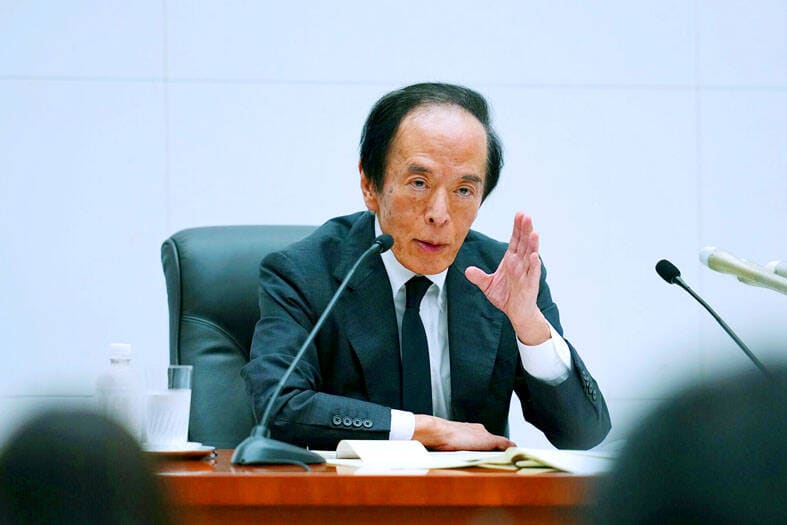
The statement represents the bank's most hawkish positioning since it began normalizing policy earlier this year. Governor Kazuo Ueda told reporters that underlying inflation is now approaching the target level, requiring heightened scrutiny of upside price risks. "We will debate our policy from our next meeting onward with this point in mind," Ueda said at a press conference following the decision.
Board member Hajime Takata dissented, voting for an immediate hike to 1.25%. His call for tightening, the second time he has broken with the majority in recent months, underscores a growing divide within the central bank over how quickly to respond to inflation pressures. Takata last dissented in April, just before the bank delivered its June rate increase.
Inflation Dynamics Shifting
The Bank of Japan highlighted two forces pushing inflation higher. First, robust global demand for artificial intelligence infrastructure is feeding through to input costs and capacity constraints. Second, firms are becoming more willing to pass on costs and raise wages, a behavior change the bank has sought for years but now views as a potential overshoot risk.
"There is a risk underlying inflation could deviate above our 2% target as medium and long-term inflation expectations continue to rise, and firms become more active toward raising prices and wages," the central bank said in its quarterly report. The language marks a departure from April's outlook, which said inflation was approaching 2% and warranted vigilance.
The bank also noted that concerns over economic damage from the Middle East conflict are receding, removing a downside risk that had previously tempered its policy stance.
Market Reaction and Intervention Context
The decision pushed the two-year Japanese government bond yield higher, but the yen remained under pressure, trading around ¥160.76 per dollar. The currency's weakness has been a persistent challenge for policymakers, prompting Japan to conduct yen-buying, dollar-selling intervention in New York markets on Thursday. That move failed to deliver a sustained boost to the currency.
Marcel Thieliant, head of Asia-Pacific at Capital Economics in Singapore, called the outlook report hawkish and reiterated his firm's forecast that the Bank of Japan will lift rates to 2% by the end of next year, a view outside the consensus. "The decision itself wasn't unanimous because arch hawk Hajime Takata once again dissented in favor of a rate hike," Thieliant said. "That's remarkable given that the bank just raised rates at its June meeting."
What It Means for Regional Policy
Japan's monetary trajectory matters for the rest of Asia. A sustained tightening cycle in Tokyo would mark a historic shift after decades of near-zero rates, altering capital flows and currency dynamics across the region. The yen's weakness has pressured other Asian central banks to maintain tighter stances to prevent competitive depreciation, even as domestic growth concerns mount.
The Bank of Japan's evolving stance also reflects broader inflationary pressures tied to AI demand, a theme echoing across semiconductor-heavy economies in Taiwan, South Korea, and Singapore. As chipmakers expand capacity and global tech firms compete for hardware, input costs and wage pressures are building in ways that challenge the low-inflation regime that defined the post-2008 era.
The central bank's next policy meeting will test whether the hawkish rhetoric translates into action. With one board member already calling for higher rates and the governor signaling heightened attention to upside risks, markets are pricing in a higher probability of another move before year-end. The question is whether inflation data and wage growth over the coming months will justify the shift, or whether external shocks, including any escalation in geopolitical tensions, will force a pause.
For now, the Bank of Japan is threading a narrow path: acknowledging inflation risks without tightening aggressively enough to derail a still-fragile recovery. That balance is likely to dominate policy debates in Tokyo through the rest of the year.
RELATED STORIES
Bank of Japan Signals Possible Rate Increase This Month
Aiko Nakamura · 3 min

Bank of Japan Prepares Third Rate Increase in Ten Months
Aiko Nakamura · 3 min
Bank of Japan to Continue Rate Increases to Anchor Inflation at 2 Per Cent
Aiko Nakamura · 3 min
Yen Climbs to Eight-Month High as Rate Hike Expectations Shift Sentiment
Jun-ho Seo · 3 min
Spot something wrong? Email editor@briefasia.com. We log every correction publicly.