Asia · Business
BAIC Motor Projects $244 Million Loss as China Price War Hits Premium Segment
Mercedes-Benz joint venture partner swings to red ink in first half of 2026, signaling intensifying competition in China's luxury vehicle market
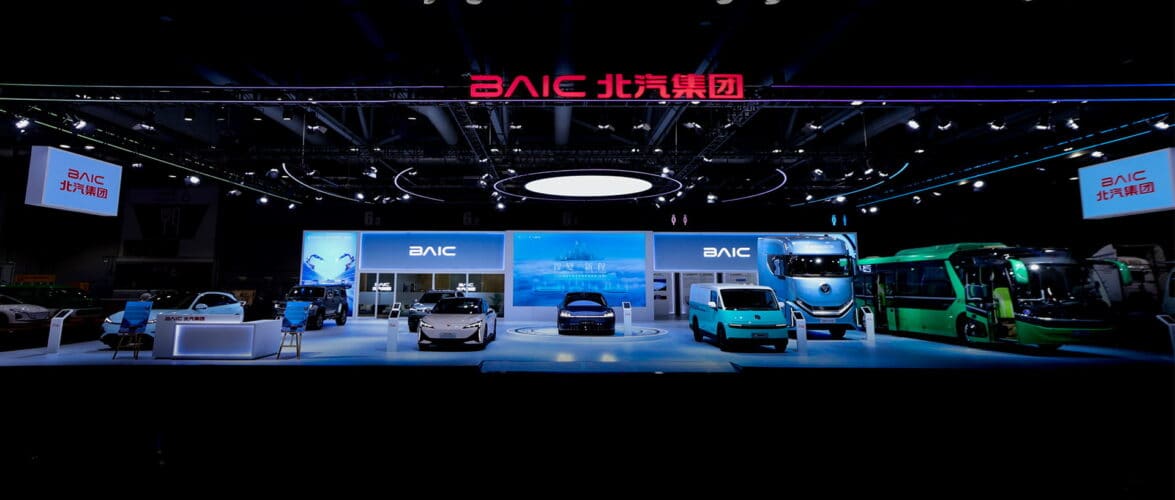
KEY TAKEAWAYS
- ·BAIC Motor expects a net loss of up to RMB 1.65 billion for the first half of 2026, reversing profits of RMB 359.96 million in H1 2025 and RMB 1.97 billion in H1 2024.
- ·The loss reflects intensifying price competition in China's automotive market, which has now spread from domestic EV brands to premium and luxury segments where BAIC's Mercedes-Benz partnership competes.
- ·The deterioration signals broader strain on foreign automaker joint ventures in China as domestic brands gain technical parity and pricing pressure erodes margins across the industry.
From Profit to Loss in Twelve Months
BAIC Motor, the Chinese automaker that operates a manufacturing joint venture with Mercedes-Benz, anticipates a net loss reaching RMB 1.65 billion ($244 million) in the first half of 2026. The forecast represents a sharp reversal from the RMB 359.96 million profit the company recorded in the same period last year and a steeper decline from the RMB 1.97 billion earned in H1 2024.
The anticipated loss underscores how pricing pressure in China's automotive sector has climbed the value chain. What began as aggressive discounting among domestic electric vehicle brands has now reached manufacturers competing in the premium and luxury segments, a territory where established foreign nameplates once enjoyed stable margins.
Price Competition Reaches Premium Tier
China's automotive market has been locked in a brutal price war for more than two years, driven primarily by overcapacity and fierce competition among battery-electric vehicle makers. Domestic brands including BYD, NIO, and Xpeng slashed prices to defend market share, forcing traditional automakers to respond. The competitive intensity has steadily escalated, pulling down transaction prices across nearly every segment.
For BAIC Motor, which assembles Mercedes-Benz vehicles for the Chinese market through Beijing Benz Automotive, the shift in competitive dynamics has proven costly. Premium brands traditionally maintained pricing discipline, relying on brand equity and customer loyalty. That calculus has changed as Chinese consumers become more price-sensitive and domestic brands move upmarket with feature-rich models at lower price points.
The company's financial trajectory illustrates the speed of deterioration. A year ago, BAIC Motor reported healthy profitability. Six months later, that profit had shrunk by more than 80 percent. Now, the company faces its first half-year loss in recent memory, a swing of more than RMB 2 billion in net income within twelve months.
Joint Venture Model Under Strain
BAIC Motor's struggles reflect broader challenges facing foreign automakers' joint ventures in China. For decades, partnerships between global brands and Chinese state-owned enterprises delivered reliable returns, granting foreign companies access to the world's largest car market while providing local partners with technology and brand prestige.
That model is fraying. Chinese consumers increasingly favor domestic brands, particularly in the electric and plug-in hybrid categories where local manufacturers have achieved technical parity or superiority in areas like battery range, connectivity, and autonomous driving features. Even in the premium segment, brands like Huawei-backed Aito and Geely's Zeekr are winning over buyers who once aspired to German or Japanese nameplates.
Mercedes-Benz has not been immune. The Stuttgart-based automaker has seen China sales soften as it contends with both domestic rivals and pricing pressure. While the brand retains cachet among Chinese luxury buyers, maintaining volume increasingly requires participation in the broader market's discount environment, compressing margins for both Mercedes-Benz and its joint venture partner.
Outlook Remains Uncertain
BAIC Motor's loss projection arrives as China's automotive industry shows few signs of pricing stabilization. Government efforts to stimulate demand through trade-in subsidies and rural incentives have provided temporary relief, but structural overcapacity persists. Industry analysts estimate China's annual production capacity exceeds domestic demand by several million units, ensuring continued pressure on pricing and profitability.
For joint venture partners like BAIC Motor, the path forward involves difficult choices. Automakers can chase volume through deeper discounts, further eroding margins, or cede market share while protecting profitability. Neither option is appealing in a market where scale remains critical for amortizing fixed costs across manufacturing, distribution, and after-sales networks.
The company's H1 performance will serve as a bellwether for other foreign-Chinese partnerships operating in the premium segment. If an established luxury brand partnership struggles to maintain profitability, the implications for mass-market joint ventures may be even more severe. China's automotive shakeout is far from over, and the next phase may determine which partnerships survive and which become casualties of the industry's transformation.
RELATED STORIES
GAC and FAW Explore Merger of Toyota Joint Ventures in China
Cheng Wei-Lun · 3 min
India's Chinese Import Bill Climbs Despite Self-Reliance Push
Priyanka V. Rao · 3 min
China's August Inflation Accelerates on Energy and Typhoon Disruption
Tran Quoc Bao · 2 min
China Imposes Anti-Dumping Measures on Japanese Semiconductor Chemical Imports
Jun-ho Seo · 3 min
Spot something wrong? Email editor@briefasia.com. We log every correction publicly.