Asia · Business
BAC Cooling to Invest $150 Million in Malaysia Manufacturing Hub
US firm's Nilai plant will anchor regional R&D for tropical cooling systems and create 200 high-skilled jobs by 2035
KEY TAKEAWAYS
- ·BAC will invest $150 million to build a manufacturing complex and regional engineering office in Nilai, creating 200 high-skilled jobs by 2035.
- ·The facility will house Asia-Pacific's only climate-controlled product development laboratory for tropical cooling technologies, with phase one completing by end-2027.
- ·The project supports Malaysia's New Industrial Master Plan 2030 and positions the country as a hub for sustainable cooling innovation in the region.
New Industrial Footprint in Negri Sembilan
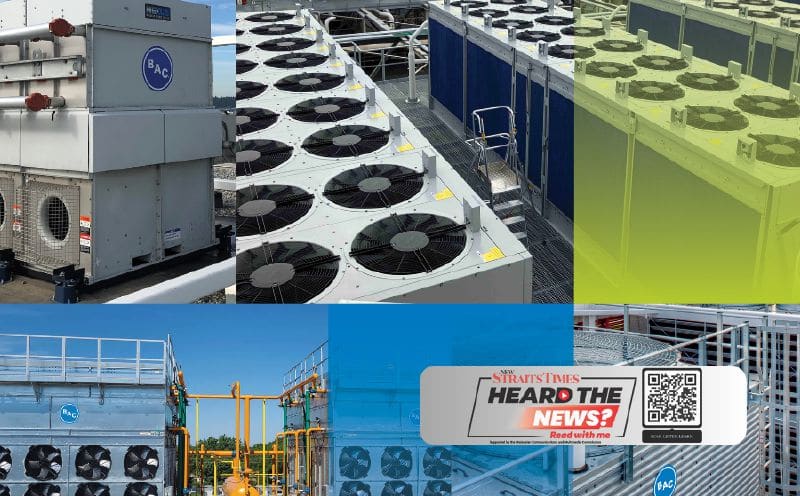
BAC, a United States-based sustainable cooling solutions provider, broke ground on a $150 million manufacturing complex in Nilai, Negri Sembilan, on August 4. The facility will serve as the company's regional engineering headquarters and house the only climate-controlled product development laboratory for Asia-Pacific operations.
The Malaysian Investment Development Authority announced the investment will generate up to 200 high-skilled positions by 2035, spanning engineering, research, and professional roles. The groundbreaking ceremony brought together Mida deputy chief executive officer Zuaida Abdullah, BAC president Don Fetzer, and the firm's global vice-president for Asia-Pacific, Ted Lim.
Two-Phase Build on 7.36 Hectares
The project unfolds across a 7.36-hectare site in two stages. Phase one targets completion by the end of 2027 and includes a 30,000-square-meter manufacturing facility alongside a regional engineering office. Phase two will add a dedicated research and development center and deploy advanced manufacturing technologies, with the core production plant scheduled to reach full capacity by 2030.
BAC's Nilai laboratory will focus on developing and testing cooling technologies tailored to tropical climates and high-density industrial applications. Local engineering teams will use the facility to prototype systems that address the thermal challenges specific to Southeast Asia's equatorial environment, where ambient temperatures and humidity levels demand distinct design parameters.
Strategic Fit with National Industrial Policy
Zuaida Abdullah framed the investment as validation of Malaysia's positioning in high-value manufacturing. The project aligns with objectives outlined in the New Industrial Master Plan 2030 and the National Energy Transition Roadmap, both of which prioritize attracting capital-intensive, technology-led operations that employ skilled labor and support decarbonization goals.
Malaysia's combination of engineering talent, industrial infrastructure, and regulatory frameworks has made it a competitive destination for manufacturing operations serving Asia-Pacific markets. The country's workforce includes a growing pool of graduates in mechanical and electrical engineering, many of whom have experience in precision manufacturing and process optimization.
Cooling Demand in Tropical Markets
Sustainable cooling technology is increasingly critical across Asia-Pacific, where rising temperatures, urbanization, and data center expansion are driving demand for efficient thermal management systems. Cooling accounts for a significant share of energy consumption in commercial buildings and industrial facilities, making efficiency gains a lever for both cost reduction and emissions targets.
BAC's decision to establish regional R&D capacity in Malaysia reflects the need to localize product development for markets where climate conditions differ sharply from temperate zones. Cooling systems designed for North American or European climates often underperform in tropical settings, where year-round heat and humidity stress components and reduce efficiency.
The Nilai facility's testing laboratory will enable iterative design work closer to end markets, shortening development cycles and allowing faster response to customer requirements in sectors such as manufacturing, logistics, and technology infrastructure.
Jobs and Skills Pipeline
The 200-position target includes roles in production engineering, quality assurance, product development, and technical support. Mida emphasized the high-skilled nature of the workforce, noting that the facility will require personnel capable of operating advanced manufacturing equipment and conducting applied research.
Malaysia has invested in technical and vocational education programs to support advanced manufacturing, and partnerships between industry and universities are expanding pathways for graduates into engineering roles. The BAC project is expected to draw on this talent pipeline while also providing on-the-job training in specialized cooling technologies.
Regional Engineering Hub
By concentrating engineering capabilities in Malaysia, BAC is positioning the Nilai site as a hub for Asia-Pacific operations rather than a satellite production line. The regional engineering office will coordinate product development, technical support, and application engineering for customers across Southeast Asia, East Asia, and South Asia.
This model reflects a broader trend among multinational manufacturers establishing centers of excellence in the region, leveraging Malaysia's connectivity, cost structure, and technical workforce to serve diverse markets from a single base. The approach also allows companies to localize supply chains and reduce lead times for customers requiring customized solutions.
The investment underscores Malaysia's role in the region's industrial ecosystem, particularly as governments and companies across Asia prioritize energy efficiency and sustainability in infrastructure and operations.
RELATED STORIES
ASEAN Targets Fourth-Largest Economy Spot as Internal Trade Lags Behind
Priyanka V. Rao · 3 min

Indonesia Car Sales Jump 34% as Electric Vehicles Reshape Southeast Asia's Auto Market
Siti Nuraini · 3 min
Malaysia Reviews Rare Earth Export Restrictions Amid Supply Race
Cheng Wei-Lun · 4 min
Malaysia's Central Bank Chief Cites Four Pillars Behind Economic Stability
Priyanka V. Rao · 5 min
Spot something wrong? Email editor@briefasia.com. We log every correction publicly.