Technology · Dev
Asian Semiconductor Makers Face New Supply Risk as Helium Sourcing Tilts Toward US
Taiwan, South Korea, and Japan have dodged production halts so far, but the geographic pivot in helium procurement is concentrating exposure in a single region
KEY TAKEAWAYS
- ·Semiconductor manufacturers in Taiwan, South Korea, and Japan have shifted helium procurement toward US sources over the past twelve months, concentrating supply exposure in a single country.
- ·Helium is critical for chip fabrication with no substitutes, and fabs typically hold only two to four weeks of inventory due to storage costs and boil-off losses.
- ·While production runs smoothly today, few Asian chipmakers have contingency plans if US export policy shifts or logistics disruptions affect transpacific helium shipments.
A Quiet Shift in Critical Gas Supply
Semiconductor manufacturers in Taiwan, South Korea, and Japan have managed to sidestep widespread helium-related production stoppages in recent months. Yet beneath this operational calm, a structural shift is taking shape: an accelerating dependence on United States helium sources that introduces fresh geographic concentration risk.
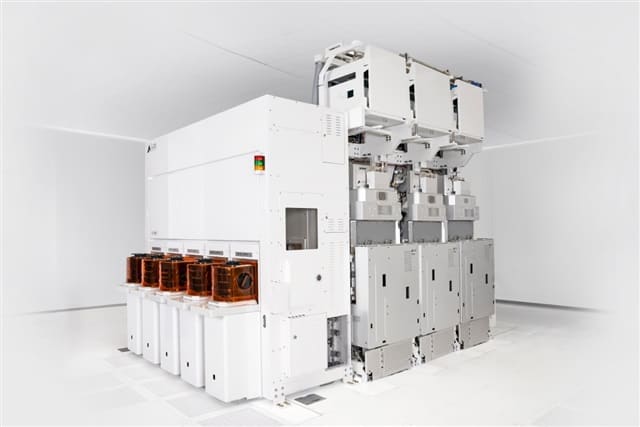
Helium is indispensable in chip fabrication. It cools superconducting magnets in lithography equipment, purges chambers during deposition and etching, and serves as a carrier gas in ion implantation. Without stable helium flows, leading-edge fabs cannot sustain output. The element's scarcity and the capital intensity of extraction infrastructure make supply chains inherently fragile.
US Share Climbing Rapidly
Data gathered from procurement teams at major foundries and memory producers show the US share of helium deliveries to East Asian fabrication facilities has climbed notably over the past twelve months. While exact volumes remain commercially sensitive, industry participants confirm the trend is broad-based across Taiwan Semiconductor Manufacturing Company, Samsung Electronics, SK hynix, and several Japanese integrated device manufacturers.
The pivot reflects two forces. First, geopolitical friction has complicated long-term contracts with suppliers in Qatar, which historically provided roughly a third of global helium exports. Second, new extraction capacity in the US, particularly from Bureau of Land Management reserves and private projects in Wyoming and Texas, has come online at competitive pricing.
Concentration Creates Vulnerability
The irony is sharp. Asian chipmakers diversified away from Middle Eastern sources to reduce exposure to regional instability. In doing so, they have consolidated procurement around a single country whose export policies, infrastructure bottlenecks, and domestic allocation priorities could shift with little warning.
Helium is classified as a strategic resource by the US Department of the Interior. While current policy supports commercial exports, any future administration could prioritize domestic users in aerospace, defense, or medical imaging. Export licensing requirements already exist; tightening them would not require new legislation.
Transportation adds another layer of fragility. Helium moves in cryogenic ISO containers via ocean freight. A single port disruption in the US Gulf Coast or a logistics snarl in transpacific shipping could ripple through Asian fab schedules within weeks. Chipmakers typically hold only two to four weeks of helium inventory on-site because of storage costs and boil-off losses.
No Immediate Crisis, But Planning Gaps
Industry sources emphasize that production lines are running smoothly today. Contracts are being honored, and spot market prices have stabilized after volatility in early 2025. The concern is forward-looking: few Asian semiconductor companies have articulated a Plan B if US supply tightens unexpectedly.
Alternative sources exist in theory. Russia possesses significant helium reserves, but sanctions and payment infrastructure challenges make long-term contracts impractical for most multinational corporations. Qatar is expanding capacity, yet the same geopolitical uncertainties that prompted the initial pivot remain unresolved. Smaller projects in Algeria and Australia are years away from meaningful scale.
What Comes Next
The helium question sits awkwardly in boardrooms. It is too technical for most chief executives to prioritize until a crisis hits, yet too critical to ignore once supply falters. Unlike silicon wafers or photoresist chemicals, helium has no substitute in most semiconductor processes. You either have it or you shut down the tool.
Some procurement officers are quietly exploring multi-year inventory financing arrangements and evaluating on-site liquefaction infrastructure to extend buffer capacity. These measures are expensive and operationally complex, but they reflect growing unease about single-country reliance.
The broader lesson is familiar to anyone who watched the semiconductor industry navigate the past five years: diversification is not a one-time achievement. It is a continuous process, and today's solution can become tomorrow's bottleneck. Asian chipmakers avoided one concentration risk only to walk into another. Recognizing that reality is the first step toward managing it.
RELATED STORIES
Itochu and Taiwan IT Leader Back Taiwanese Chip Firms' Kyushu Push
Cheng Wei-Lun · 3 min
Tokyo Summit Pushes Trilateral Tech Alliance Among Taiwan, Japan, and US
Cheng Wei-Lun · 3 min
Taiwan Indicts Nvidia Manager in Chip-Smuggling Investigation
Cheng Wei-Lun · 4 min
South Korea's Chip Concentration Carries Lower Risk Than Taiwan's, Financial Analysis Shows
Cheng Wei-Lun · 3 min
Spot something wrong? Email editor@briefasia.com. We log every correction publicly.