Finance · Markets
Asian Markets Swing as Fed Rate Standstill Fuels Investor Uncertainty
Regional equities attempt recovery from steep weekly losses while bond yields hit 19-year highs and Fed Chair Kevin Warsh offers little clarity on monetary policy path
KEY TAKEAWAYS
- ·Asian equity markets posted uneven gains Thursday after a Federal Reserve split decision left rates unchanged and bond yields climbed to 5.22 per cent, the highest since 2007.
- ·South Korea's KOSPI faces a 12 per cent weekly decline erasing over US$2 trillion in market value, prompting a government apology over leveraged ETF introduction.
- ·Fed Chair Kevin Warsh pledged to contain inflation but declined to signal next steps, with futures now pricing 60 per cent odds of a September rate hike.
Volatility Grips Regional Bourses
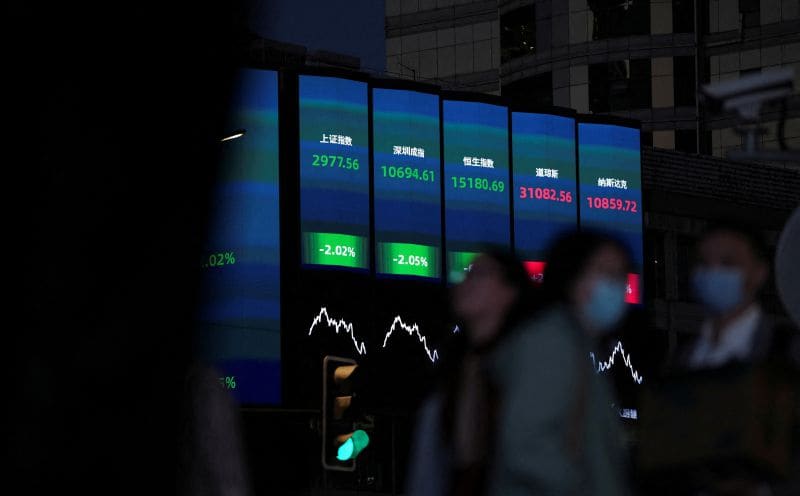
Asian equity markets posted uneven gains Thursday morning, attempting to recover from a bruising week driven by anxiety over artificial intelligence valuations and a Federal Reserve decision that raised more questions than it answered. The US central bank kept interest rates unchanged in a split vote, prompting yields on 30-year Treasury bonds to climb to 5.22 per cent, their highest level since June 2007.
MSCI's broadest index of Asia-Pacific shares outside Japan rose more than 1 per cent in early trading, while Japan's Nikkei advanced 2 per cent. Both benchmarks remain on track for weekly declines of roughly 3 per cent. The dollar weakened as investors parsed the Fed's lack of guidance on future rate moves.
Seoul's KOSPI index jumped 4 per cent in volatile trading but faces a 12 per cent weekly drop, the steepest since the pandemic selloff. The rout erased more than US$2 trillion from South Korea's equity market and prompted Finance Minister Koo Yun-cheol to publicly apologise for the government's introduction of single-stock leveraged exchange-traded funds, which amplified losses.
Chipmakers at the Eye of the Storm
Asian semiconductor stocks have borne the brunt of investor jitters about the sustainability of massive spending on AI infrastructure. The selloff intensified after several US technology giants reported quarterly results that highlighted diverging fortunes in the sector.
Samsung Electronics offered a bright spot, announcing operating profit surged 19-fold to a record in the second quarter. The figure helped stabilise sentiment among investors who had fled Korean tech names earlier in the week.
Microsoft said it expects to continue generating cash through fiscal year 2027, lifting its shares in after-hours trading. In contrast, Meta reported a 91 per cent drop in second-quarter free cash flow, sending its stock lower and fuelling concerns about the pace of returns from AI capital expenditure.
Gina Kim, portfolio manager for emerging market equities at Nordea Asset Management in Singapore, noted that while the fundamental investment case for Asian chipmakers remains sound, the current selling carries signs of panic. "We would ideally need to see some levelling off" in margin balances for retail investors in Taiwan and Korea, Kim said, as a signal that forced liquidation is easing.
Nasdaq futures rose 1.2 per cent in Asian hours, while European futures gained 0.3 per cent.
Fed Chair Declines to Signal Next Steps
Fed Chair Kevin Warsh vowed to bring inflation back to target in a post-meeting press conference but offered no specifics on what steps the central bank would take. Warsh acknowledged that bond yields had risen notably since the Fed's previous policy meeting and welcomed the move, while stopping short of committing to ratify market expectations with actual rate increases.
Fed funds futures now imply a 60 per cent probability the central bank will raise rates at its September meeting, with 33 basis points of tightening priced in by year-end.
Chris Weston, head of research at Pepperstone, described the message as "fairly defiant" on inflation but noted it contained "very little substance on exactly how that would be achieved." Kerry Craig, global market strategist at JP Morgan Asset Management, warned that the gap between the Fed's rhetoric and its actions may challenge market pricing and raise questions about the central bank's credibility.
The divided committee and a bond market testing the Fed's resolve present obstacles for Warsh, who faces pressure to demonstrate policy coherence as inflation remains above target.
Energy Markets React to Geopolitical Flare-Up
Brent crude futures slipped below US$90 per barrel Thursday after surging more than 7 per cent the previous session on escalating Middle East hostilities. Data showed tankers continued to depart the region despite ongoing missile and drone strikes, easing immediate supply fears.
Oil price swings added another layer of complexity for Asian central banks navigating inflation pressures and slowing growth. Several regional policymakers have kept rates elevated to contain price gains, though weaker domestic demand in China and subdued export growth across Southeast Asia have tempered the urgency for further tightening.
The interplay between commodity price volatility, Fed policy uncertainty, and fragile risk appetite in technology stocks is likely to keep Asian markets on edge in the weeks ahead. Investors will scrutinise upcoming corporate earnings and US economic data for clues on whether the AI spending boom can deliver the profit growth needed to justify elevated valuations.
RELATED STORIES
Frencken Stock Falls 7.5% After $100 Million Share Placement
Cheng Wei-Lun · 3 min

Addvalue Technologies Lands $5 Million in Space and Radio Contracts
Tran Quoc Bao · 3 min
Singapore Tightens Stablecoin Rules to Separate Regulated Tokens From Crypto Claims
Priyanka V. Rao · 2 min
Shein Drops 4% in Hong Kong Debut as Tariff Pressure Weighs on Valuation
Priyanka V. Rao · 4 min
Spot something wrong? Email editor@briefasia.com. We log every correction publicly.