Finance · Markets
Asian Markets Rise as Fed Hike Fears Ease, Oil Climbs on Hormuz Impasse
Equity gains track softer US jobs data while Brent crude edges toward $85 as Iran-Oman shipping talks stall on American conditions

KEY TAKEAWAYS
- ·Asian equities posted modest gains following Wall Street's record close, with Japan's Nikkei up 0.6 per cent and broader regional indices climbing as Fed rate hike odds fell to 44 per cent.
- ·Brent crude rose 0.9 per cent to $84.32 per barrel as Iran said Strait of Hormuz shipping lanes would remain closed until the US met additional conditions beyond the Oman deal.
- ·US July CPI data due August 12 will determine whether the Fed proceeds with a September hike, with core inflation forecast at 0.22 per cent monthly and Asian central banks watching closely.
Equity Rally Extends Across Asia
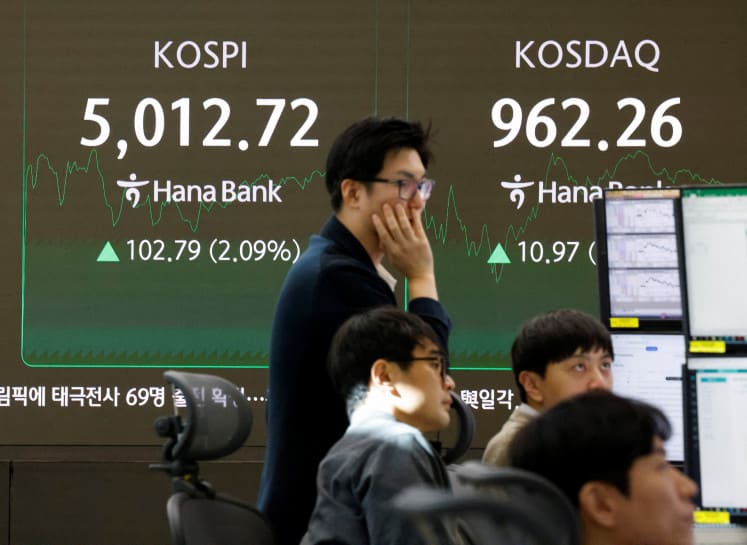
Asian equity markets posted modest gains in Monday trading, tracking Wall Street's record close after softer US employment figures diminished expectations for near-term Federal Reserve tightening. Japan's Nikkei 225 rose 0.6 per cent while South Korea's Kospi added 0.5 per cent. MSCI's broadest index of Asia-Pacific shares outside Japan climbed 0.3 per cent.
The rally came as futures markets scaled back the probability of a September Fed rate increase to approximately 44 per cent, down from 67 per cent a week earlier. Treasury yields had retreated following the jobs report, with the 10-year note settling near 4.673 per cent ahead of $125 billion in new government debt issuance this week.
European markets signaled a more cautious open, with EUROSTOXX 50 and DAX futures both slipping 0.1 per cent. S&P 500 futures edged down marginally after the benchmark index posted record highs on strong corporate earnings.
Oil Advances on Strait Closure
Energy markets moved in the opposite direction as diplomatic efforts around the Strait of Hormuz showed limited progress. Brent crude gained 0.9 per cent to $84.32 per barrel while West Texas Intermediate rose 0.7 per cent to $78.74.
Iran announced that negotiations with Oman over new shipping lanes in the strait had reached final stages but emphasized the waterway would remain effectively closed until Washington satisfied additional conditions. Tanker traffic through the chokepoint, which normally handles roughly one-fifth of global oil supply, has slowed to minimal levels.
The resurgence in fuel costs raises the stakes for the US July consumer price index due August 12. Analysts project a 0.1 per cent rise in headline inflation and 0.2 per cent in core measures, excluding food and energy.
JPMorgan chief US economist Michael Feroli noted his forecast for core CPI of 0.22 per cent would likely fall short of triggering a Fed hike in September, though sustained monthly readings closer to 0.3 per cent could shift the calculus. He flagged particular attention on core goods prices after two consecutive months of declines.
Earnings Season Shows Strength
Corporate results continued to underpin equity confidence, with nearly 90 per cent of S&P 500 companies having reported. According to BofA analysis, earnings per share jumped 30 per cent year-on-year after excluding investment gains at Alphabet and Amazon. The 76 per cent beat rate matched the strongest level since 2021.
Artificial intelligence-related firms led the performance, posting median EPS growth of 28 per cent compared with 12 per cent for non-AI stocks. Consensus forecasts anticipate AI earnings growth moderating to 16 per cent in the next quarter.
The lighter reporting schedule this week includes semiconductor equipment maker Applied Materials, networking infrastructure provider Cisco, and cloud technology firm CoreWeave.
Currency and Commodity Moves
The dollar retreated broadly as yields declined and risk appetite improved. The euro hovered just below a seven-week peak at $1.1557, while the dollar held flat against the yen at 157.85. Currency traders remained alert to potential intervention from Japanese authorities should the yen weaken further.
Gold benefited from lower yields, holding near $4,342 per ounce after climbing more than 7 per cent the previous week. The non-yielding metal typically gains appeal when real interest rates decline.
Asia's Inflation Watch
The interplay between energy costs and monetary policy carries particular weight for Asian economies, many of which remain net importers of oil and gas. Indonesia, Thailand, and the Philippines have kept policy rates elevated to combat imported inflation pressures, while China's modest deflation has allowed the People's Bank to maintain accommodative settings.
Singapore's core inflation ran at 2.1 per cent in June, within the central bank's comfort zone but vulnerable to oil shocks. India's retail inflation accelerated to 5.1 per cent in the same month, edging closer to the Reserve Bank's upper tolerance band.
The upcoming US inflation print will inform whether Asian central banks face renewed pressure from a strengthening dollar and tighter Fed policy, or whether the current pause extends into year-end. Bond markets across the region have priced in modest easing cycles beginning in early 2027, contingent on stable commodity prices and orderly currency adjustments.
With geopolitical risk premiums now embedded in oil futures and corporate earnings holding firm, Asian investors face a narrowing window between supportive liquidity conditions and the inflationary consequences of prolonged supply disruptions. The next fortnight of data releases will clarify which force dominates.
RELATED STORIES

Asian Markets Rise on Fed Rate Pause Bets While Oil Climbs on Strait of Hormuz Closure
Cheng Wei-Lun · 3 min

Asian Tech Stocks Surge as Weak US Jobs Data Dims Rate Hike Outlook
Cheng Wei-Lun · 4 min
Asian Markets Show Tentative Recovery After Tech Selloff
Cheng Wei-Lun · 3 min
Asian Markets Swing as Fed Rate Standstill Fuels Investor Uncertainty
Cheng Wei-Lun · 3 min
Spot something wrong? Email editor@briefasia.com. We log every correction publicly.