Finance · Markets
Asian Markets Show Tentative Recovery After Tech Selloff
Seoul's Kospi stabilizes following volatile week while oil rebounds on geopolitical uncertainty over Strait of Hormuz
KEY TAKEAWAYS
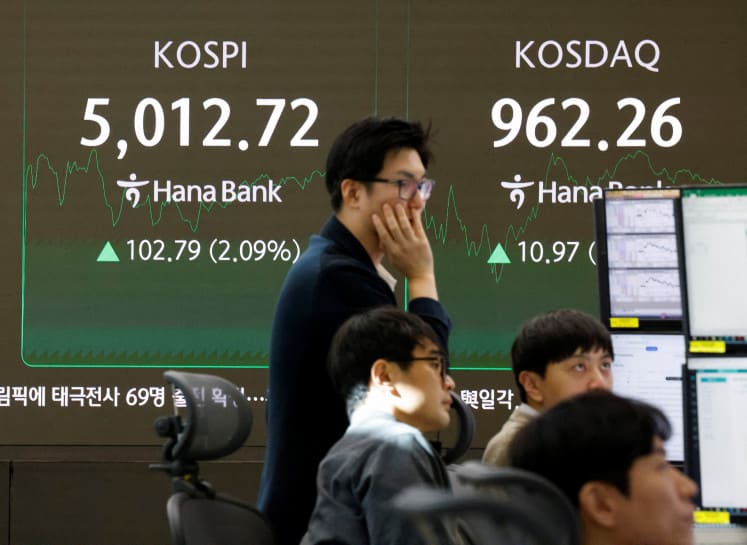
- ·South Korea's Kospi stabilized Tuesday after dropping 17 percent over three sessions last week then surging 18 percent Friday, with chip stocks SK hynix and Samsung remaining volatile.
- ·Oil prices rose roughly one percent following conflicting statements from Washington and Tehran on Strait of Hormuz negotiations, through which one-fifth of global oil and LNG flows.
- ·The Japanese yen weakened after reaching 155.23 per dollar Monday, its strongest level since May, following historic joint intervention by US and Japanese authorities on Friday.
Seoul Finds Its Footing
Asian equity markets displayed cautious stability on Tuesday, with South Korea's Kospi fluctuating through morning trade after one of the most volatile stretches in recent memory. The semiconductor-heavy index, which plunged approximately 17 percent over three sessions last week before surging nearly 18 percent Friday, continued to swing as investors reassessed positions in SK hynix and Samsung, both central to the month-long artificial intelligence sector rout.
Regional performance diverged. Sydney, Singapore, Wellington, Taipei, Jakarta and Manila posted gains, while Tokyo, Hong Kong and Shanghai retreated. The measured trading followed a record close for the Dow in New York, where Amazon's climb past the $3 trillion market capitalization threshold helped ease concerns about the capital intensity of AI infrastructure buildouts.
Earnings and Economic Data in Focus
The stabilization comes as corporate results continue to underpin market sentiment. SPI Asset Management noted that earnings remain supportive and that AI infrastructure investment shows no sign of weakening, despite the recent turbulence. The firm observed that the US economy appears to be cooling at the margins rather than entering sharp contraction, providing a foundation for recovery beyond technical short-covering.
Attention now turns to SpaceX earnings expected later this week and upcoming US employment figures, both of which will inform Federal Reserve deliberations on interest rate policy. The data releases arrive as markets seek clarity on the pace and depth of monetary easing.
Oil Climbs on Hormuz Uncertainty
Crude prices rose roughly one percent Tuesday after tumbling five percent the previous session. The rebound followed contradictory statements from Washington and Tehran regarding negotiations over the Strait of Hormuz, through which approximately one-fifth of global oil and liquefied natural gas flows.
President Trump told reporters Monday that talks were underway and could yield reopening of the waterway as soon as the following day, though he acknowledged that denuclearization discussions would require more time. He described the negotiations as a final opportunity before what he termed potential decapitation strikes.
Iran's foreign ministry denied that direct negotiations with Washington were occurring. However, Tehran confirmed separate discussions with Oman aimed at securing passage through the strait. The conflicting narratives injected fresh uncertainty into energy markets after Trump stepped back from threatened military action he had described as potentially the largest attack since World War II.
Yen Retreats from Intervention Highs
Currency markets saw the Japanese yen weaken against the dollar after Friday's historic joint intervention by Japanese and US authorities. The yen had strengthened from a four-decade low near 163 per dollar to 155.23 on Monday, its strongest level since May, before giving back some gains. Finance ministers from both nations pledged continued support for the currency if needed.
The intervention marked an unusual moment of coordinated action between the two economies, reflecting concern over the yen's prolonged weakness and its implications for regional financial stability.
Volatility Lingers
While Tuesday's trading suggested some return to equilibrium, the past month has underscored persistent fragility in technology valuations and sensitivity to geopolitical risk. Semiconductor stocks remain under pressure as investors weigh the timeline and returns on massive AI infrastructure investments against slowing global growth and tightening monetary conditions.
The interplay between corporate earnings strength, central bank policy direction and geopolitical flashpoints will likely define market direction in the weeks ahead, with Asia's export-oriented economies particularly exposed to shifts in both technology demand and energy costs.
RELATED STORIES

Asian Tech Stocks Surge as Weak US Jobs Data Dims Rate Hike Outlook
Cheng Wei-Lun · 4 min

South Korea's Pension Giant Faces Questions Over Market Timing
Jun-ho Seo · 3 min
Seoul Market Climbs on Tech Rally After US Jobs Data
Cheng Wei-Lun · 3 min

KT&G Posts Fourth Consecutive Quarter of Double-Digit Profit Growth
Cheng Wei-Lun · 3 min
Spot something wrong? Email editor@briefasia.com. We log every correction publicly.