Finance · Markets
Asian Equities Post Sharp Rebound as Intervention Lifts Yen From 40-Year Low
South Korea's Kospi surges over 10 percent in single session while coordinated currency action pulls dollar-yen back from historic trough ahead of BOJ decision

KEY TAKEAWAYS
- ·South Korea's Kospi jumped over 10 percent in a single session after losing 25 percent through July, its worst monthly performance since 1997.
- ·Coordinated currency intervention by Japanese, South Korean, and potentially US authorities drove the yen to 160.55 per dollar from a 40-year low near 164.
- ·Asian chip stocks rallied on renewed confidence in AI demand after Microsoft and Amazon reported strong earnings and forward guidance.
Markets Snap Back After Week of Heavy Losses
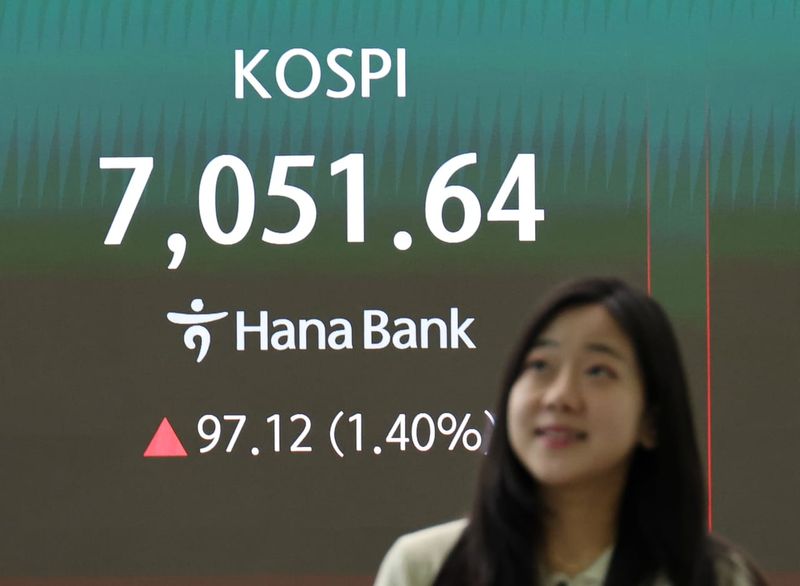
Asian equity markets posted substantial gains on Friday, with South Korea's Kospi jumping more than 10 percent in a single session, reversing steep declines from earlier in the week. Japan's Nikkei advanced 4.5 percent, while the MSCI Asia-Pacific index outside Japan climbed 4.6 percent.
The rally followed strong overnight performances from US technology giants Microsoft and Amazon, whose upbeat earnings and forward guidance eased concerns about excessive capital expenditure in artificial intelligence infrastructure. Chip stocks across the region benefited from the renewed confidence in AI demand sustainability.
Despite the sharp rebound, the Kospi remained on track to lose over 25 percent in July, its largest monthly decline since the 1997 Asian financial crisis. South Korean authorities have moved to restrict leveraged products that contributed to significant losses for retail investors during the recent volatility.
Currency Markets in Focus
The yen strengthened to 160.55 per dollar on Friday after authorities intervened in foreign exchange markets on Thursday, driving the currency away from a 40-year low near 164. The move represented a 2.4 percent surge in a single day, one of the most dramatic interventions in recent memory.
In an unusual development, South Korean foreign exchange authorities also conducted dollar-selling operations on Thursday. Multiple sources indicated that US authorities conducted rate checks, suggesting a coordinated effort among major economies to stabilize currency markets. The timing of the intervention, just ahead of the Bank of Japan's rate decision, appeared designed to discourage further yen weakness regardless of the policy outcome.
Trading desks reported thin liquidity in dollar-yen pairs on Friday, with market participants wary of triggering additional official action. The dollar remained under pressure across major pairs, with the euro holding near a one-month high at $1.1514 and sterling trading at $1.3457.
Bond Markets Signal Inflation Doubts
US Treasury markets showed signs of stress, with long-end yields holding near 19-year highs while short-end yields eased, steepening the yield curve. The divergence reflects growing market skepticism about the Federal Reserve's ability to keep inflation expectations anchored, a concern that has implications for monetary policy across the region.
Chinese equity markets participated in the rally, with the CSI AI index rising more than 7 percent. The Hang Seng Tech index added 0.5 percent. Futures markets pointed to further gains in European and US trading, with Nasdaq futures up 0.6 percent and S&P 500 futures adding 0.3 percent.
Energy Markets Absorb Geopolitical Risk
Oil prices declined despite heightened tensions in the Middle East. Brent crude futures fell 1.2 percent to $88.00 per barrel, while US crude dropped more than 2 percent to $81.82 a barrel. A drone strike on gas vessels in Egypt's Mediterranean port of Damietta raised concerns about potential threats to navigation through the Suez Canal, a critical route for Saudi oil exports.
The muted reaction in energy markets contrasted with the severity of the geopolitical developments, suggesting traders may be factoring in ample global supply or doubting the likelihood of sustained disruption to major export routes.
Volatility Likely to Persist
Market analysts noted that sentiment remains fragile around AI-related investments, which have driven much of Asia's equity performance outside Japan this year. The sharp correction across markets with significant AI exposure suggests investors are reassessing valuations and capital spending trajectories in the sector.
Portfolio managers indicated that while the worst of the volatility may be subsiding, markets remain vulnerable to shifts in earnings guidance and macroeconomic data. The coordination among central banks and finance ministries on currency intervention demonstrates official concern about disorderly market conditions, particularly as the yen's weakness threatens to complicate monetary policy normalization in Japan.
The coming sessions will test whether Friday's rebound represents a sustainable shift in sentiment or a temporary pause in a broader repricing of technology and AI-related assets across Asian markets.
RELATED STORIES

Japan Deploys $96.5 Billion in Currency Intervention to Halt Yen's Slide
Aiko Nakamura · 3 min
Seoul Stocks Drop on Mideast Tensions and Oil Price Surge
Tran Quoc Bao · 3 min

Samsung Electronics Drops 8% as Market Questions Buyback Strategy
Cheng Wei-Lun · 2 min

Samsung Biologics Plans $2.2 Billion Rights Offering to Fund Peptide Acquisition
Jun-ho Seo · 3 min
Spot something wrong? Email editor@briefasia.com. We log every correction publicly.