Sustainability · Energy
Asia Accelerates Electric Vehicle Push as Fuel Import Risks Mount
Vietnam, Indonesia and Thailand roll out EV incentives while Australia weighs refinery revival amid supply disruptions from Gulf conflict
KEY TAKEAWAYS
- ·The Strait of Hormuz remains effectively closed five months after the U.S.-Israel-Iran conflict began, carrying nearly 20 percent of global crude and fuel shipments before the disruption.
- ·Australia is studying a new refinery costing over $12 billion while Fortescue Metals reports $840 million annual savings from electrifying mining operations.
- ·Vietnam, Indonesia and Thailand are rolling out electric vehicle subsidies and charging infrastructure, with Thailand offering up to $3,020 per purchase.
The New Calculus
Energy-importing nations across Asia are recalibrating their fuel strategies after five months of disrupted shipments through the Strait of Hormuz. The waterway, which previously carried nearly one-fifth of global crude, refined products and liquefied natural gas, remains effectively closed following the conflict that began in late February between the United States, Israel and Iran.
Markets initially priced in a swift reopening, but the calculus has shifted. Iran is likely to retain influence over vessel movements through the choke point, forcing countries that rely heavily on imported diesel and gasoline to pursue alternatives rather than wait for a return to pre-conflict conditions.
The pressure is particularly acute for nations with minimal domestic refining capacity. Australia imports roughly 80 percent of its liquid fuel needs after shutting down most of its refineries over the past two decades. The country brought in approximately 861,000 barrels per day of light and middle distillates in 2025, with diesel representing about 60 percent of that volume, according to commodity analysts Kpler.
Two Paths, One Problem
Australia's government recently allocated AU$4 million toward a pre-feasibility study for a new oil refinery in Western Australia, which would serve mining and agricultural operations. The state imports around 200,000 barrels daily despite its vast geography and sparse population of 3 million.
Fertilizer producer Perdaman has championed the project, describing it as essential for fuel security. Yet the economics are daunting. A modern refinery capable of producing mainly diesel and gasoline would need at least 300,000 barrels per day of capacity to remain competitive. A comparable facility under construction in Ghana carries an estimated price tag of $12 billion, a figure that would climb higher in Australia due to labor and land costs. The plant would also require crude offloading infrastructure, export terminals and storage for 90 days of crude imports as a strategic reserve.
Even if built, the facility would not eliminate import dependence but rather shift it from refined products to crude oil. That reality has prompted a parallel conversation about electrification.
Fortescue Metals Group, Australia's third-largest iron ore miner, has moved aggressively into electric mining vehicles and renewable power generation. The company reports a net annual benefit of AU$1.2 billion compared with diesel and natural gas operations, according to clean energy platform Renew Economy.
Australian consumers are following suit. Electric vehicles, plug-in hybrids and mild hybrids accounted for nearly half of all vehicle sales in July for the second consecutive month, data from the Federal Chamber of Automotive Industries shows. Pure electric vehicle sales more than tripled year-on-year in July, while plug-in hybrids surged 157 percent and mild hybrids jumped 206 percent.
Southeast Asia Moves Faster
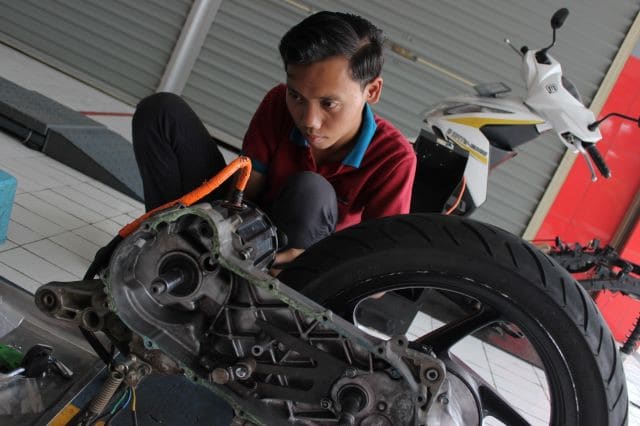
Vietnam has introduced policies to boost domestic production and sales of electric vehicles, with particular emphasis on electric scooters. Motorcycles remain the dominant form of personal transport in the country of 102 million, making the shift to two-wheel electrification a higher priority than passenger cars.
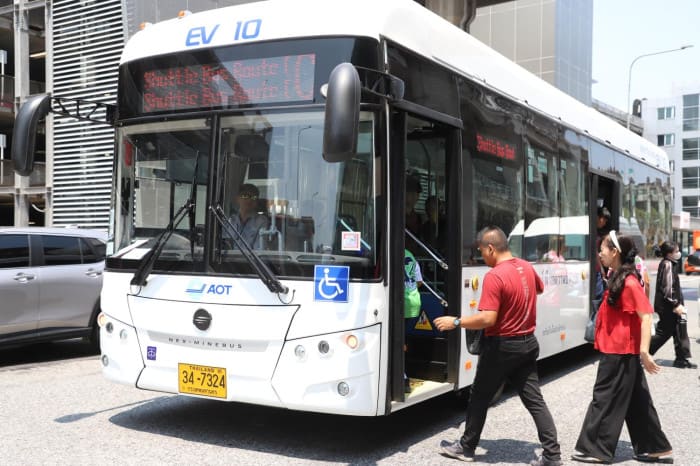
Indonesia is targeting an all-electric bus fleet by 2045 while promoting electric scooters and cars. Thailand offers subsidies of up to 100,000 baht, or roughly $3,020, for electric vehicle purchases and is rapidly expanding public charging networks.
The policy momentum reflects a broader recognition that diversification matters as much as the energy source itself. No single solution will insulate importers from geopolitical shocks, but a mix of domestic refining capacity, renewable electricity generation and electrified transport can reduce exposure.
The Transition Window
For countries that have spent decades relying on Gulf fuel imports, the path forward is neither purely fossil nor purely electric. Australia's debate illustrates the tension: a new refinery offers tangible protection against refined product shortages, but the capital cost is steep and the facility would still depend on crude imports. Electrification promises long-term savings and reduced vulnerability, but the infrastructure buildout takes time and requires upfront investment in charging networks, grid upgrades and vehicle subsidies.
A hybrid approach may prove most viable. Building limited refining capacity to cover critical sectors like mining, agriculture and freight while accelerating electrification in passenger transport and urban logistics would spread risk and buy time for the energy transition to mature.
The Gulf conflict is the second major supply shock in four years, following Russia's 2022 invasion of Ukraine, which sent crude, fuel, LNG and thermal coal prices soaring. Energy importers can no longer treat such disruptions as outliers. The question is not whether to reduce dependence on Middle Eastern oil, but how quickly and at what cost.
Asia's response will shape global energy markets for the next two decades. Countries that move decisively on electrification and renewable generation will gain a competitive edge in industrial costs and energy security. Those that delay risk prolonged exposure to volatile fuel markets and geopolitical uncertainty.
RELATED STORIES

Mongolia Faces Fuel Shortage as Import Dependency Collides With Rising Demand
Priyanka V. Rao · 3 min

India Pours $8.8 Billion Into Deep-Sea Drilling to Shift Away From Middle East Oil
Rajesh K. Iyer · 3 min
Power Rationing Spreads Across Southeast Asia as Strait of Hormuz Crisis Enters Third Month
Priyanka V. Rao · 3 min
Thailand Deploys Emergency Funds to Replace Diesel Buses With EVs
Priyanka V. Rao · 4 min
Spot something wrong? Email editor@briefasia.com. We log every correction publicly.