Technology · Dev
ASE Technology Lifts 2026 Budget to $10.5 Billion on AI Packaging Surge
Taiwan's packaging giant boosts capex 23.5% above original plan as hyperscaler orders strain advanced capacity
KEY TAKEAWAYS
- ·ASE Technology increased its 2026 capital expenditure to $10.5 billion, a 23.5 percent rise from its earlier $8.5 billion plan, with 70 percent directed to advanced packaging capacity.
- ·The company reported second-quarter net income of NT$21.07 billion, up 180 percent year-on-year, and expects packaging revenue to grow 35 percent for the full year.
- ·ASE will begin volume production of chip-on-panel-on-substrate technology in the first quarter of 2027 as it races to meet AI infrastructure demand.
Capital Plan Revised Upward Mid-Year
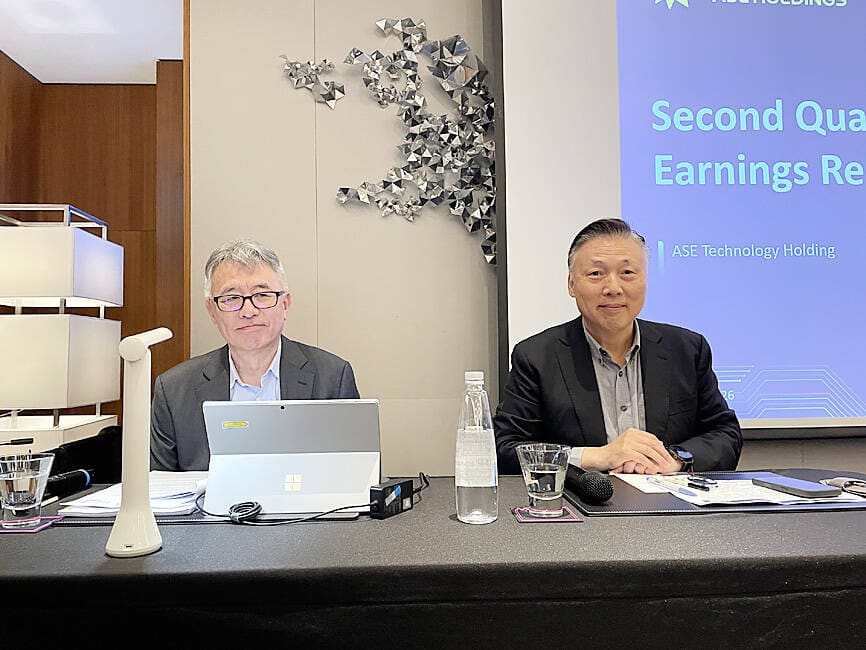
ASE Technology Holding announced it will spend $10.5 billion on capital projects in 2026, a 23.5 percent increase over the $8.5 billion it outlined at the start of the year. The Taiwanese firm, which holds the top global position in chip packaging and testing, attributed the revision to accelerating orders for artificial intelligence hardware.
About 70 percent of the additional outlay will fund new production lines, primarily for what ASE calls leading-edge advanced packaging, or LEAP. The company expects LEAP revenue to surpass $3.5 billion this year, driven by demand from both direct customers and foundry partners that supply chips requiring sophisticated assembly techniques.
CFO Joseph Tung told analysts in Taipei that the spending increase reflects more than a one-year requirement. "We are seeing stronger demand, not just from customers but also our foundry partner, which requires a lot of new investments, not just for this year but also for next year," Tung said.
ASE currently has 13 greenfield facilities and eight brownfield expansions underway. COO Tien Wu noted that execution risk, rather than order volume, is now the binding constraint. "The business demand is not a concern," Wu said. "With AI, the hardware requirement is new, insatiable, more complicated and more complex, so it is a capacity bottleneck for automation and, more importantly, from an innovation perspective."
Capacity Constraints and Technology Choices
ASE continues to anchor its strategy around chip-on-wafer-on-substrate packaging, the dominant architecture developed by Taiwan Semiconductor Manufacturing. Wu said ASE would welcome alternative approaches if they deliver comparable yield and help relieve infrastructure bottlenecks, acknowledging the rising profile of Intel's embedded multi-die interconnect bridge technology.
The company is also accelerating development of next-generation chip-on-panel-on-substrate methods. Wu confirmed that panel-level packaging technology will enter volume production in the first quarter of 2027, a timeline that positions ASE to serve clients seeking cost advantages over wafer-based processes.
Second-Quarter Profit Jumps
ASE reported net income of NT$21.07 billion for the three months ended June, up 180 percent year-on-year and 49 percent sequentially. Earnings per share climbed to NT$4.8 from NT$1.74 in the same quarter of 2025 and NT$3.23 in the prior period.
Packaging and testing service revenue rose 35 percent in the first half compared with the year-earlier period, and the company expects that growth rate to hold through the second half. For all of 2026, ASE anticipates packaging and testing revenue will advance 35 percent.
Third-quarter consolidated revenue is forecast to grow 21 to 22 percent sequentially from the record NT$191.06 billion posted in the second quarter. Gross margin for the packaging and testing segment is projected to reach 30 percent by year-end, up from 28 to 29 percent in the current quarter, as LEAP technology accounts for a larger share of total sales and delivers higher profitability.
Asia's Packaging Race
The capex increase underscores the intensity of competition in Asia's chip assembly sector, where leading players are pouring capital into advanced nodes to meet hyperscaler specifications. ASE's expansion mirrors moves by rivals across the region, all targeting a share of the AI infrastructure build-out that is reshaping semiconductor supply chains.
Taiwan's position as the hub for both wafer fabrication and back-end services gives ASE proximity to TSMC's roadmap and direct access to design wins at major fabless customers. That geographic and technical clustering has allowed the company to ramp LEAP capacity faster than competitors operating in more fragmented ecosystems.
The revised budget signals that ASE sees the current AI wave as a multi-year cycle rather than a transient spike. With 21 projects in flight and another generation of packaging technology entering production early next year, the company is betting that tight integration with foundry partners and a broad technology portfolio will sustain margin expansion even as absolute spending climbs.
RELATED STORIES
Integrated Systems Will Drive Next Wave of AI Growth, Says TSMC
Cheng Wei-Lun · 4 min
Delta Electronics Unveils AI-Powered Dual-Arm Cobot for Server Assembly
Cheng Wei-Lun · 3 min
Taiwan UPS Maker Eyes Record Quarter on Data Center Demand
Cheng Wei-Lun · 3 min
AI Demand Tightens Memory Markets as HBM4 Production Strains Supply
Cheng Wei-Lun · 3 min
Spot something wrong? Email editor@briefasia.com. We log every correction publicly.