Sustainability · Energy
America's Solar Manufacturing Push Threatens to Deepen Global Clean Energy Divide
Trump administration policies favoring domestic production could price out emerging markets from renewable energy transition
KEY TAKEAWAYS
- ·U.S. domestic content rules and tariffs have created an 18% to 25% price premium for solar panels, directly affecting procurement costs in import-dependent markets across Asia and Africa.
- ·Emerging economies that rely on Chinese modules for 80% of supply now face higher equipment costs that threaten the financial viability of renewable projects and delay decarbonization timelines.
- ·Development banks report that rising solar costs are forcing project delays and capacity reductions in lower-income countries, undermining global climate commitments that depend on faster energy transitions in these regions.
Protectionism Meets Climate Policy
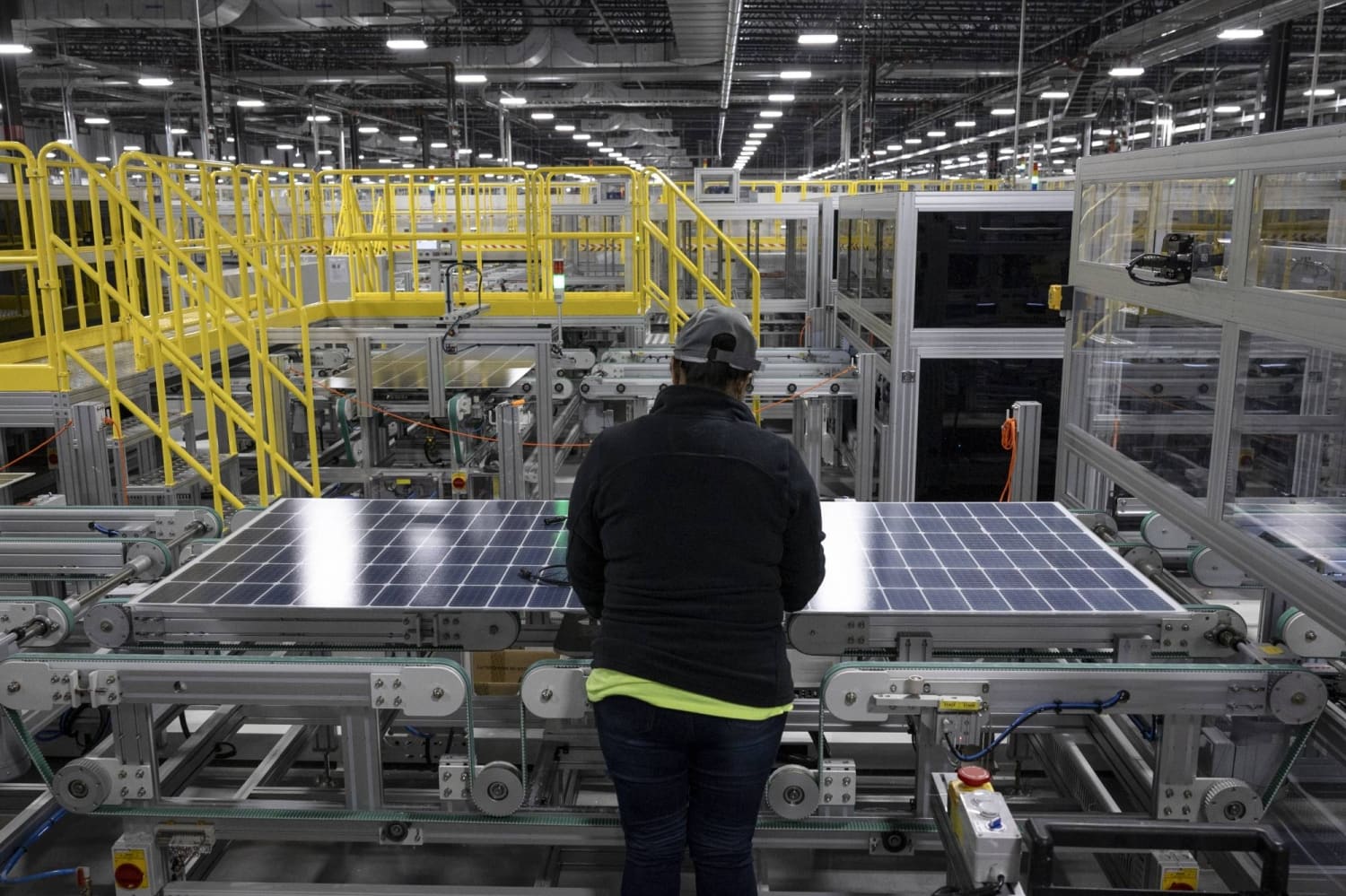
The Trump administration's renewed emphasis on domestic solar panel production is creating an unintended fault line in the global clean energy transition. While tariffs and subsidies aim to rebuild American manufacturing capacity, the policy framework threatens to raise costs for renewable installations in countries that lack domestic production infrastructure.
The White House has maintained import duties on foreign solar modules while expanding tax credits exclusively for panels manufactured on U.S. soil. The approach mirrors earlier trade actions but now operates at significantly larger scale, covering roughly 40% of global solar equipment demand when combined with similar policies in Europe.
For emerging economies across Southeast Asia, South Asia, and sub-Saharan Africa, the implications are immediate. These regions depend heavily on imported solar equipment to meet electrification and decarbonization targets, and most procurement budgets assume access to competitively priced Chinese panels that currently dominate 80% of worldwide supply chains.
The Cost Gap Widens
Solar installations in countries without preferential trade access to American or European manufacturers now face a bifurcated market. Panels meeting new domestic content requirements in the U.S. carry price premiums of 18% to 25% compared to standard Chinese modules, according to industry procurement data.
That gap matters acutely in markets where project economics hinge on razor-thin margins. In Vietnam, utility-scale solar developers operate on levelized costs barely competitive with coal-fired generation. An 18% increase in module expense can flip a bankable project into one that struggles to secure financing.
The Philippines faces similar calculations. Manila has set a target of 35% renewable generation by 2030, requiring roughly 15 gigawatts of new solar capacity. Nearly all equipment for those projects would be imported, and any sustained price elevation directly threatens deployment timelines.
India presents a more complex case. New Delhi has its own domestic content requirements and manufacturing ambitions, but current local production covers only a fraction of installation demand. The country still imports significant volumes, and global supply tightness driven by protectionist policies elsewhere feeds directly into higher landed costs for Indian developers.
Supply Chain Realignment
Manufacturers are responding by redirecting investment. Several Chinese solar producers have announced plans to open facilities in the U.S. and European Union to access subsidy programs and circumvent tariffs. That shift represents a net addition to global capacity but does little to ease access constraints for buyers in non-aligned markets.
Southeast Asian countries that served as transshipment hubs during earlier rounds of trade restrictions now find themselves squeezed. Thailand and Malaysia had attracted solar assembly operations as companies sought to avoid direct China-origin tariffs. New rules focused on wafer and cell production, rather than just final assembly, have reduced the effectiveness of those workarounds.
The result is a fragmented supply landscape. Developers in wealthy markets with strong domestic manufacturing policies can access subsidized equipment. Those in countries without such frameworks face higher prices and, in some cases, longer lead times as manufacturers prioritize orders that qualify for incentive payments.
Climate Targets at Risk
The dynamic poses a direct challenge to international climate commitments. Emerging economies account for the majority of projected emissions growth over the next two decades, making their energy transitions critical to global decarbonization. Slower or more expensive renewable deployments in these markets undercut the collective effort to limit warming.
Multilateral institutions have begun flagging the tension. Development banks that finance renewable projects in lower-income countries report that rising equipment costs are eroding the financial viability of pipelines they had considered solid. Some projects are being delayed or redesigned with smaller capacity to fit constrained budgets.
Trade policy and climate policy, long treated as separate domains, are now colliding in ways that require coordinated responses. The question is whether governments prioritizing industrial policy will adjust mechanisms to avoid penalizing countries that lack domestic manufacturing bases, or whether the green divide will continue to widen as supply chains realign around protectionist blocs.
RELATED STORIES
Washington Moves to Impose 15% Tariff on Polysilicon Derivatives
Cheng Wei-Lun · 3 min
Indonesia's 100 GW Solar Target Faces Industrial Capacity Constraints
Siti Nuraini · 3 min

Seoul Plans Cash Payments for Rooftop Solar as Chip Factories Drive Power Crunch
Cheng Wei-Lun · 5 min
TNB's UK Renewable Portfolio Reaches 908MW Across 94 Projects
Priyanka V. Rao · 4 min
Spot something wrong? Email editor@briefasia.com. We log every correction publicly.