Technology · Dev
Amazon Raises 2026 Capital Spending to $220 Billion on Memory Costs
E-commerce giant cites single input cost as driver behind $20 billion increase in infrastructure investment

KEY TAKEAWAYS
- ·Amazon increased its 2026 capital expenditure budget to $220 billion, a $20 billion rise attributed entirely to memory pricing pressures.
- ·The adjustment highlights how HBM and DRAM costs are reshaping infrastructure spending across hyperscale cloud providers as AI workloads scale.
- ·Asia's memory supply chain, dominated by Samsung, SK hynix, and Micron, stands to benefit from sustained order visibility and pricing power in high-performance segments.
Spending Surge Tied to Component Prices
Amazon has lifted its 2026 capital expenditure budget to $220 billion, marking a roughly $20 billion increase over prior projections. The company attributes the entire adjustment to a single factor: memory pricing.
The revision underscores how component costs are reshaping infrastructure spending across hyperscale cloud providers. Memory, which includes DRAM for servers and high-bandwidth memory (HBM) for AI accelerators, has become a swing variable in data center economics as training and inference workloads scale.
Amazon's disclosure offers a rare glimpse into how input-cost volatility flows through to capex planning. The company did not break out whether the pressure stems from DRAM for traditional compute or specialized memory for machine learning clusters, but both markets have tightened over the past year.
Asia Supply Chain in Focus
The memory market is dominated by three Asian manufacturers: Samsung Electronics and SK hynix in South Korea, and Micron Technology with fabs in Taiwan, Japan, and Singapore. Together they control over 95% of global DRAM production and nearly all HBM supply.
Pricing dynamics have shifted as AI infrastructure demand collides with constrained leading-edge capacity. HBM3E, the latest generation used in Nvidia's H100 and H200 GPUs, commands premiums several times higher than commodity server DRAM. SK hynix and Samsung have both reported HBM shipments tripling year-on-year, yet supply remains tight.
Amazon operates its own custom chip roadmap through its Annapurna Labs division, designing Graviton CPUs and Trainium AI accelerators. Both require substantial memory subsystems. The company has not disclosed whether it sources HBM directly or relies on GPU vendors, but the spending increase suggests exposure to the high end of the memory stack.
China's CXMT, a DRAM startup backed by Hefei government capital, has also entered volume production of DDR4 and early DDR5 modules, though its technology remains multiple generations behind incumbents. Western export controls limit its access to advanced lithography equipment, constraining its ability to compete in HBM or cutting-edge server DRAM.
Capex Arms Race Among Cloud Giants
Amazon's revised figure places its 2026 infrastructure spending above most sovereign infrastructure budgets. The company has not itemized the allocation, but analysts expect the majority to fund data center construction, power infrastructure, networking gear, and server deployments across North America, Europe, and Asia-Pacific.
Microsoft and Google have signaled similar spending trajectories, each projecting capex north of $80 billion for their fiscal years. The three companies collectively account for a substantial share of global semiconductor demand, particularly in memory, custom silicon, and optical networking components.
The memory-driven adjustment also highlights a broader challenge: hyperscalers are increasingly price-takers in component markets where supply is concentrated and lead times stretch beyond a year. Unlike prior cycles where negotiating leverage and volume discounts provided cost predictability, today's AI-driven demand has inverted the dynamic.
Implications for Memory Makers
For Samsung, SK hynix, and Micron, Amazon's spending increase translates into sustained order visibility. All three have announced multibillion-dollar fab expansions targeting HBM and next-generation DRAM nodes. SK hynix is constructing a new fab cluster in Yongin, South Korea, dedicated to advanced packaging for HBM4. Micron is ramping production in Hiroshima, Japan, with government subsidies covering a portion of the investment.
The pricing environment also benefits memory substrate suppliers, assembly houses, and testing providers across Taiwan, South Korea, and Malaysia. Companies such as Unimicron, Ibiden, and ASE Technology have flagged advanced packaging as a growth driver, with HBM modules requiring through-silicon vias, microbumps, and interposer layers that command higher margins than legacy products.
Amazon's disclosure arrives as the memory industry enters a period of bifurcation: commodity DRAM for PCs and smartphones faces cyclical oversupply, while high-performance memory for AI and data centers operates in a structurally tight market. The divergence is shaping where capital flows and which fabs receive priority for scarce equipment from ASML, Applied Materials, and Tokyo Electron.
What Comes Next
The $220 billion figure is not final. Amazon has revised capex guidance multiple times in prior years as project timelines shift and component availability changes. The company's reliance on memory pricing as the sole explanation for the increase suggests vulnerability to further adjustments if HBM or DRAM costs continue climbing.
Investors and supply chain partners will watch whether competitors follow suit. If Microsoft, Google, or Oracle issue similar revisions, it would confirm that memory pricing is a sector-wide pressure rather than an Amazon-specific procurement challenge.
For Asia's memory ecosystem, the trajectory is clear: hyperscale demand is no longer a tailwind but the primary demand driver, and pricing power has shifted upstream. How long that dynamic persists depends on when new capacity comes online and whether AI workload growth decelerates. Neither looks imminent.
RELATED STORIES
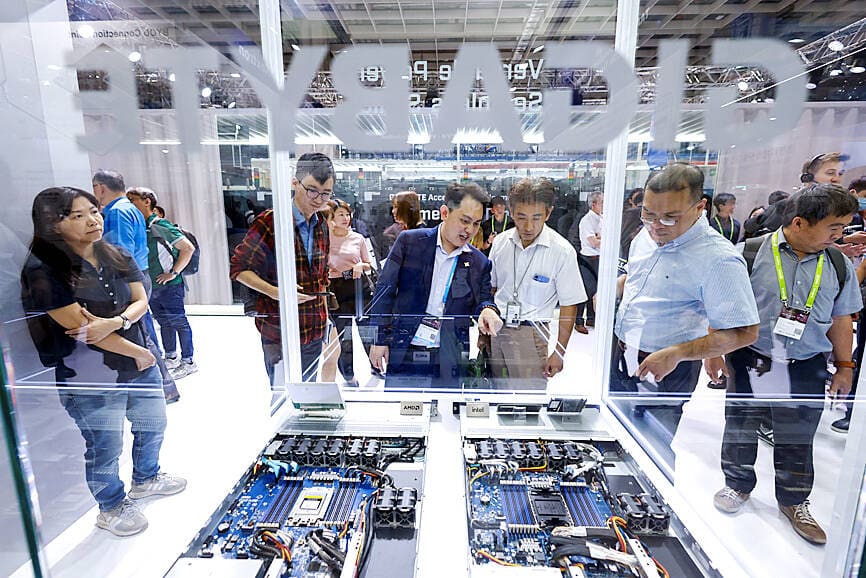
AI Server Shipments Set to Reach 2.8 Million Units This Year
Cheng Wei-Lun · 3 min

Asia's Memory Makers Shift Focus as DRAM Margins Challenge HBM Dominance
Cheng Wei-Lun · 4 min
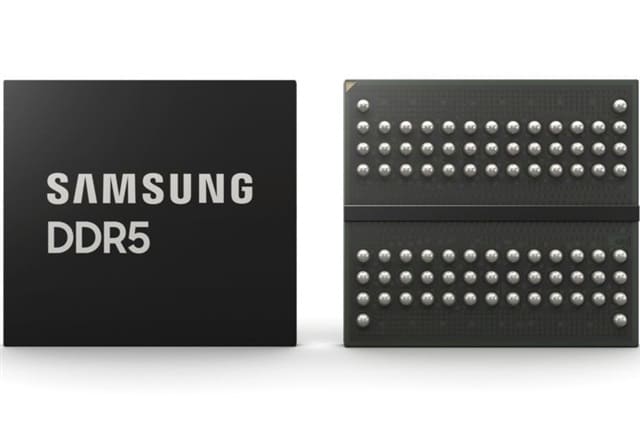
Samsung and SK Hynix Shift Capacity to DDR5 as Profitability Rivals HBM
Cheng Wei-Lun · 3 min
Optical Networking Emerges as New Bottleneck in AI Infrastructure Race
Cheng Wei-Lun · 4 min
Spot something wrong? Email editor@briefasia.com. We log every correction publicly.