Technology · AI
AI Server Shipments Set to Reach 2.8 Million Units This Year
Cloud providers are accelerating infrastructure spending to nearly $887 billion, driving a 31 percent surge in global AI server demand as rack-scale systems and domestic Chinese solutions gain traction.
KEY TAKEAWAYS
- ·Global AI server shipments are forecast to reach 2.8 million units in 2026, up 31 percent year-on-year, driven by nine major cloud providers spending approximately $886.7 billion on infrastructure.
- ·North American cloud providers account for nearly 90 percent of total capital expenditure, focusing on GPU clusters and liquid-cooling infrastructure for generative AI workloads.
- ·Chinese cloud service providers are increasing spending by over 80 percent this year, adopting domestic AI solutions to support large language model development and entering a new investment cycle.
Cloud Giants Fuel AI Infrastructure Boom
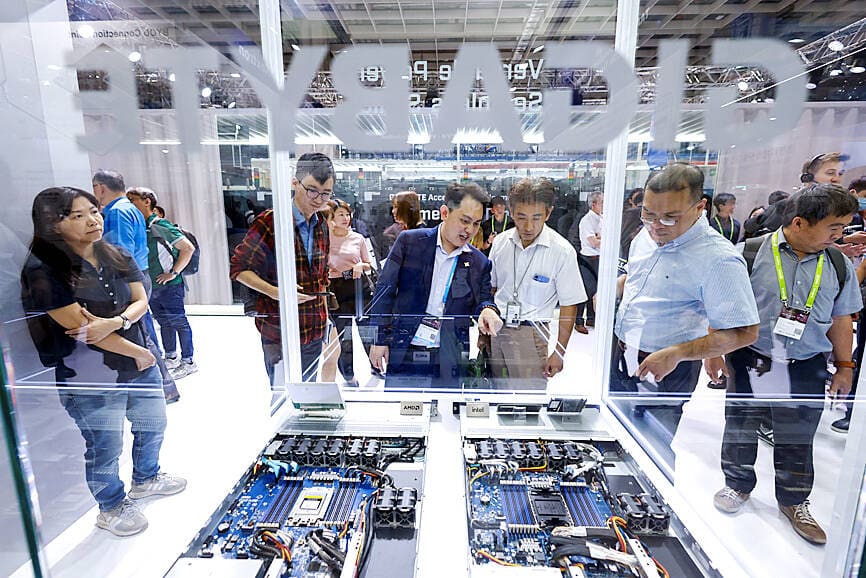
Global AI server shipments are on track to reach nearly 2.8 million units this year, marking a 31 percent increase over 2025, according to TrendForce. The revised forecast, up from the research firm's January prediction of 28 percent growth, reflects accelerating investment by cloud service providers in AI infrastructure and rising demand for rack-scale server configurations.
Nine major cloud service providers are expected to collectively spend approximately $886.7 billion on capital expenditures this year, a 90 percent jump from 2025. The group includes Google, Amazon, Meta, Microsoft, Oracle, ByteDance, Tencent, Alibaba, and Baidu. Their spending priorities center on rack-scale AI server systems built around Nvidia's GB series and Vera Rubin platforms, alongside next-generation application-specific integrated circuit architectures.
North American Providers Dominate Spending
The five North American cloud providers account for nearly 90 percent of total capital expenditure among the nine companies. Their investments are concentrated in AI data centers, graphics processing unit clusters, and liquid-cooling infrastructure designed to handle the computational demands of generative AI and large language model training.
This geographic concentration underscores the region's continued leadership in AI infrastructure deployment. The hyperscalers are expanding capacity not only to support their own AI product development but also to meet enterprise demand for AI-as-a-service offerings. The shift toward rack-scale systems reflects the need for higher density configurations as model sizes and training workloads continue to grow.
Chinese Ecosystem Enters New Investment Cycle
Chinese cloud service providers are expected to increase combined capital expenditure by more than 80 percent this year. The surge comes as the country's AI ecosystem enters a fresh investment cycle, with domestic providers prioritizing locally developed AI solutions to support large language model development.
The adoption of domestic AI hardware and software platforms addresses both strategic autonomy goals and growing demand from Chinese enterprises building AI capabilities. This trend is contributing materially to the global AI server shipment forecast, as Chinese providers deploy infrastructure at scale to support their expanding AI services.
Beyond GPUs
Looking ahead to 2027, combined capital expenditure by the nine cloud providers is forecast to reach approximately $1.3 trillion, a nearly 50 percent increase year-on-year. TrendForce attributes the continued growth to emerging demand drivers including AI inference workloads, agentic AI applications, in-house chip development, and new model architectures.
The investment wave is expected to extend beyond GPU procurement to encompass upgrades across the entire infrastructure stack. Areas seeing increased attention include advanced packaging technologies, high-speed interconnects, power distribution systems, and specialized memory configurations. Liquid cooling infrastructure is also seeing heightened investment as power density in AI data centers continues to climb.
What This Means for Asia
The forecast carries significant implications for Asia's technology supply chain. Taiwan-based server manufacturers and component suppliers stand to benefit from the infrastructure build-out, particularly as rack-scale systems require more sophisticated integration and thermal management solutions.
The revised shipment forecast also highlights the divergence in regional AI strategies. While North American providers focus on scaled deployment of cutting-edge platforms, Chinese providers are balancing performance requirements with supply chain localization. This creates distinct demand profiles that Asian suppliers must navigate as they allocate production capacity and R&D resources.
The data center infrastructure boom is reshaping capital allocation across the technology sector. For investors and executives tracking Asia's semiconductor and hardware industries, the 2027 spending forecast of $1.3 trillion represents a structural shift rather than a cyclical uptick. The question is no longer whether AI infrastructure will scale, but which technologies and suppliers will capture the most value as the buildout accelerates.
RELATED STORIES

Xiaomi Unveils 3nm Mobile Processor to Challenge Qualcomm and MediaTek
Cheng Wei-Lun · 3 min
Taiwan Indicts Nvidia Manager in Chip-Smuggling Investigation
Cheng Wei-Lun · 4 min

MediaTek Executive Projects Million-GPU Clusters as Mid-Tier by 2030
Cheng Wei-Lun · 3 min
Lithuania's Laser Industry Powers Taiwan's Chip Manufacturing Edge
Cheng Wei-Lun · 2 min
Spot something wrong? Email editor@briefasia.com. We log every correction publicly.