Technology · Dev
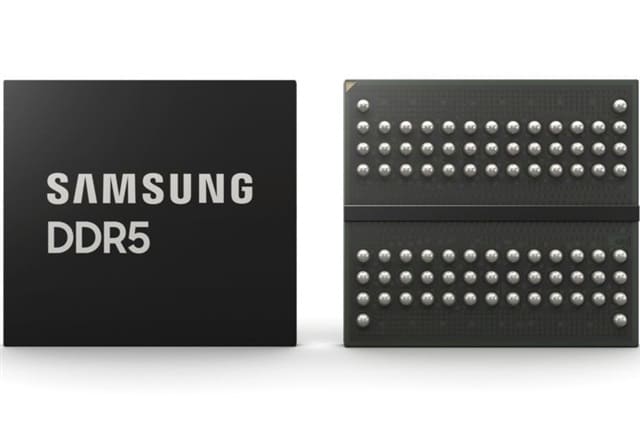
Samsung and SK Hynix Shift Capacity to DDR5 as Profitability Rivals HBM
South Korea's memory giants are diverting flexible production lines toward conventional server memory amid margin convergence, while keeping AI-focused HBM commitments intact.
KEY TAKEAWAYS
- ·Samsung Electronics and SK Hynix are directing flexible DRAM production capacity toward server DDR5 as gross margins on conventional memory approach those of high-bandwidth memory.
- ·Both manufacturers are preserving existing HBM supply agreements with AI accelerator customers, but incremental capacity is now favoring DDR5 due to margin convergence and faster time-to-revenue.
- ·Increased DDR5 availability may ease data center supply constraints through late 2026, while raising questions about the durability of HBM's profitability premium if margin parity persists.
Margin Parity Reshapes Production Strategy
Samsung Electronics and SK Hynix are reallocating flexible DRAM fabrication capacity toward server DDR5 and other conventional memory products, according to industry sources. The shift comes as profitability on standard memory approaches levels previously exclusive to high-bandwidth memory (HBM), the specialized chips powering AI accelerators.
Both South Korean manufacturers are preserving existing HBM supply agreements with hyperscale customers, but incremental or adaptable production lines are now being steered toward DDR5 server modules. The move reflects a broader recalibration in memory economics: where HBM once commanded outsized margins due to technical complexity and constrained supply, conventional DRAM pricing has tightened enough to make DDR5 an attractive alternative for capacity allocation.
DDR5 Demand Meets Supply Discipline
Server DDR5, the fifth-generation double data rate synchronous dynamic random-access memory, has seen sustained demand from cloud providers upgrading data center infrastructure. Adoption accelerated through late 2025 and into 2026 as enterprises replaced DDR4 modules to support higher core-count processors and memory-intensive workloads.
At the same time, memory makers have exercised supply discipline following the cyclical downturn of 2023. Capital expenditure restraint kept new capacity additions modest, allowing pricing to recover faster than in previous cycles. By mid-2026, contract prices for server DDR5 had climbed to levels that yield gross margins within striking distance of HBM3, according to semiconductor analysts.
Samsung and SK Hynix both operate flexible fabrication lines capable of switching between product types with lead times measured in weeks rather than quarters. These lines, originally intended as swing capacity for whichever segment offered the highest return, are now tilting toward DDR5 as the margin gap narrows.
HBM Commitments Remain Locked
The reallocation does not signal a retreat from HBM. Samsung has multi-year supply agreements with Nvidia, AMD, and other AI accelerator designers, while SK Hynix holds a dominant position in HBM3E, the latest iteration shipping in volume. Those commitments are contractually binding and represent the highest-value segment of the memory portfolio.
What has changed is the calculus for incremental capacity. When HBM margins were double or triple those of conventional DRAM, every available wafer start flowed toward high-bandwidth products. Now, with DDR5 profitability rising and HBM capacity largely spoken for, flexible lines find better near-term returns in server memory.
The shift also reflects yield and complexity considerations. HBM production involves through-silicon vias, microbump interconnects, and multi-die stacking, processes that carry higher risk and longer qualification cycles. DDR5, while more advanced than DDR4, uses established packaging and testing flows that allow faster time-to-revenue.
Implications for Data Center Supply Chains
Data center operators stand to benefit from increased DDR5 availability. Shortages in early 2025 pushed lead times out to 16 weeks for certain high-capacity modules, constraining server deployments. Additional supply from Samsung and SK Hynix could ease bottlenecks and stabilize pricing through the second half of 2026.
For Micron Technology, the third major DRAM supplier, the dynamics are similar. The U.S.-based manufacturer has also emphasized server DDR5 in recent earnings commentary, citing robust demand from enterprise and cloud customers. Micron's production mix favors conventional DRAM over HBM, giving it a structural advantage if margin parity persists.
The convergence in profitability also raises questions about the durability of HBM's premium. If memory makers can achieve comparable returns on less complex products, incentives to expand HBM capacity may weaken unless AI accelerator demand continues to grow at current rates. That scenario would place pressure on Nvidia and AMD to secure supply through longer-term agreements or equity stakes in memory fabs.
Broader Memory Market Dynamics
The shift toward DDR5 occurs against a backdrop of cyclical uncertainty. Industry observers have warned that aggressive capacity expansion planned for 2027 and 2028 could flip the market from shortage to oversupply, particularly if macroeconomic conditions soften or AI infrastructure spending slows.
Samsung and SK Hynix are navigating that risk by keeping flexible capacity flexible. Rather than locking in multi-year product roadmaps, both companies are optimizing quarter-by-quarter based on margin signals. That approach allows rapid pivots if HBM pricing strengthens or DDR5 demand falters.
For now, the message from Seoul is clear: conventional memory is no longer the low-margin fallback it once was. As server architectures evolve and supply discipline holds, DDR5 has reclaimed a place at the center of memory strategy, even as the AI boom continues to drive headlines around HBM.
RELATED STORIES
Memory Makers Gain Leverage as AI Server Costs Climb
Cheng Wei-Lun · 3 min
SK Hynix May Fast-Track Gwangju Fab Investment Alongside Yongin Expansion
Jun-ho Seo · 3 min

SK Hynix Eyes Deeper Collaboration With Japan's Chip Sector
Cheng Wei-Lun · 4 min

Samsung's Device Division Reports First Quarterly Loss as Chip Costs Surge
Cheng Wei-Lun · 3 min
Spot something wrong? Email editor@briefasia.com. We log every correction publicly.