Technology · Dev
Alibaba Advances In-House Chip Push with Second-Generation T-Head Production Timeline
The e-commerce giant aims to tape out its next-generation processor in H2 2026 as China's tech leaders deepen semiconductor self-reliance.
KEY TAKEAWAYS
- ·Alibaba expects to tape out and begin production of its second-generation T-Head chip in the second half of 2026, targeting large-model AI training workloads.
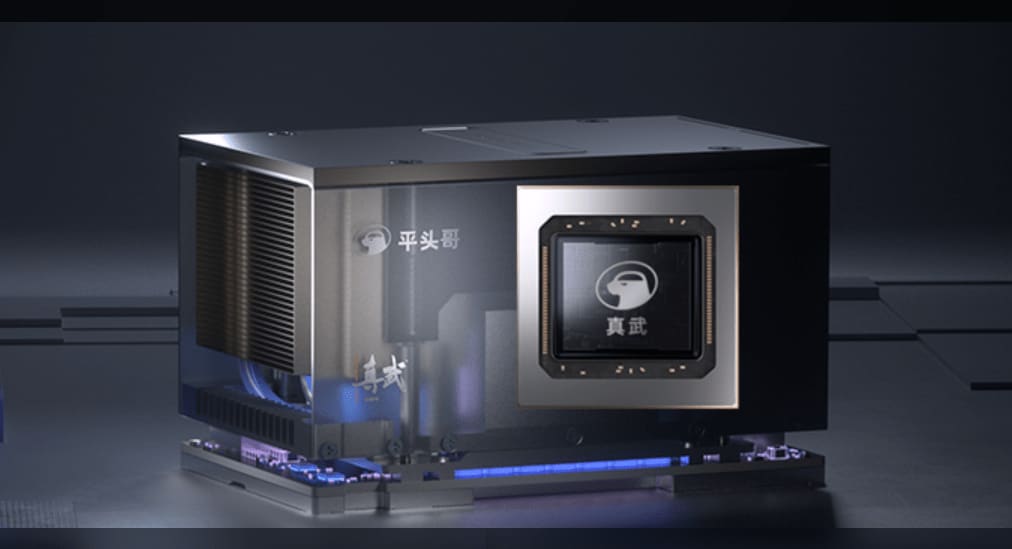
- ·The Zhenwu M890 chip has entered scaled sales and served more than 650 customers by early August 2026, while T-Head has built a portfolio spanning GPUs, CPUs, and networking chips.
- ·The timeline reflects China's accelerating push for semiconductor self-reliance amid U.S. export controls, with Alibaba competing against Huawei, Baidu, and domestic startups in the AI chip market.
Accelerating Silicon Ambitions
Alibaba is doubling down on its semiconductor strategy. CEO Eddie Wu announced on August 20 that the company expects to tape out and begin production of its second-generation T-Head processor during the second half of this year. The move signals Alibaba's determination to reduce dependence on foreign chip suppliers amid ongoing technology export restrictions.
According to Alibaba, the upcoming chip will deliver enhanced computing performance and greater interconnect bandwidth compared to its predecessor. The company believes the new processor can handle large-model training workloads, a critical capability as artificial intelligence applications proliferate across enterprise and cloud environments.
T-Head, Alibaba's semiconductor subsidiary, has already shipped its first-generation designs into commercial deployments. The Zhenwu M890 chip, which powers Alibaba Cloud supernodes, has entered scaled sales. By early August, the Zhenwu product line had accumulated more than 650 customers, according to the company.
Building a Complete Stack
Alibaba's chip ambitions extend well beyond a single processor line. T-Head has developed a full-stack semiconductor portfolio that spans graphics processing units, central processing units, and networking chips. This breadth positions Alibaba to design and optimize entire system architectures rather than relying on third-party components stitched together.
The strategic rationale is clear. Vertical integration in silicon gives Alibaba tighter control over performance, cost, and supply chain risk. For a cloud infrastructure provider competing with AWS, Microsoft Azure, and Google Cloud across Asia, custom chips offer differentiation that generic merchant silicon cannot deliver.
China's broader semiconductor push has accelerated since 2018, when Washington began restricting access to advanced chipmaking equipment and designs. Alibaba, Baidu, and Tencent have all ramped up in-house chip development programs. Unlike memory or analog chips, however, high-performance compute processors demand bleeding-edge process nodes and complex design expertise, areas where Chinese firms still lag behind TSMC, Samsung, and Intel.
Market Context and Challenges
Alibaba's chip progress comes as Chinese tech companies face a two-front challenge: geopolitical supply constraints and intensifying domestic competition. The U.S. has tightened export controls on advanced AI chips from Nvidia and AMD, forcing Chinese cloud providers to either stockpile older-generation hardware or develop alternatives.
Meanwhile, Huawei's HiSilicon division has re-emerged with the Ascend AI chip family, and startups like Biren Technology and Moore Threads are vying for market share. Alibaba must prove that T-Head can compete on performance per watt and total cost of ownership, not just offer a politically safer alternative.
The tape-out milestone is significant but not definitive. Tape-out marks the point when a chip design is finalized and sent to a foundry for manufacturing. Yield rates, thermal performance, and real-world software compatibility remain unknown until production ramps. Alibaba has not disclosed which foundry will manufacture the second-generation T-Head chip, though SMIC and other domestic fabs are likely candidates given current trade dynamics.
The 650-customer figure for the Zhenwu line suggests Alibaba has found early adopters, likely among its own cloud tenants and affiliated enterprises. Broader adoption will hinge on whether independent software vendors optimize their code for T-Head architectures and whether Alibaba can offer compelling economics versus established x86 and Arm ecosystems.
Regional Implications
Alibaba's chip roadmap is part of a larger pattern reshaping Asia's technology landscape. Japan is subsidizing domestic foundry capacity through partnerships with TSMC and Rapidus. South Korea is pouring investment into next-generation memory and logic. India is launching incentive schemes to attract semiconductor assembly and test facilities.
China's approach has been the most aggressive, combining state-directed capital, talent recruitment, and policy support. Alibaba benefits from this ecosystem but also faces the burden of expectation: Beijing wants national champions that can close the gap with Silicon Valley, not just incremental improvements.
For multinational enterprises operating in Asia, Alibaba's chip strategy introduces both opportunity and complexity. Cloud customers may gain access to lower-cost compute resources optimized for specific AI workloads. But they must also weigh vendor lock-in risks and the potential for supply disruptions if geopolitical tensions escalate further.
The second-generation T-Head chip will be a bellwether. If Alibaba can deliver on its performance claims and scale production, it validates the viability of China's semiconductor self-sufficiency drive. If yields stumble or software ecosystems fail to materialize, the gap between ambition and execution will widen.
RELATED STORIES
Nvidia Pushes Back on Reports of China-Specific AI Chip Launch
Cheng Wei-Lun · 3 min
Alibaba Profit Drops 76% as AI Infrastructure Push Drives Capex to $9.3 Billion
Cheng Wei-Lun · 4 min

Apple Trains Proprietary AI Model for China Market With Alibaba Support
Cheng Wei-Lun · 3 min
Chinese Humanoid Robots Now Jump Higher and Run Faster Than Olympic Athletes
Cheng Wei-Lun · 4 min
Spot something wrong? Email editor@briefasia.com. We log every correction publicly.