Technology · Dev
Xi'an Eswin Breaks 1 Million Monthly 12-Inch Wafer Mark
Chinese silicon wafer manufacturer reaches production milestone and eyes 1.8 million unit monthly capacity as domestic semiconductor push accelerates
KEY TAKEAWAYS
- ·Xi'an Eswin Material Technology reported monthly production and sales of 12-inch electronic-grade silicon wafers have both exceeded 1 million units, with a target of 1.8 million monthly capacity.
- ·The milestone reflects China's ongoing effort to scale domestic semiconductor materials supply amid trade restrictions and reliance on foreign wafer imports from Japan, Taiwan, and South Korea.
- ·Sustained growth will depend on securing stable fab customer orders, maintaining quality standards, and navigating cyclical demand in memory and logic chip markets across the region.
Production Milestone Signals Scale-Up
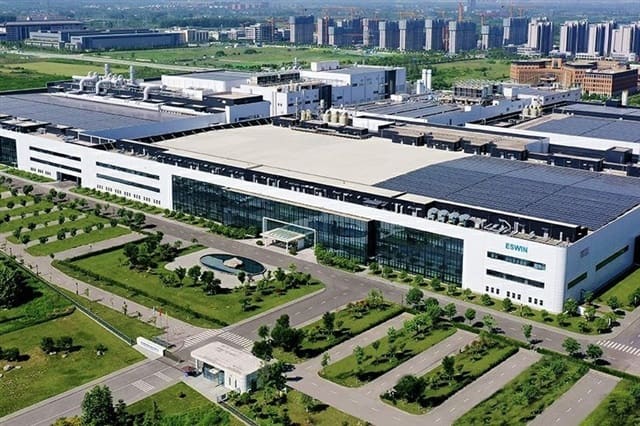
Xi'an Eswin Material Technology has pushed both production and sales of 12-inch electronic-grade silicon wafers past the 1 million unit monthly threshold, according to the company. The achievement represents a significant expansion in mass-production capacity for the Chinese silicon wafer maker, which is now targeting 1.8 million units per month.
The milestone comes as China continues building out domestic semiconductor manufacturing infrastructure amid ongoing technology trade restrictions. Silicon wafers serve as the fundamental substrate for chip production, and scaling wafer supply is critical to supporting the country's broader fab expansion plans.
Context in China's Wafer Supply Chain
Twelve-inch wafers, also known as 300mm wafers, have become the industry standard for advanced semiconductor manufacturing. They offer better economies of scale compared to smaller 200mm (8-inch) wafers, allowing more chips per wafer and lower per-unit costs. Most leading-edge logic and memory production worldwide now relies on 300mm wafer supply.
China has been working to reduce reliance on foreign wafer suppliers as part of its semiconductor self-sufficiency drive. Domestic wafer production capacity remains below consumption levels, with significant volumes still imported from Japan, Taiwan, and South Korea. Companies like Xi'an Eswin are part of the effort to close that gap.
The 1 million monthly figure puts Xi'an Eswin in a notable position within China's wafer ecosystem, though still smaller than global leaders. For comparison, major Japanese and Taiwanese wafer suppliers operate at multi-million unit monthly scales across multiple facilities.
Capacity Expansion Trajectory
Xi'an Eswin's stated target of 1.8 million units per month suggests ongoing capacity additions are planned or underway. Reaching that level would represent an 80 percent increase from the current milestone, requiring additional equipment, cleanroom space, and process optimization.
The company has not disclosed a timeline for hitting the 1.8 million target. Wafer manufacturing involves complex crystal growth, slicing, polishing, and cleaning processes, and ramping production typically takes quarters rather than weeks. Equipment lead times and yield improvements both factor into expansion schedules.
Electronic-grade silicon wafers must meet stringent purity and flatness specifications. Any defects or contamination can propagate through the chip manufacturing process, affecting yields at customer fabs. Maintaining quality while scaling volume is a persistent challenge for wafer producers.
Regional and Policy Backdrop
Xi'an, the capital of Shaanxi province in northwest China, has emerged as a node in the country's semiconductor manufacturing landscape. The city hosts memory chip production facilities and related supply chain operations, supported by provincial and municipal government incentives.
China's semiconductor push has included substantial subsidies, tax breaks, and policy support for materials and equipment companies. The goal is to raise the domestic content share across the chip supply chain, from raw materials through packaging. Wafer production sits at the upstream end of that chain.
However, scaling wafer production alone does not solve all bottlenecks. Advanced fabs also require specialized photoresists, gases, and equipment, many of which remain import-dependent. Export controls imposed by the United States, Japan, and the Netherlands have restricted access to cutting-edge lithography and deposition tools, complicating China's efforts to move up the technology curve.
Market Dynamics and Demand
Demand for 12-inch wafers has been uneven in recent quarters, shaped by cyclical swings in memory pricing and logic chip orders. China's domestic fab utilization rates have varied, with some facilities running below capacity due to weak end-market demand or technology restrictions limiting their customer base.
Still, long-term projections for wafer consumption in China remain positive, driven by electric vehicle electronics, industrial automation, and data center buildouts. Local wafer suppliers stand to benefit if domestic fabs continue expanding, even if those fabs focus on mature rather than leading-edge nodes.
Xi'an Eswin's ability to sustain sales at the 1 million level, and eventually reach 1.8 million, will depend on securing stable customer orders and maintaining competitive pricing against established suppliers. Quality consistency and delivery reliability are also key factors in winning and retaining fab customers, who often qualify wafer sources through lengthy testing processes.
RELATED STORIES
Sharpa Secures $668 Million at $3.3 Billion Valuation in Tech Giant-Backed Round
Cheng Wei-Lun · 2 min

China Scrubs 5.6 Million AI-Generated Posts in Platform Cleanup
Cheng Wei-Lun · 3 min
China's Chip Makers Split Three Ways Beneath the Revenue Growth
Tran Quoc Bao · 3 min
JCET Eyes $968 Million to Scale AI Packaging Lines
Tran Quoc Bao · 3 min
Spot something wrong? Email editor@briefasia.com. We log every correction publicly.