Perspectives · Analysis
What Zhu Rongji's Economic Playbook Means for Asia Today
The late premier's reforms transformed China into a market force, but his unfinished business holds lessons for the region's next chapter of growth
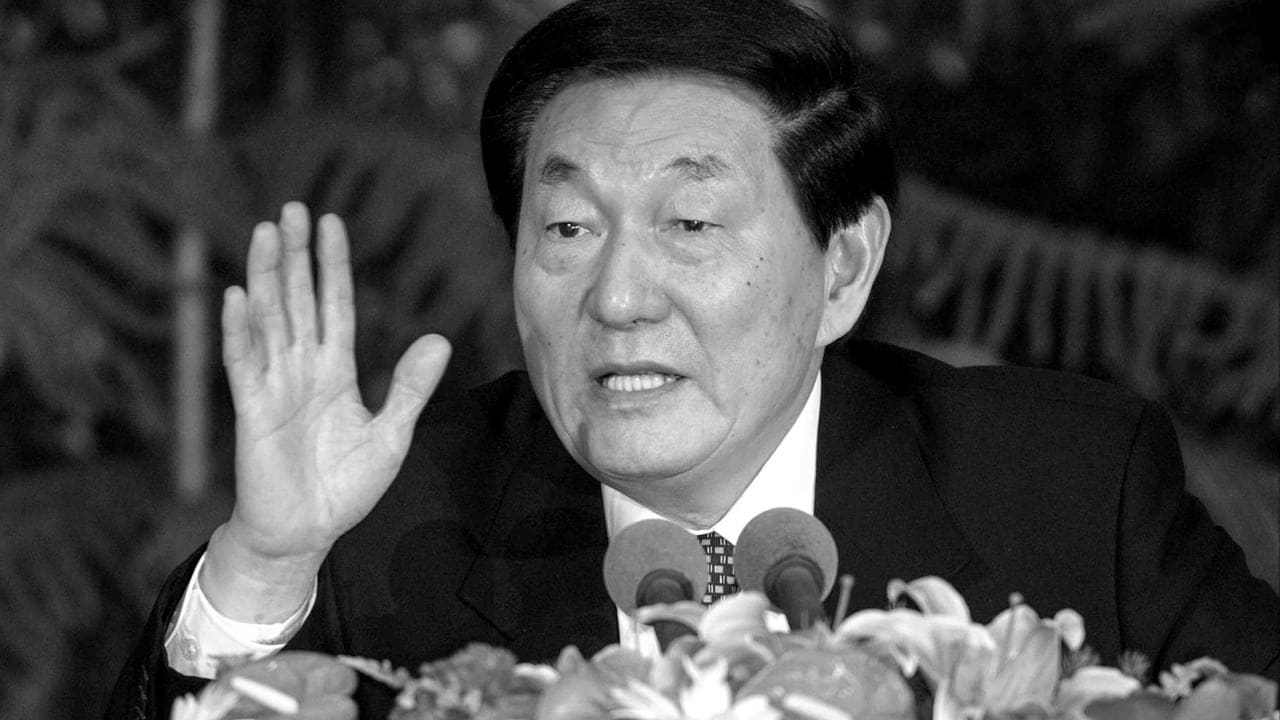
KEY TAKEAWAYS
- ·Zhu Rongji's fiscal recentralization, SOE restructuring, and WTO accession between 1998 and 2003 laid the foundation for China's emergence as a manufacturing hub.
- ·His reforms reshaped Asia's supply chains, accelerating Vietnam's liberalization and widening the infrastructure gap between China and India.
- ·China's current shift to high-quality growth and Asia's demographic and trade challenges test whether the region's leaders will pursue similarly bold structural reforms.
- ·Zhu left unfinished work in financial sector and SOE reform, debates that remain live as Beijing reasserts state control over strategic sectors.
The Architect Who Rewired an Economy
When Zhu Rongji stepped into the premier's office in 1998, China was a different animal. State-owned enterprises hemorrhaged cash, provinces hoarded tax revenue, banks operated as patronage machines, and the global trading system kept the world's most populous nation at arm's length. By the time he left in 2003, the scaffolding of a modern market economy was in place, and China had a seat at the World Trade Organization table.
The outpouring of tributes following his death underscores something rare in contemporary politics: a technocrat whose reforms genuinely altered the trajectory of a nation and, by extension, the region around it. For executives and investors watching Asia's current economic crossroads, Zhu's playbook is worth revisiting not as nostalgia, but as a case study in how structural reform creates durable competitive advantage.
Three Moves That Mattered
Zhu's most consequential reform was fiscal recentralization. Before 1994, local governments collected taxes and remitted a negotiated share to Beijing, a system that bred inefficiency and starved the central budget. The tax-sharing reform Zhu championed redirected value-added tax and corporate income tax to the center, stabilizing national finances and giving Beijing the fiscal firepower to invest in infrastructure and social programs. The result was a more coherent economic policy across provinces and a foundation for the infrastructure boom that followed.
The second pillar was the painful restructuring of state-owned enterprises. Tens of millions of workers were laid off as Zhu pushed to close or merge loss-making firms, a process that provoked unrest but ultimately made the remaining SOEs leaner and more competitive. The social cost was real, but so was the economic payoff: by the early 2000s, China's industrial base was no longer a liability but a magnet for foreign capital.
The third was WTO accession in 2001. Zhu personally negotiated terms that required China to open sectors, lower tariffs, and accept trade rules that many domestic stakeholders opposed. The gamble was that integration into global supply chains would force Chinese companies to modernize faster than protection ever could. The two decades that followed proved him right, even as the same integration now fuels geopolitical tension.
The Regional Ripple
Zhu's reforms did not happen in a vacuum. They reshaped Asia's economic geography. As China became the factory floor for global manufacturing, supply chains reorganized around it. Seoul, Taipei, Tokyo, and later Bangkok and Ho Chi Minh City found themselves either feeding components into Chinese assembly lines or competing for the same export markets. The Pearl River Delta and Yangtze River Delta emerged as hubs that pulled in capital, talent, and trade flows from across the region.
For Southeast Asia, the China that Zhu helped build was both opportunity and challenge. Vietnam's own doi moi reforms accelerated in part because Hanoi saw what market-oriented policies could achieve at scale. Singapore positioned itself as the financial and logistics gateway to a China that was now open for business. Malaysia and Thailand recalibrated their export strategies as Chinese manufacturing moved up the value chain.
India, meanwhile, watched from a distance. New Delhi's liberalization in 1991 predated Zhu's tenure, but the contrast in execution was stark. Where Zhu pushed through fiscal centralization and SOE restructuring with technocratic resolve, India's reforms remained piecemeal and politically contested. The gap in infrastructure investment and manufacturing competitiveness that opened in the 1990s and 2000s is still visible today.
Unfinished Business and Today's Echoes
Zhu left office with unfinished work. Financial sector reform, for instance, was incomplete. The big state banks were recapitalized and listed, but they remained instruments of industrial policy as much as commercial lenders. That tension persists: China's banking system is still grappling with how to allocate capital efficiently when policy goals and market signals diverge.
The same applies to SOE reform. Zhu's restructuring made state firms more viable, but it did not resolve the fundamental question of how much space the state should occupy in a market economy. That debate is live again as Beijing reasserts control over technology platforms and strategic sectors, raising questions about whether the reform era has peaked or simply paused.
For the rest of Asia, the lesson is not to replicate Zhu's specific policies but to absorb the underlying logic: reform works when it is coherent, sequenced, and backed by political will. Japan's lost decades, by contrast, illustrate what happens when structural problems are deferred. South Korea's chaebol reforms after the 1997 crisis show that even entrenched interests can be reshaped if the alternative is collapse.
What Comes Next
The current moment feels like an inflection point. China is pursuing what it calls "high-quality growth," a shift from export-driven expansion to domestic consumption and technological self-reliance. That transition is proving harder than the reforms Zhu engineered, in part because the global environment is less hospitable and in part because the low-hanging fruit has been picked.
Other Asian economies face their own reckonings. India needs infrastructure investment and labor market reform at a scale it has struggled to deliver. Southeast Asian nations must decide whether to deepen integration with China or hedge by diversifying supply chains. Japan and South Korea are navigating demographic decline and the need to reinvent their growth models.
Zhu's legacy is not a blueprint but a reminder that economic transformation requires trade-offs. Laying off millions to save the industrial base was politically risky. Opening to foreign competition threatened domestic players. Centralizing tax revenue angered provinces. But the reforms created momentum that compounded over time, turning China into the second-largest economy and a central node in Asian trade.
The tributes pouring in reflect recognition that Zhu belonged to a rare category: leaders who bet on structural change over short-term stability and won. Whether today's policymakers across Asia have the appetite for similar bets will shape the region's next chapter. The playbook exists. The question is who will use it.
RELATED STORIES
China's Inflation Slows to Six-Month Low as Deflation Risks Return
Cheng Wei-Lun · 4 min
Renminbi Faces Upward Pressure After US-Japan Yen Intervention
Cheng Wei-Lun · 3 min

Vietnam Pushes Rare Earth Processing to Strengthen Supply Chain Autonomy
Cheng Wei-Lun · 3 min

CXMT Reports 90% Yield on DDR5 Production as Chinese Chipmaker Eyes PC Market
Cheng Wei-Lun · 4 min
Spot something wrong? Email editor@briefasia.com. We log every correction publicly.