Technology · Products
Weathernews Expands Forecast Platform to 57 Languages
Japanese weather data firm rolls out multilingual app targeting global users, aiming to crowdsource accuracy improvements from international reports
KEY TAKEAWAYS
- ·Weathernews introduced a global weather app supporting 57 languages, aiming to expand beyond its established Japanese market.
- ·The company plans to enhance forecast accuracy by incorporating real-time weather reports submitted by users worldwide.
- ·The launch targets regions with sparse official weather networks, where crowdsourced data can fill critical gaps in localized forecasting.
A Multilingual Push from Tokyo
Weathernews, the Japanese weather information company, has unveiled a global edition of its forecast application that supports 57 languages, according to the company. The move represents one of the most ambitious language rollouts in the consumer weather data sector and signals the firm's intention to compete beyond its established domestic market.
The company has built its business on hyper-local forecasting within Japan, where its services are widely used by logistics firms, airlines, and individual consumers navigating the country's varied climate zones. Now it is applying that model to international markets, where competition from established players like AccuWeather, The Weather Channel, and government meteorological agencies is already fierce.
Crowdsourced Data as Competitive Edge
Following the launch, Weathernews plans to improve forecast precision by integrating user-generated weather reports submitted through the app. This crowdsourcing strategy mirrors approaches used by traffic apps like Waze and reflects a broader industry shift toward participatory data collection.
The company has not disclosed how many users it expects to attract in its first year, nor has it detailed which of the 57 supported languages will receive priority in terms of localized features or customer support. However, the emphasis on user contributions suggests Weathernews is betting that scale and density of real-time reports will allow it to differentiate from rivals that rely primarily on satellite data and ground-based sensors.
Weather forecasting accuracy depends heavily on the granularity and timeliness of observational data. In regions where official weather station networks are sparse, user reports can fill critical gaps, particularly for localized events like thunderstorms, flash floods, or sudden temperature shifts.
Asia's Weather Data Market Heats Up
The timing of the launch coincides with rising demand for weather intelligence across Asia, driven by climate volatility, urbanization, and the growth of gig-economy platforms that depend on real-time environmental data. Delivery services, ride-hailing companies, and agricultural technology firms increasingly rely on precise, minute-by-minute forecasts to optimize routes, manage fleets, and advise farmers.
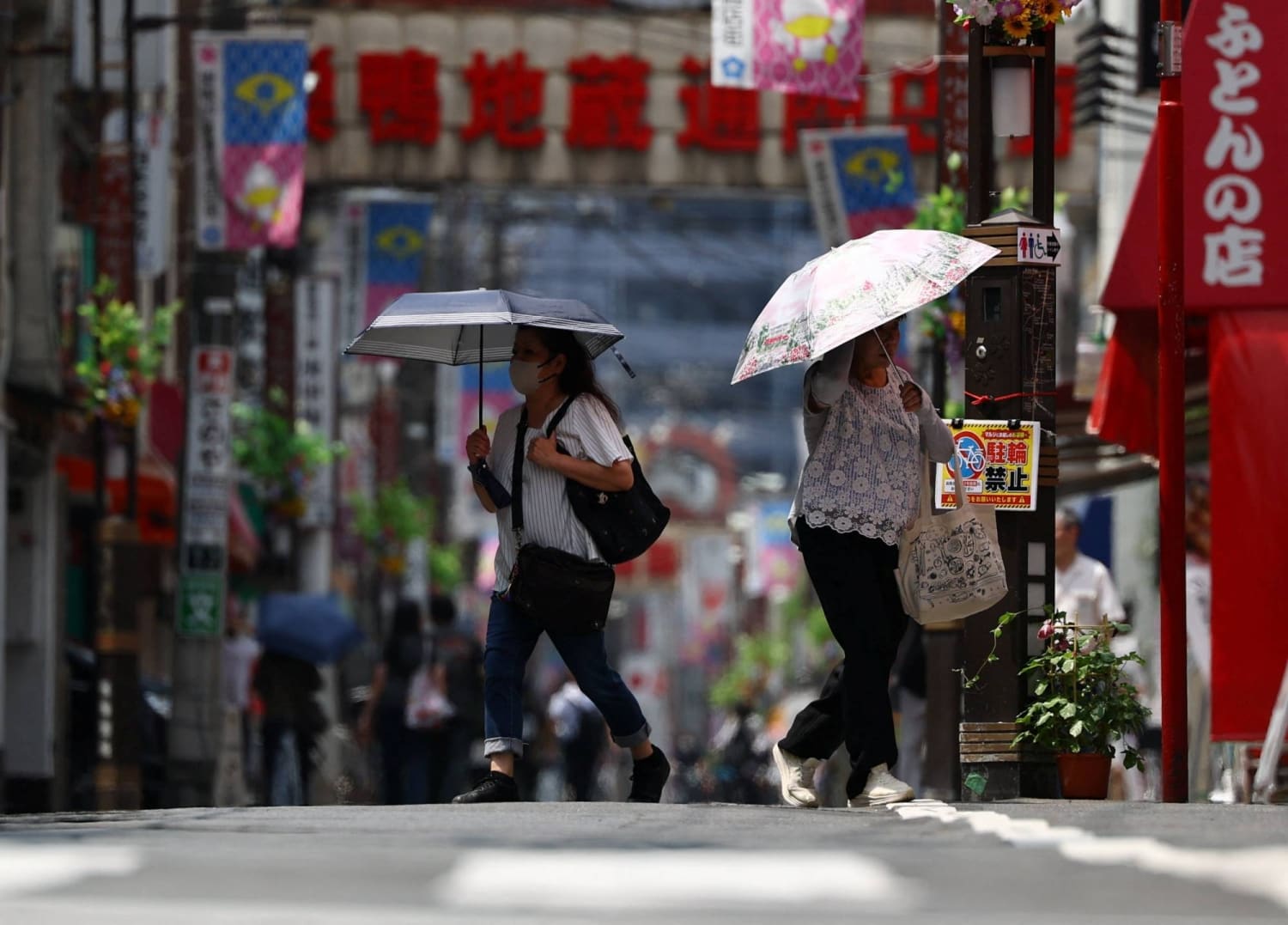
Japan has experienced a series of extreme heat events in recent years, including a prolonged heat wave last month that strained power grids and prompted public health warnings in Tokyo and other major cities. Such conditions have heightened public awareness of weather risks and created openings for commercial forecast services to offer more detailed, neighborhood-level information than government agencies typically provide.
Weathernews operates a 24-hour forecast center in Chiba, east of Tokyo, and has long emphasized speed and localization. Its domestic app allows users to report conditions like rainfall intensity, visibility, and even cherry blossom bloom status. The global version is expected to replicate many of these features, adapted for international users.
Monetization and Market Strategy
The company has not announced pricing tiers or whether the global app will be free with advertising or operate on a freemium model. In Japan, Weathernews generates revenue through both consumer subscriptions and enterprise contracts with transportation, construction, and energy companies.
Expanding to 57 languages suggests the company is targeting not only English-speaking markets but also regions in Southeast Asia, South Asia, Latin America, and Africa where smartphone penetration is high but localized weather services remain underdeveloped. The success of the rollout will likely depend on how quickly Weathernews can build user density in key cities and whether it can secure partnerships with local governments or businesses.
The weather data industry is increasingly shaped by advances in machine learning, satellite imaging, and edge computing. Companies that can ingest diverse data streams and process them in real time hold an advantage, and user-generated reports represent one such stream that is both low-cost and high-resolution.
Whether Weathernews can translate its domestic strengths into global market share remains an open question, but the scale of its language support and its commitment to participatory data collection mark a serious attempt to compete on the international stage.
RELATED STORIES

Tesla Expands Japan Delivery Network to Meet Rising EV Demand
Aiko Nakamura · 3 min

Taiyo Yuden Lifts Full-Year Forecast as AI Server Demand Boosts Capacitor Sales
Cheng Wei-Lun · 3 min

Ajinomoto Lifts Forecast as AI Server Demand Drives Semiconductor Material Sales
Cheng Wei-Lun · 3 min
Japan Embeds Cyber Defense in Air Force Systems as AI Threats Grow
Aiko Nakamura · 4 min
Spot something wrong? Email editor@briefasia.com. We log every correction publicly.