Technology · Products
Tesla Expands Japan Delivery Network to Meet Rising EV Demand
American automaker plans 60% increase in delivery sites as government incentives and corporate benefits drive record shipments across Japanese market
KEY TAKEAWAYS
- ·Tesla will increase its delivery locations in Japan by 60% in 2026 to address capacity constraints from surging electric vehicle demand driven by government subsidies and corporate benefits.
- ·Tokyo's EV subsidies now reach up to $8,100 per vehicle, making new electric cars price-competitive with used gasoline vehicles and accelerating adoption beyond early-adopter segments.
- ·The delivery expansion focuses on metropolitan corridors including Tokyo, Osaka, and Nagoya, where Tesla separates showroom operations from vehicle handover facilities to scale faster.
Scaling Infrastructure for Growth
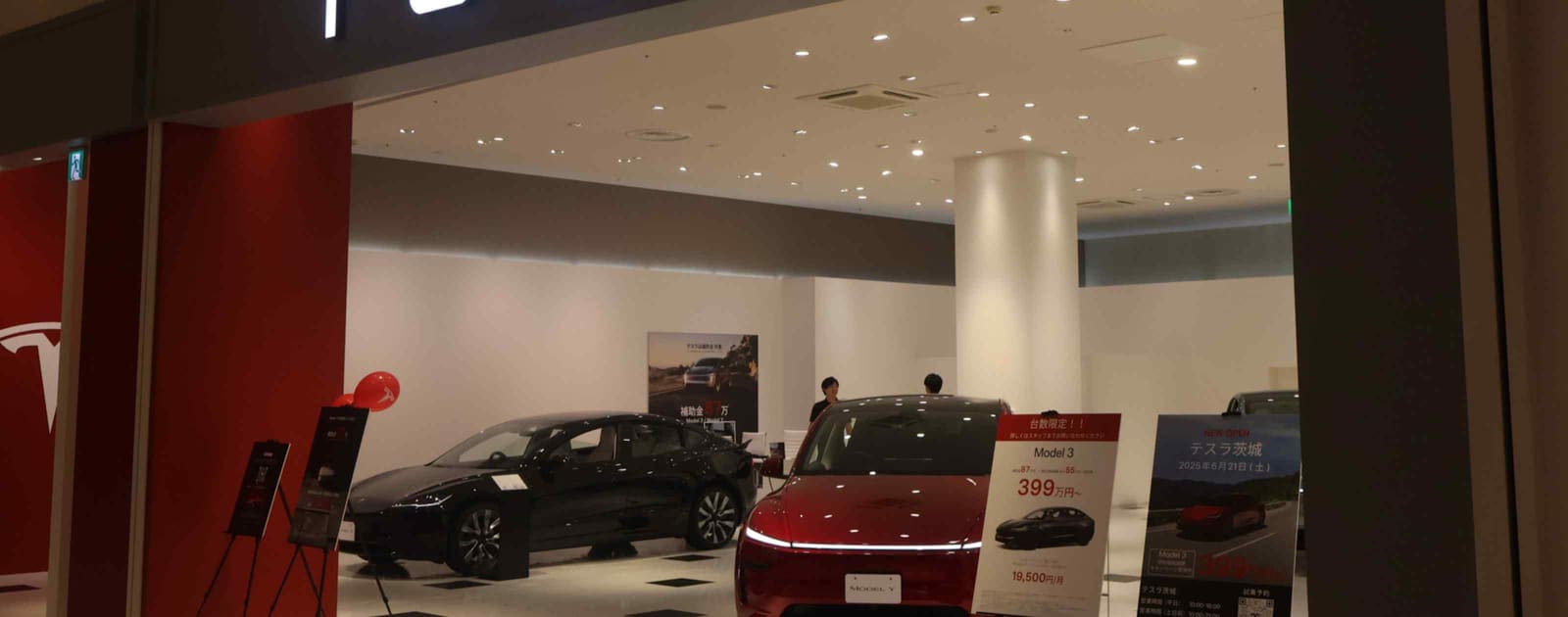
Tesla is adding delivery sites across Japan at an accelerated pace, expanding its footprint by 60% in 2026 to handle what the company describes as unprecedented demand. The move addresses logistical bottlenecks that have emerged as electric vehicle adoption accelerates in the world's third-largest auto market.
The expansion comes as Tesla separates its sales and delivery operations in Japan. Showrooms remain dedicated to product demonstration and customer consultation, while the new facilities will focus exclusively on vehicle handover and post-purchase support. This bifurcated model allows the California-based manufacturer to scale delivery capacity without the overhead of full-service retail locations.
Government Policy Meets Corporate Incentives
Two forces are converging to reshape Japan's electric vehicle landscape. National subsidy programs have made battery-electric cars financially competitive with conventional alternatives, in some cases pushing new EV pricing below used gasoline vehicle equivalents. Tokyo metropolitan government has announced subsidies reaching up to $8,100 for qualifying electric vehicles, a policy that benefits both Tesla and domestic manufacturers including Toyota.
Corporate Japan is simultaneously adjusting employee benefit packages to include electric vehicle perks. Companies are adding charging infrastructure at office campuses and offering preferential lease terms for EVs as part of sustainability commitments. These employer-driven incentives create a secondary support layer beyond government programs, particularly in urban centers where Tesla concentrates its operations.
The dual subsidy structure has compressed the traditional adoption curve. Where early EV buyers were primarily environmentally motivated consumers willing to pay premium prices, the current wave includes cost-conscious buyers responding to immediate financial advantage.
Delivery Bottlenecks and Operational Strain
Tesla's existing delivery network was calibrated for earlier demand projections. The subsidy-driven surge has exposed capacity constraints, with wait times stretching and customer experience metrics declining. The company's response prioritizes speed over full-service expansion, choosing delivery-focused facilities that can be operationalized quickly.
Japan's automotive retail landscape differs substantially from North American and European markets. Dealership networks remain dense, with local presence and after-sales service deeply embedded in consumer expectations. Tesla's showroom-without-delivery model represents a compromise between its direct-sales philosophy and Japanese market norms, though the approach has required infrastructure catch-up as volumes climb.
The 60% expansion translates to dozens of new delivery points concentrated in metropolitan corridors where EV adoption runs highest. Osaka, Nagoya, and greater Tokyo are receiving priority investment, reflecting population density and charging infrastructure availability.
Asia's EV Competitive Landscape
Tesla's Japanese expansion unfolds against intensifying regional competition. Chinese manufacturers including BYD are pushing into Southeast Asian luxury segments, while domestic players Toyota, Nissan, and Honda accelerate their own electric programs after years of hybrid-focused strategy. Malaysia has emerged as a key battleground for premium EV positioning, with BYD targeting the segment Tesla has dominated.
Japan's late but rapid EV adoption creates strategic opportunity for Tesla. The company enters a market where charging anxiety is diminishing, government support is robust, and consumer awareness has matured. However, the same conditions benefit competitors, particularly domestic manufacturers with established service networks and brand loyalty.
Toyota's financial performance remains heavily weighted toward the U.S. market, leaving its home market open for aggressive EV plays by Tesla and others. Nissan has leveraged subsidy programs to position new electric models at disruptive price points. Mazda's recent CX-5 redesign has underperformed in U.S. markets where gasoline prices favor hybrids, potentially redirecting company focus back toward domestic and Asian markets.
Infrastructure and Long-Term Positioning
The delivery site expansion signals Tesla's commitment to Japan beyond opportunistic subsidy capture. Building physical infrastructure requires capital investment and multi-year operational commitments, suggesting the company views current demand as sustainable rather than a temporary policy-driven spike.
Japan's EV charging network continues to expand, with convenience store chains, shopping centers, and municipal facilities adding fast-charging capability. This infrastructure build-out reduces range anxiety and makes EVs practical for a broader demographic beyond early adopters with home charging access.
Tesla's challenge now shifts from generating awareness to managing logistics and maintaining service quality during rapid scaling. The company's ability to deliver vehicles efficiently while preserving customer experience will determine whether it can convert Japan's subsidy-driven EV moment into durable market share.
RELATED STORIES
Japan Embeds Cyber Defense in Air Force Systems as AI Threats Grow
Aiko Nakamura · 4 min
Rashi Peripherals and Restar Form Joint Venture to Expand Semiconductor Services in India
Priyanka V. Rao · 2 min
Taiyo Yuden Lifts Full-Year Forecast as AI Server Demand Boosts Capacitor Sales
Cheng Wei-Lun · 3 min
Ajinomoto Lifts Forecast as AI Server Demand Drives Semiconductor Material Sales
Cheng Wei-Lun · 3 min
Spot something wrong? Email editor@briefasia.com. We log every correction publicly.