Finance · Markets
Vietnamese Dong Strengthens as Dollar Trades Near Two-Month Low
Vietnam's currency gained ground Monday as weak U.S. labor data pressures the greenback and shifts expectations around Federal Reserve policy
KEY TAKEAWAYS
- ·The Vietnamese dong appreciated 0.34% at Vietcombank to VND26,320 per dollar Monday, while the State Bank of Vietnam raised its reference rate by 0.1% to VND25,491.
- ·The U.S. dollar index hovered near 99.6, close to a two-month low, after July employment data showed unexpected job losses and downward revisions for prior months.
- ·U.S. inflation data due this week will likely determine currency direction as traders assess whether the Federal Reserve will adjust its policy stance in response to cooling labor markets.
Currency Shifts at Vietnamese Banks
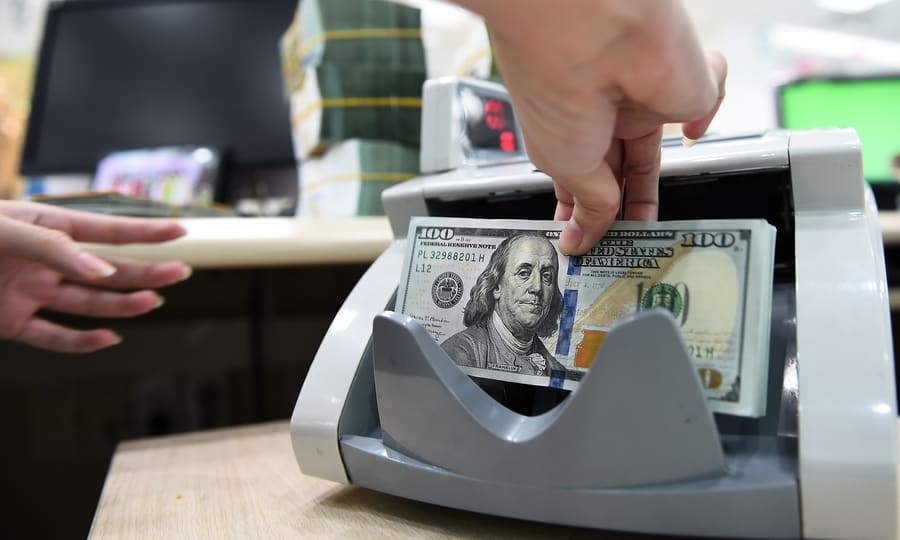
The Vietnamese dong gained against the U.S. dollar on Monday morning, with Vietcombank selling the greenback at VND26,320, down 0.34% from the previous Friday. The currency strengthened even more sharply in parallel trading, falling 0.65% to approximately VND25,830.
Meanwhile, the State Bank of Vietnam raised its daily reference rate by 0.1% to VND25,491, continuing its incremental adjustment pattern.
The move reflects broader pressure on the dollar across Asian currency markets as traders reassess the trajectory of American monetary policy following unexpectedly soft employment data released last week.
Dollar Under Pressure Globally
The U.S. dollar index, which measures the currency against six major counterparts, held near 99.6 on Monday, close to its lowest point since early June. The euro traded at $1.1558, near its strongest level in eight weeks, while sterling held steady at $1.3490, close to a five-week high. The Japanese yen stabilized at 157.90 per dollar after recent volatility.
July employment figures showed the U.S. economy shed jobs unexpectedly, with prior months revised sharply lower. The data cooled market expectations for a Federal Reserve rate increase next month and pulled down real-rate expectations across currency markets.
Geoff Yu, senior EMEA market strategist at BNY, noted that weaker labor-market signals have extended the dollar decline but cautioned that inflation data due this week will likely prove the biggest factor for currency direction. Traders are watching closely for clues about whether the Fed will adjust its policy stance.
Regional Implications
For Vietnam, a stronger dong against the dollar carries mixed implications. The currency's appreciation may ease inflationary pressure on imported goods, particularly energy and raw materials priced in dollars. However, it also presents challenges for exporters, who rely on competitive exchange rates to maintain margins in key markets including the United States and Europe.
Vietnam's central bank has been managing the dong within a narrow band, balancing the need to support export competitiveness with concerns about inflation and capital flows. The reference rate adjustments signal a willingness to allow gradual appreciation while maintaining stability.
The dong's movement also reflects Vietnam's improving current account position and steady foreign direct investment inflows, which continue to support the currency despite global uncertainty. Remittances and export receipts have provided a solid foundation for the dong even as regional currencies face pressure from shifting Fed expectations.
What Comes Next
Currency traders across Asia are now focused on U.S. inflation data expected later this week. The figures will help clarify whether the Federal Reserve maintains its current policy stance or signals a shift in response to cooling labor markets.
For Vietnam, the central bank's next moves will depend on how the dollar behaves globally and whether currency appreciation begins to weigh on export competitiveness. If the dong continues to strengthen, policymakers may face pressure to slow the pace of reference rate increases or intervene more directly to stabilize the exchange rate.
The interplay between U.S. monetary policy and Asian currency markets remains a key variable for regional economies. Vietnam's ability to navigate these shifts while maintaining export momentum and controlling inflation will be tested in the months ahead as global rate expectations continue to evolve.
RELATED STORIES

Vietnam Gold Hits Three-Week Peak as Global Prices Rally
Priyanka V. Rao · 2 min

Vietnam's Non-Term Bank Deposits Fall $1.8 Billion as Savers Chase Higher Yields
Priyanka V. Rao · 2 min

Vietnam's Gold Bars Retreat as Traders Lock in Gains After Seven-Week Rally
Priyanka V. Rao · 5 min
Black Market Dollar Trades at VND26,550 Amid Middle East Tensions
Cheng Wei-Lun · 2 min
Spot something wrong? Email editor@briefasia.com. We log every correction publicly.