Finance · Markets
Black Market Dollar Trades at VND26,550 Amid Middle East Tensions
The greenback strengthened against the dong on unofficial exchanges as geopolitical risks and semiconductor concerns weighed on Asian currency markets.
KEY TAKEAWAYS
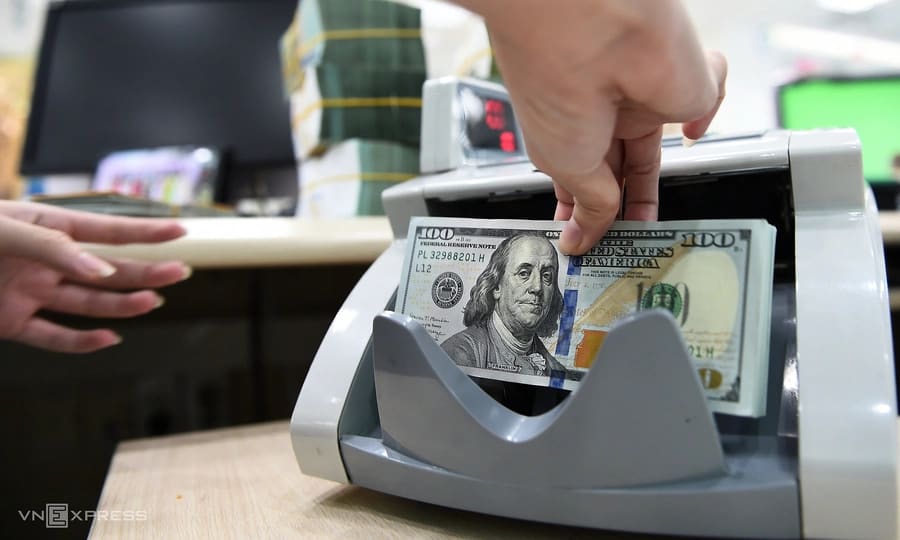
- ·The U.S. dollar climbed 0.08% to VND26,550 on Vietnam's black market while Vietcombank held its official rate at VND26,490 and the central bank cut its reference rate to VND25,252.
- ·The greenback strengthened across Asia as Middle East tensions escalated and semiconductor sector concerns weighed on risk appetite, pushing the dollar index to 100.84.
- ·The modest premium between informal and official rates signals controlled currency pressure, though further geopolitical shocks could widen the gap and test Vietnam's exchange rate management.
Unofficial Exchange Rate Climbs
The U.S. dollar strengthened to approximately VND26,550 at informal currency exchange points in Vietnam on Monday morning, marking a 0.08% gain as traders responded to heightened geopolitical uncertainty and a broader flight to safe-haven assets across Asian markets.
The movement in Vietnam's parallel currency market tracked the greenback's modest advance against major global currencies at the opening of Asian trading sessions. Official banking channels showed a different picture: Vietcombank maintained its exchange rate at VND26,490, while the State Bank of Vietnam adjusted its daily reference rate downward by 0.008% to VND25,252.
The divergence between black market pricing and formal banking rates reflects ongoing demand dynamics in Vietnam's dual-track currency system, where businesses and individuals often turn to unofficial channels for dollar liquidity when official sources tighten or when external pressures mount.
Global Dollar Strength Returns
The dollar index, which measures the currency against six major peers, rose 0.1% to 100.84 in early Monday trading. The greenback climbed 0.1% to 162.48 yen, reaching its strongest position against the Japanese currency since July 9, according to foreign exchange data.
Against European currencies, the dollar gained 0.1% on the euro, which traded at $1.1426, while holding steady against the British pound at $1.3445. Pacific currencies weakened, with the Australian dollar slipping 0.1% to $0.6975 and the New Zealand dollar declining 0.2% to $0.5833.
The currency moves came as oil prices climbed and investor confidence remained fragile following turbulence in equity markets during the previous week. Iran's decision to suspend its commitments under an interim peace agreement added to regional instability, prompting traders to reassess risk exposures.
Semiconductor Concerns Compound Risk-Off Mood
Market analysts pointed to a confluence of factors driving the shift toward defensive positioning. Westpac noted in a research report that deteriorating sentiment reflected both concerns around semiconductor sector valuations and escalating Middle East tensions.
The technology sector's outsized influence on regional equity indices has made currency markets more sensitive to shifts in chip-related risk appetite. Southeast Asian economies with significant electronics manufacturing exposure, including Vietnam, face indirect pressure when global investors rotate away from tech-heavy portfolios.
For Vietnam, the currency dynamics carry particular significance given the country's role in global supply chains and its reliance on dollar-denominated trade. The black market premium, while modest at current levels, serves as a real-time gauge of foreign exchange pressure that official channels may not fully capture.
What Comes Next
Currency traders will watch whether the gap between informal and official exchange rates widens if geopolitical tensions persist or if semiconductor sector volatility continues. The State Bank of Vietnam has historically intervened to manage excessive dong weakness, though it typically allows gradual adjustment to preserve export competitiveness.
The dollar's trajectory against Asian currencies will largely depend on how quickly risk appetite returns to global markets. Any further escalation in Middle East conflicts or renewed concerns about U.S.-China technology restrictions could sustain safe-haven demand for the greenback, maintaining upward pressure on Vietnam's parallel market rates.
For now, the modest premium in the black market suggests controlled pressure rather than panic, but the divergence bears monitoring as external shocks continue to test currency stability across the region.
RELATED STORIES

Malaysia Hospital Group A1Health Prepares US$1.7 Billion IPO for Early 2027
Tran Quoc Bao · 2 min

Vietnam's VN-Index Climbs Toward 1,800 as Market Sentiment Strengthens
Priyanka V. Rao · 3 min

Vietnam Draws $7.5 Billion From Singapore in Seven Months
Priyanka V. Rao · 3 min
Vietnam's Trade Turnover Hits $770 Billion as Imports Surge Past Exports
Jun-ho Seo · 2 min
Spot something wrong? Email editor@briefasia.com. We log every correction publicly.