Sustainability · Energy
Vietnam Turns to Rooftop Solar as Tourist Season Drives Record Electricity Demand
Hotels and businesses invest in energy efficiency and solar installations as summer heatwaves and 12% visitor growth push peak consumption 15% higher year-on-year
KEY TAKEAWAYS
- ·Nghe An province recorded peak electricity demand of 1,310 megawatts in May and June, up nearly 15% year-on-year, as tourist arrivals rose 12% and heatwaves intensified.
- ·Nearly 20% of hotels in Cua Lo Ward have installed rooftop solar systems, cutting daytime grid dependence by 30% or more during peak cooling hours.
- ·Vietnam's Directive No. 10/CT-TTg instructs authorities and utilities to accelerate electricity-saving campaigns and solar deployment as industrialization and climate volatility push baseline demand higher.
Solar Panels Meet Surge in Cooling Needs
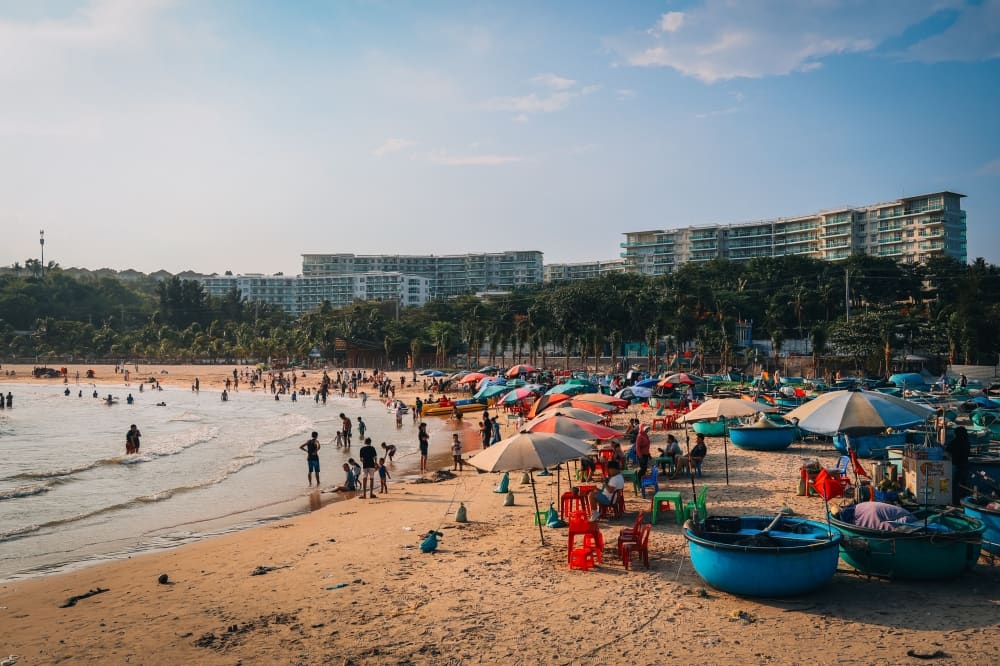
Cua Lo Beach in Nghe An province welcomed over four million tourists in the first seven months of 2026, a 12% increase from the same period last year. The influx has filled hotel rooms and restaurant tables, but it has also strained the local power grid. At Muong Thanh Cua Lo Hotel, occupancy rates hover between 83% and 85% during summer months, keeping air conditioning, laundry facilities, and kitchen equipment running nearly around the clock.
Vo Huy Tuan, managing director of the hotel, said the property has upgraded equipment and shifted laundry operations away from peak hours to cut costs without compromising guest services. Monthly electricity expenses remain high, but the adjustments have prevented bills from climbing in lockstep with occupancy.
The pattern is repeating across coastal Vietnam. Restaurants and guesthouses are swapping out old air conditioners and fluorescent tubes for inverter units and LED bulbs. Le Anh Tuan, who runs Tuan Phu Quy Restaurant in Ha Tinh province's Thien Cam tourism area, reported a 10% drop in monthly electricity costs after following local utility recommendations to replace aging cooling systems and enforce stricter shutdown protocols for unused equipment.
Peak Demand Climbs 15% in Heatwave Months
Nghe An province recorded peak electricity demand of approximately 1,310 megawatts during May and June heatwaves, according to Le Quang Thanh, deputy director of Nghe An Power Company. That figure represents a nearly 15% jump compared to the same period in 2025. In Ha Tinh's Can Loc district, consumption surged 24% year-on-year in June alone, driven by extreme temperatures and continuous air conditioner use.
Phan Van Nhan from Can Loc Power Company said many households with monthly bills exceeding 1,000 kilowatt-hours leave water heaters on all day, run air conditioning at 18°C or lower, and forget to turn off lights in empty rooms. The utility now targets these high-consumption customers with advice on thermostat settings and equipment runtime, pointing out that lower temperatures not only inflate bills but also shorten compressor lifespans.
The national government issued Directive No. 10/CT-TTg earlier this year, instructing ministries, provincial authorities, and state-owned enterprises to accelerate electricity-saving campaigns and rooftop solar deployment. The directive frames energy efficiency as a pillar of national energy security, particularly as industrialization and climate volatility push baseline demand upward.
Rooftop Solar Gains Traction in Coastal Zones
Nearly 20% of hotels in Cua Lo Ward have installed rooftop solar arrays, according to Nguyen Van Hung, vice chairman of the ward's People's Committee. The systems reduce daytime grid draw and generate savings that can offset installation costs within a few years, especially for properties with large roof areas and high cooling loads.
Utilities are amplifying the message. Nghe An Power Company works with local media and district offices to distribute technical guidance on system sizing, inverter selection, and net metering arrangements. The company also highlights case studies of businesses that have cut grid dependence by 30% or more during daylight hours.
Ha Tinh's power distributor takes a similar approach, advising any customer whose monthly consumption tops 1,000 kilowatt-hours to evaluate solar feasibility. The pitch is straightforward: panels generate most electricity during the hottest part of the day, precisely when air conditioners work hardest and tariffs are highest under time-of-use pricing.
Industrialization and Climate Meet Summer Tourism
Vietnam's electricity demand trajectory reflects overlapping pressures. Manufacturing zones continue to expand, urban populations grow, and rising incomes bring more appliances into homes. Climate change has lengthened heatwave seasons and pushed temperatures higher, making cooling a necessity rather than a luxury in many provinces.
Tourism adds a seasonal spike. Coastal destinations see visitor numbers double or triple between May and August, filling hotels that must run chillers, laundries, and kitchens at maximum capacity. The result is a sharp summer peak that coincides with the hottest weather, compounding strain on generation and transmission infrastructure.
Rooftop solar offers a partial solution because its output curve aligns with cooling demand. Panels produce peak power between 11 a.m. and 2 p.m., the same hours when air conditioners consume the most energy. For hotels and restaurants, this synchronization turns rooftops into mini power plants that directly offset daytime grid purchases.
Broader adoption will depend on financing, grid interconnection rules, and the pace at which tariffs reflect the true cost of peak supply. Directive No. 10/CT-TTg signals policy intent, but implementation will require coordination among power companies, local governments, and business associations.
Vietnam's energy transition is unfolding in real time along its beaches. Tourists arrive seeking sun and surf; the sun, in turn, is being enlisted to power the infrastructure that keeps them cool.
RELATED STORIES

Laos Hydropower Faces Solar and Wind Competition as Regional Grid Expands
Tran Quoc Bao · 4 min
Southeast Asian Firms Race to Raise Green Debt as Region Falls Behind on Renewables
Priyanka V. Rao · 3 min

Mixue Shutters 89 Stores Across Southeast Asia Amid Profit Decline
Siti Nuraini · 3 min

Vietnam Pursues Deeper Capital Market Ties with London
Tran Quoc Bao · 3 min
Spot something wrong? Email editor@briefasia.com. We log every correction publicly.