Asia · Politics
Vietnam Positions Đồng Nai as Regional Aviation Gateway
Politburo approves special policy framework to build Asia-Pacific hub around Long Thành International Airport
KEY TAKEAWAYS
- ·Vietnam's Politburo has approved a development strategy granting Đồng Nai City special policy mechanisms to establish an Asia-Pacific aviation hub anchored by Long Thành International Airport.
- ·Long Thành is designed for 100 million annual passengers and five million tons of cargo when fully operational, positioning it among Asia's top ten airports by throughput.
- ·The strategy includes streamlined land clearance, tax holidays for logistics firms, and expedited licensing for foreign joint ventures in ground handling and maintenance operations.
Strategic Elevation for Southern Gateway
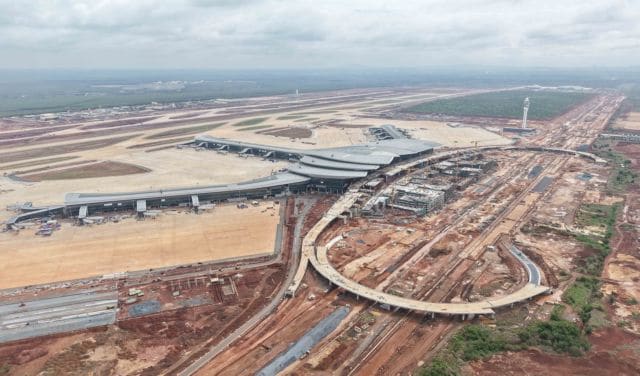
Vietnam's central leadership has outlined an ambitious trajectory for Đồng Nai City, granting the newly designated municipality a suite of preferential policy instruments designed to position it as a competitive aviation node in the Asia-Pacific corridor. The Politburo's approval centers on leveraging Long Thành International Airport as the anchor infrastructure for broader economic transformation in the southern province.
The decision reflects Hanoi's broader calculus: as Southeast Asia's air traffic rebounds and regional manufacturing diversifies away from single-country concentration, secondary gateway cities with greenfield airport capacity stand to capture cargo, passenger flows, and the logistics clusters that follow. Đồng Nai sits approximately 40 kilometers east of Ho Chi Minh City, placing it within the industrial belt that has absorbed electronics assembly, furniture manufacturing, and automotive parts production over the past decade.
Long Thành as the Fulcrum
Long Thành International Airport remains under construction, with the first phase targeting an annual capacity of 25 million passengers. When fully operational across all phases, the facility is designed to handle 100 million passengers and five million tons of cargo annually, figures that would rank it among the top ten airports in Asia by throughput. The timeline for phase-one completion has been subject to periodic revision, but current official projections place commercial operations in the late 2020s.
The Politburo's strategy assigns Đồng Nai City administrative responsibility for coordinating land use, infrastructure corridors, and investment incentives in the airport's immediate catchment. This marks a departure from Vietnam's typical model, in which provincial authorities manage airport peripheries without dedicated policy mandates. The special mechanisms referenced in the approval include streamlined land clearance procedures, tax holidays for qualifying logistics and aerospace service firms, and expedited licensing for foreign joint ventures in ground handling and maintenance, repair, and overhaul operations.
Regional Context and Competitive Pressure
The move arrives as other Southeast Asian capitals race to expand hub capacity. Bangkok's Suvarnabhumi and Don Mueang together processed more than 60 million passengers in 2023; Singapore Changi is advancing Terminal 5 to eventually reach 140 million annual passengers; and Kuala Lumpur International Airport has launched a second runway and cargo expansion. Within Vietnam, Tan Son Nhat International Airport in Ho Chi Minh City has operated above design capacity for years, with chronic congestion limiting further growth.
Đồng Nai's advantage lies in the combination of available land, proximity to existing industrial zones, and the political commitment embedded in the Politburo resolution. The province already hosts more than 30 industrial parks, many focused on export-oriented manufacturing. Integrating those parks with dedicated air cargo infrastructure could shorten supply-chain lead times for electronics and high-value consumer goods bound for North American and European markets.
Infrastructure and Fiscal Realities
Financing remains the central constraint. The first phase of Long Thành carries an estimated price tag exceeding five billion US dollars, funded through a mix of sovereign bonds, official development assistance, and targeted state budget allocations. Đồng Nai City's elevation to provincial-level status in early 2025 brought with it greater revenue retention, but the municipality still depends on central transfers to cover large capital projects.
The special policy mechanisms approved by the Politburo are intended to attract private capital, particularly in ancillary sectors such as logistics warehousing, hotel and conference facilities, and industrial real estate adjacent to the airport. Whether those incentives prove sufficient to draw the scale of foreign direct investment seen in other regional hubs will depend on execution speed, regulatory clarity, and the broader macroeconomic environment.
Implications for Southern Vietnam
If the strategy succeeds, Đồng Nai stands to capture a larger share of the value chain that currently flows through Ho Chi Minh City. Manufacturing firms seeking lower land costs and direct airport access may relocate or establish satellite facilities in the province. Conversely, failure to deliver infrastructure on schedule or to harmonize local regulations with national commitments could leave Long Thành underutilized, a scenario observed at several ambitious airport projects across developing Asia.
For Vietnam's aviation ambitions, the Politburo's decision signals that the country intends to compete not merely as a cost-effective manufacturing base but as a logistics and connectivity hub capable of supporting just-in-time supply chains and passenger transit flows. Đồng Nai's trajectory over the next five years will serve as a litmus test for whether policy mandates and infrastructure investment can converge into operational reality.
RELATED STORIES

Vietnam Ships 1.7 Million Tonnes of Coffee as Brazil Delays and EU Rules Reshape Trade
Tran Quoc Bao · 3 min
Vietnam's Trade Turnover Hits $770 Billion as Imports Surge Past Exports
Jun-ho Seo · 2 min

Samsung's Vietnam Operations Post 23% Profit Jump to $2.3 Billion
Tran Quoc Bao · 3 min

Viettel Opens Dominican Republic Operations as Military Telco Eyes Caribbean Expansion
Cheng Wei-Lun · 3 min
Spot something wrong? Email editor@briefasia.com. We log every correction publicly.