Finance · Markets
Vietnam Gold Climbs as Fed Signals Measured Inflation Response
Domestic bars reached VND142.5 million per tael Thursday while spot gold held above $4,076 an ounce on Federal Reserve policy cues and Middle East tensions.
KEY TAKEAWAYS
- ·Vietnam's gold bars rose 0.71 percent to VND142.5 million per tael Thursday, while rings gained 1.06 percent, tracking global spot gold up 0.3 percent to $4,076.29 per ounce.
- ·The Federal Reserve held rates steady and Chair Kevin Warsh signaled a measured approach to inflation, reducing the opportunity cost of holding non-yielding bullion and supporting prices.
- ·Analysts at TD Securities expect gold to drift back toward $3,900 per ounce as oil prices ease, though Asian central banks continue adding to reserves as a hedge against dollar exposure.
Domestic Prices Tick Higher
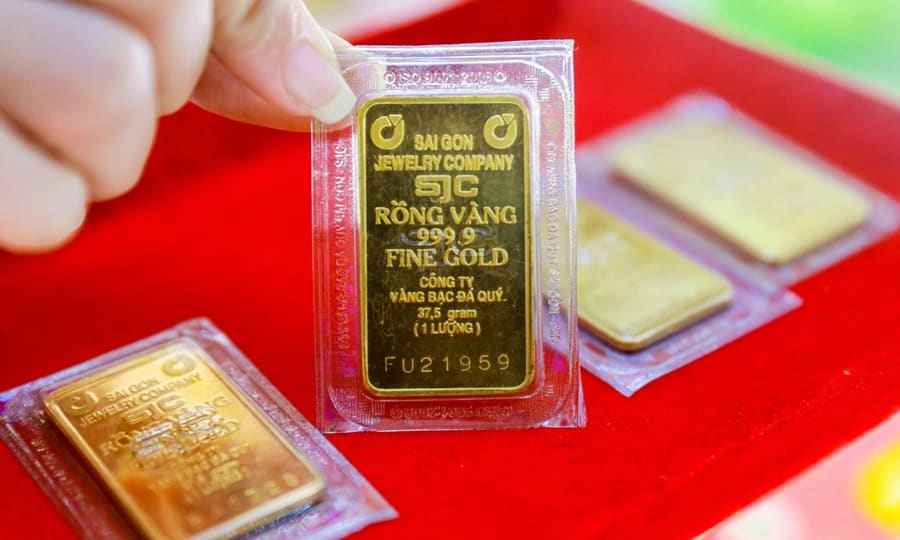
Vietnam's domestic gold market posted modest gains Thursday morning, tracking a slight uptick in global prices as traders digested signals from the U.S. central bank. Saigon Jewelry Company gold bars rose 0.71 percent to VND142.5 million per tael, equivalent to approximately $5,416. A tael equals 37.5 grams. Gold rings gained 1.06 percent to VND143.5 million per tael, according to Saigon Jewelry Company.
The increase comes despite a broader retreat in Vietnam's gold market this year. Domestic prices have fallen 6.7 percent since January, reflecting both global price swings and local supply dynamics. The gap between domestic and international prices has narrowed in recent months, reducing the premium that Vietnamese buyers traditionally pay over London spot benchmarks.
Fed Holds Rates, Signals Caution
Global spot gold climbed 0.3 percent to $4,076.29 per ounce Thursday, extending a rally that saw prices jump as much as 2 percent the previous session. U.S. gold futures for August delivery gained 1 percent to $4,073.60, according to data from the exchange.
The Federal Reserve left interest rates unchanged at its latest policy meeting, with Chairman Kevin Warsh outlining a measured approach to tackling inflation. Markets interpreted the comments as a signal that aggressive rate hikes remain off the table for now, a scenario that typically supports non-yielding assets such as gold. Lower real yields reduce the opportunity cost of holding bullion, which pays no interest or dividends.
Warsh's tone marked a shift from earlier hawkish rhetoric, when policymakers had warned that inflation remained stubbornly above the central bank's 2 percent target. The Fed has held rates steady for three consecutive meetings, pausing after a series of increases that pushed borrowing costs to multi-decade highs.
Geopolitical Risk Adds Support
Gold also drew support from renewed tensions in the Middle East. The U.S. military carried out fresh strikes in Iran on Wednesday, further escalating a five-month conflict that has already drawn in multiple countries across the region. The strikes followed a series of tit-for-tat attacks that have kept risk premiums elevated in commodity markets.
Oil prices gave up some of their gains Thursday as tankers continued to leave the Middle East, easing immediate supply concerns. Crude had spiked earlier in the week on fears that the conflict could disrupt shipping lanes or target energy infrastructure in the Persian Gulf, a chokepoint for roughly a fifth of global oil supply.
Analysts at TD Securities cautioned that gold's recent rally may prove short-lived. The firm said in a note that the precious metal is likely to drift back toward $3,900 per ounce as oil prices come under pressure through the summer. The inverse relationship between crude and gold has weakened in recent months, but a sustained drop in energy costs could dampen inflation expectations and reduce demand for inflation hedges.
Asia Buyers Weigh Entry Points
For buyers across Asia, the current price level presents a mixed picture. Vietnam's gold market remains sensitive to dollar liquidity and remittance flows, with overseas Vietnamese workers a key source of demand. Jewelry fabricators in Ho Chi Minh City have reported steady orders from retail chains, though wedding-season demand has yet to reach pre-pandemic peaks.
Regional central banks, meanwhile, have continued to add to gold reserves. Data from the World Gold Council show that Asian monetary authorities accounted for more than half of official-sector purchases in the first quarter, with China, India and Singapore among the most active buyers. The trend reflects a broader push to diversify reserves away from dollar-denominated assets, a priority that has gained urgency amid sanctions and trade frictions.
Thailand's central bank disclosed in June that it had increased gold holdings by 15 tonnes over the previous six months, lifting total reserves to 178 tonnes. The Bank of Thailand cited portfolio rebalancing and long-term value preservation as primary motives. Similar moves by other Southeast Asian monetary authorities suggest that official demand will remain a structural support for prices, even as speculative interest ebbs and flows.
Traders in Singapore and Hong Kong are watching the Fed's next moves closely. Any hint of a pivot toward rate cuts could trigger a fresh wave of buying, particularly if inflation data softens in the coming months. For now, the market is pricing in a cautious stance from the central bank, with futures markets assigning roughly even odds to a quarter-point cut by year-end.
RELATED STORIES

Vietnam Pursues Deeper Capital Market Ties with London
Tran Quoc Bao · 3 min
Vietnam Ships 1.7 Million Tonnes of Coffee as Brazil Delays and EU Rules Reshape Trade
Tran Quoc Bao · 3 min

Vietnam Draws $7.5 Billion From Singapore in Seven Months
Priyanka V. Rao · 3 min

Malaysia Hospital Group A1Health Prepares US$1.7 Billion IPO for Early 2027
Tran Quoc Bao · 2 min
Spot something wrong? Email editor@briefasia.com. We log every correction publicly.