Asia · Politics
Vietnam to Let Fuel Retailers Set Prices as State Ends Base-Price Mechanism
A proposed decree shifts pricing authority to distributors, ending the government's periodic price announcements in the country's petroleum market
KEY TAKEAWAYS
- ·Vietnam's draft decree ends periodic state announcement of fuel base prices and transfers pricing authority to wholesale and retail distributors using a prescribed formula.
- ·The reform aims to reduce administrative burden and allow faster price adjustments in line with global oil benchmarks, following similar moves in Malaysia and Thailand.
- ·Implementation questions remain around monitoring, competition enforcement, and the future role of Vietnam's petroleum stabilisation fund under the new pricing regime.
New Pricing Authority
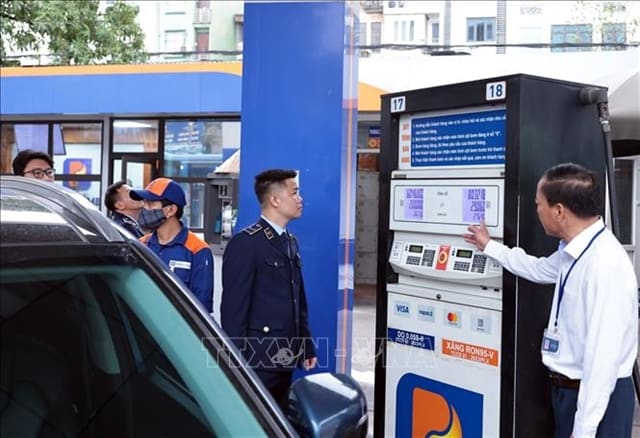
Vietnam is preparing to transfer fuel pricing authority from the state to private distributors under a draft decree that would end the government's periodic announcement of base petroleum prices. The proposed amendments would allow wholesale and retail distributors to independently set and announce retail prices within their networks, according to a formula specified in the decree.
The shift marks a significant change in how Vietnam's petroleum market operates. For years, state agencies have played a direct role in setting price ceilings or base prices that guide the retail market, a system common across Southeast Asia but increasingly seen as inflexible in volatile global oil markets.
Under the draft decree, distributors would gain the authority to calculate and publish their own prices based on an official formula, rather than waiting for government announcements. The formula itself remains prescribed by regulation, but the execution moves to market participants.
Formula-Based Flexibility
The new framework stops short of full deregulation. Distributors will not have unlimited pricing discretion; instead, they must apply a price formula laid out in the decree. That formula is expected to incorporate import costs, logistics, storage, taxes, and a margin cap, though the draft text has not yet been made public in full.
This approach mirrors reforms in neighbouring markets such as Malaysia and Thailand, where governments have gradually reduced direct price controls while maintaining formula-based guardrails to prevent sharp spikes that could fuel inflation or social unrest.
Vietnam's inflation rate has remained relatively stable in recent years, but global oil price swings have repeatedly forced the government to intervene with subsidies or price freezes, straining the state budget. By decentralising pricing decisions, officials aim to reduce the administrative burden and allow faster price adjustments in line with international benchmarks.
Market Structure and Competition
Vietnam's fuel retail sector is dominated by state-owned enterprises, including Petrolimex, which controls roughly 40 percent of the market. Private players such as Saigon Petro and foreign-invested distributors hold smaller shares but have been expanding their networks.
The draft decree does not alter ownership rules, but it could intensify competition if distributors use their new pricing authority to differentiate offerings or target specific customer segments. In practice, however, price coordination among major players has historically kept retail spreads narrow.
Consumer groups have expressed concern that removing state oversight could lead to collusion or regional price disparities, particularly in remote areas where competition is limited. The government has not yet detailed how it plans to monitor pricing behaviour under the new system, though existing competition law provides a legal basis for intervention if abuse occurs.
Regional Context
Vietnam's move aligns with a broader trend in Southeast Asia, where governments are stepping back from direct fuel price administration. Indonesia eliminated most subsidies in 2015, and the Philippines deregulated downstream oil in the 1990s. Singapore has long operated a fully liberalised market.
Yet the region's experience shows that formula-based systems can still be vulnerable to political pressure during price surges. Both Malaysia and Thailand have temporarily reintroduced caps or subsidies when global oil prices spiked, undermining the credibility of their pricing frameworks.
For Vietnam, the timing is notable. Brent crude has traded in a relatively stable range over the past year, providing a less volatile backdrop for the transition. If global prices spike sharply after the decree takes effect, the government may face pressure to intervene, testing the durability of the new system.
Implementation Timeline
The draft decree is currently under review by ministries and industry stakeholders. No official implementation date has been announced, though regulatory reforms of this scale typically require several months of consultation and approval by the National Assembly or the Prime Minister's office.
Once enacted, the decree will require distributors to establish systems for calculating and publishing prices, a process that may involve updating IT infrastructure and training staff. State agencies will need to define monitoring and enforcement protocols to ensure compliance with the formula and prevent market manipulation.
The shift also raises questions about the future of Vietnam's petroleum stabilisation fund, which has been used to smooth price fluctuations by subsidising distributors during periods of high import costs. If pricing becomes more dynamic and market-driven, the role of the fund may need to be reconsidered or restructured.
Vietnam's petroleum market is at an inflection point. The proposed decree represents a measured step toward greater market flexibility, but its success will depend on how effectively the government can balance pricing freedom with consumer protection and macroeconomic stability.
RELATED STORIES
Chinese Brands Capture Vietnam's $92 Million Robot Vacuum Market
Siti Nuraini · 3 min
Five ASEAN Members Back Regional Oil Stockpile as Study Nears Completion
Tran Quoc Bao · 3 min

Vietnam Ships 1.7 Million Tonnes of Coffee as Brazil Delays and EU Rules Reshape Trade
Tran Quoc Bao · 3 min
Vietnam's Trade Turnover Hits $770 Billion as Imports Surge Past Exports
Jun-ho Seo · 2 min
Spot something wrong? Email editor@briefasia.com. We log every correction publicly.