Asia · Business
Vietnam's Foreign Investment Commitments Jump to $38 Billion in Seven Months
Manufacturing and energy sectors attracted more than half of newly registered capital as Singapore and South Korea led inflows into Southeast Asia's fastest-growing industrial hub.
KEY TAKEAWAYS
- ·Vietnam registered $38.06 billion in foreign direct investment commitments over seven months, a 58% increase from 2025, with manufacturing and energy sectors capturing the majority.
- ·Singapore led source markets with $7.5 billion in newly registered capital, followed by South Korea at $5.61 billion and Hong Kong at $2.91 billion.
- ·Realized FDI disbursements reached $15.2 billion, the highest seven-month total in five years, while outbound Vietnamese investment surged 4.5 times to $2.36 billion.
Capital Commitments Accelerate
Vietnam secured $38.06 billion in registered foreign direct investment during the January-July period of 2026, a 58% increase compared to the same stretch last year, according to the National Statistics Office under the Ministry of Finance. The surge reflects heightened investor appetite for manufacturing capacity, energy infrastructure, and technology-related industries across Southeast Asia's third-largest economy.
Realized FDI - the portion of committed capital actually disbursed into projects - reached $15.2 billion over the seven months, marking an 11.8% gain from 2025 and the highest seven-month deployment in five years. Processing and manufacturing absorbed $12.55 billion of that total, representing 82.6% of disbursed funds.
The gap between commitments and disbursements is typical in cross-border investment cycles, where regulatory approvals, site preparation, and construction timelines create multi-year deployment schedules. The $38 billion figure captures new project licenses, expansions of existing ventures, and equity transactions, all of which feed the pipeline for future capital expenditure.
New Projects Drive Growth
Newly registered FDI posted the sharpest gains. Vietnam licensed 2,429 fresh projects carrying $21.05 billion in committed capital, with the number of projects climbing 7.8% year-on-year while dollar value more than doubled. Processing and manufacturing claimed $11.58 billion, or 55% of new commitments, followed by electricity, gas, and water production at $3.13 billion, accounting for 14.9%.
An additional 666 existing projects increased their investment by a combined $10.43 billion, up 4.4% from the prior year, signaling that foreign operators are expanding footprints rather than pulling back. Capital contributions and share purchases - often reflecting M&A activity or minority stakes in local firms - totaled $6.58 billion across 1,815 transactions, a 61.6% jump. Professional, scientific, and technological services led this category with $2.68 billion, ahead of wholesale and retail at $1.96 billion.
The monthly trajectory underscores a sharp mid-year acceleration. Registered and adjusted FDI stood at just $2.36 billion in January, while realized capital was $1.48 billion. Steady month-on-month increases since then pushed newly registered commitments above $21 billion, a pattern investment bankers attribute to improving sentiment around high-tech manufacturing, power generation, and export-oriented processing.
Singapore and Korea Lead Source Markets
Among 69 countries and territories investing in Vietnam, Singapore remained the largest origin, committing $7.5 billion in newly registered capital and claiming 35.6% of the total. South Korea followed with $5.61 billion, Hong Kong contributed $2.91 billion, and China added $1.73 billion.
Singapore's position reflects both genuine Singaporean capital and the city-state's role as a regional holding-company hub, where multinational groups park intermediate entities for tax efficiency and treaty access. South Korea's investment flows are concentrated in electronics, batteries, and automotive components, sectors where Korean conglomerates have built integrated supply chains stretching from Hanoi to Ho Chi Minh City.
Hong Kong's $2.91 billion often masks mainland Chinese capital routed through the special administrative region, a common structure in cross-border deals that require currency conversion, offshore financing, or regulatory arbitrage. China's direct $1.73 billion excludes such flows, meaning the aggregate exposure from Greater China is materially higher than headline figures suggest.
Outbound Investment Surges
Vietnam's own outward FDI recorded notable growth. Total outbound investment, including new licenses and additional capital for existing overseas ventures, reached $2.36 billion in the seven-month period, 4.5 times the 2025 level. New overseas licenses covered 106 projects worth $1.17 billion, up 2.9 times year-on-year, while expansions of existing foreign assets totaled $1.19 billion, a 9.2-fold increase.
Transport and warehousing captured $601.7 million, or 25.5% of outbound capital, while electricity and gas production drew $585.8 million, representing 24.8%. Laos received $638.3 million, equivalent to 27% of the total, followed by Cambodia at $449.9 million and Indonesia at $308.6 million. More distant markets including India, the Philippines, and Kazakhstan are also attracting Vietnamese investors, particularly state-owned enterprises and large private conglomerates seeking raw materials, logistics nodes, and power assets.
Regional Context and Forward View
The $38 billion commitment figure places Vietnam among the top FDI destinations in Southeast Asia, competing directly with Indonesia and Thailand for manufacturing relocations driven by U.S.-China trade friction, supply-chain diversification, and the region's demographic tailwinds. Semiconductor assembly, electric-vehicle components, and renewable-energy equipment are emerging as priority sectors, with investors drawn by Vietnam's participation in multiple free-trade agreements and its relatively low labor costs compared to coastal China.
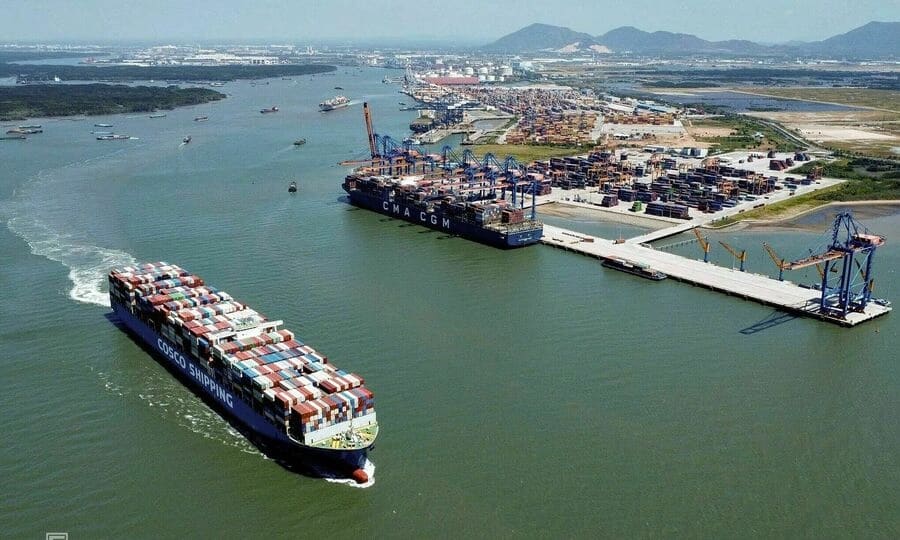
Realized disbursements of $15.2 billion, while a five-year high, still lag the commitment pace, suggesting that bottlenecks in land clearance, grid connection, and skilled-labor availability remain constraints. Infrastructure upgrades - including the under-construction Long Thanh International Airport and port expansions at Cai Mep-Thi Vai - are intended to ease those frictions and sustain capital inflows through the remainder of the decade.
The monthly acceleration from January's modest base to a $21 billion new-project tally by July indicates that investor confidence is rising, not plateauing. If disbursement rates continue to improve in the second half of 2026, full-year realized FDI could approach or exceed $25 billion, a threshold that would cement Vietnam's status as the region's most dynamic industrial investment story.
RELATED STORIES
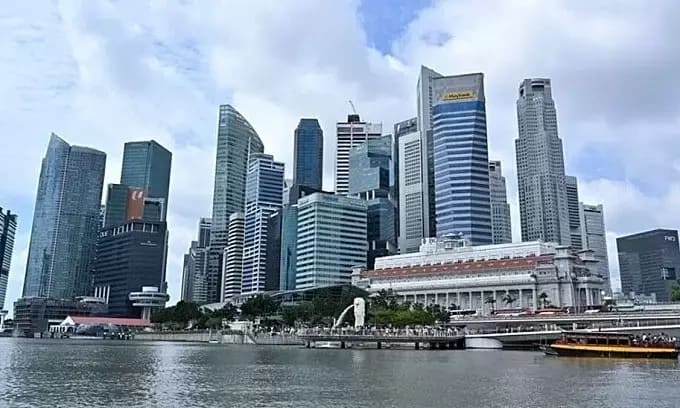
Vietnam Draws $7.5 Billion From Singapore in Seven Months
Priyanka V. Rao · 3 min
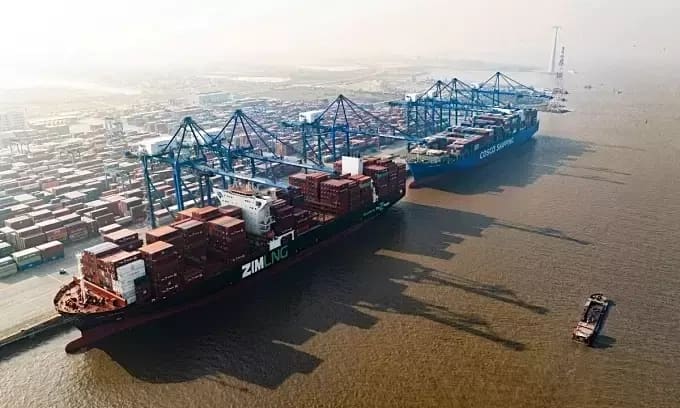
Vietnam's Trade Turnover Hits $770 Billion as Imports Surge Past Exports
Jun-ho Seo · 2 min
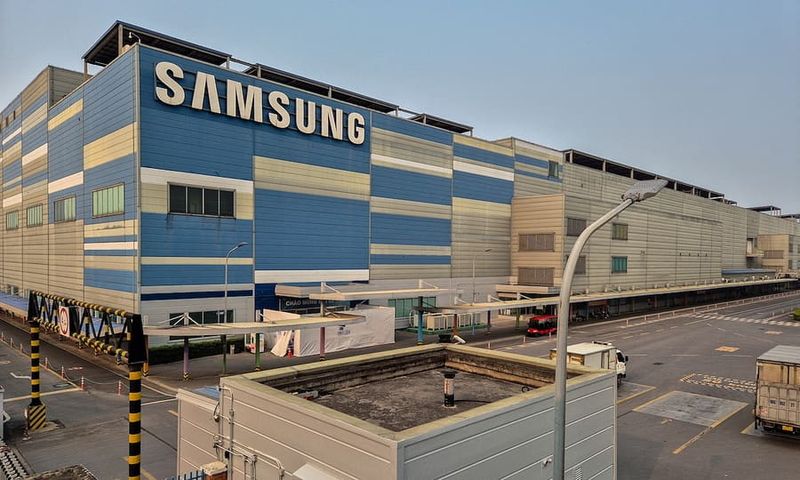
Samsung's Vietnam Operations Post 23% Profit Jump to $2.3 Billion
Tran Quoc Bao · 3 min

Southeast Asian Firms Overlook Digital Pact Worth USD 2 Trillion
Lim Hui Ying · 4 min
Spot something wrong? Email editor@briefasia.com. We log every correction publicly.