Asia · Politics
Vietnam's 8.2% First-Half Growth Masks Concerns Over Inflation and Structural Gaps
Economists question sustainability of Hanoi's 10% expansion target as rapid growth threatens price stability and exposes underlying economic vulnerabilities
KEY TAKEAWAYS
- ·Vietnam's GDP grew 8.2% in the first half of 2026, up from 7.5% in the same period of 2025, as the government pursues a 10% annual growth target through 2030.
- ·Economists warn that the rapid expansion risks fueling inflation and exposing structural weaknesses, including uneven income distribution and reliance on imported inputs.
- ·President To Lam has called for measures to increase foreign tourist spending and encourage domestic travel, signaling government concern over consumption patterns and demand management.
Strong Expansion Raises Red Flags
Vietnam's economy expanded 8.2% in the first half of 2026, according to government figures released earlier this month. The acceleration from 7.5% growth in the same period of 2025 puts Hanoi on track toward its ambitious double-digit expansion target, but economists caution that the pace may be unsustainable.
The rapid clip has prompted warnings from analysts who see inflation risk and structural vulnerabilities lurking beneath the headline number. President To Lam has publicly called for measures to boost foreign tourist spending and encourage Vietnamese citizens to holiday domestically, signaling government awareness that consumption patterns need careful management.
The 10% Question
Vietnam's leadership has set a growth target of at least 10% annually for the 2026-2030 period. The first-half performance suggests the country is within striking distance, yet the gap between 8.2% and the 10% threshold remains significant in macroeconomic terms.
Economists point to several pressure points. Inflation, which had remained relatively contained through 2025, could accelerate if demand continues to outpace supply-side capacity. The country's manufacturing base, while robust, still relies heavily on imported intermediate goods and energy, creating vulnerability to external price shocks.
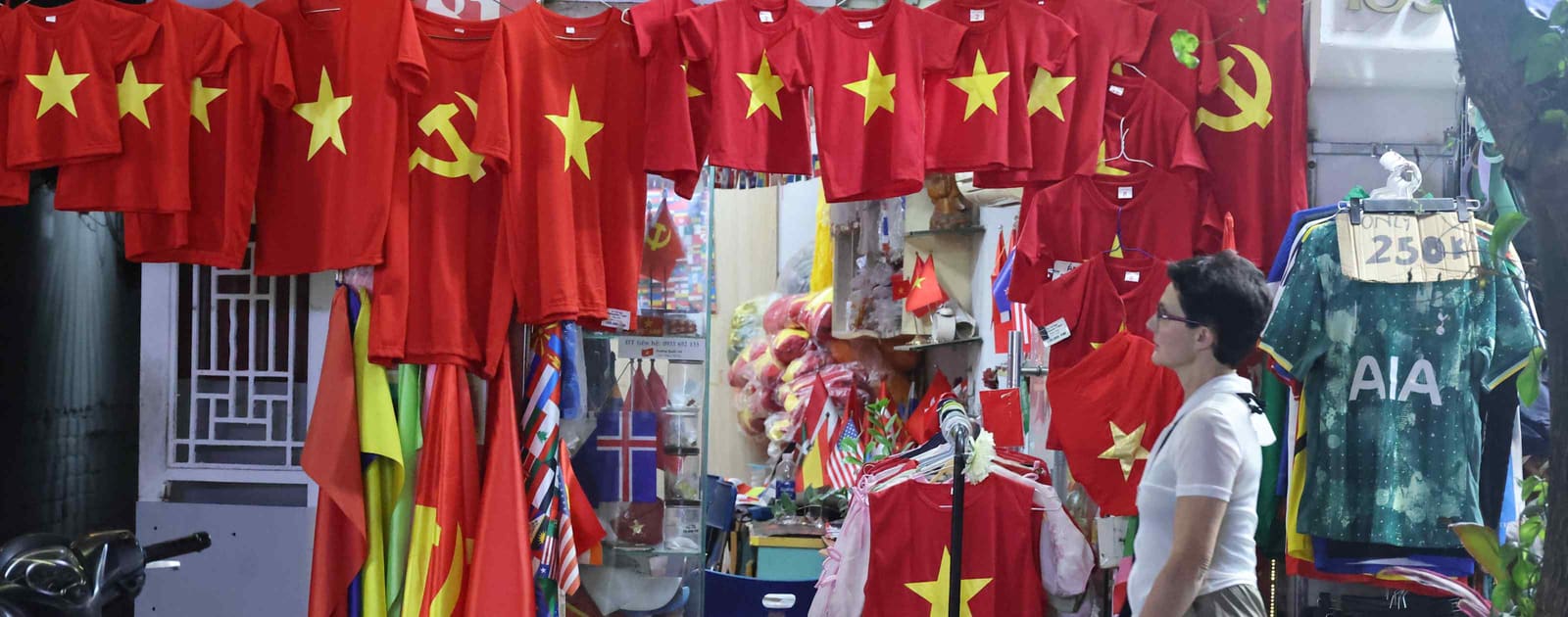
Structural issues also persist. Vietnam's domestic consumption has shown signs of strain despite strong GDP figures. Vietnamese shoppers have tightened budgets, suggesting that growth has not translated evenly into household purchasing power. The disconnect between production-led expansion and consumer confidence points to income distribution challenges that rapid growth alone cannot solve.
Regional Context and Global Headwinds
Southeast Asia as a region faces what analysts describe as "increasing divergence" following mixed growth performance in 2025. Vietnam's trajectory stands out, but not all neighbors are experiencing similar momentum. Thailand's deputy prime minister Sihasak recently noted that Vietnam's rapid expansion could benefit his country through regional supply chain integration, yet the comment also underscores competitive tensions within ASEAN.
External risks loom. Geopolitical uncertainty, including potential conflict scenarios that could disrupt trade routes, threatens Vietnam's export-dependent model. The country has worked to maintain its appeal as a production base despite tariff pressures from Washington, but the strategy requires constant diplomatic and economic recalibration.
Hanoi has also launched efforts to attract overseas Vietnamese talent back home, recognizing that sustained high growth demands a deeper skills base than the domestic labor market currently provides. The talent gap remains a structural constraint that cannot be addressed through monetary or fiscal stimulus alone.
Balancing Act Ahead
The challenge for Vietnamese policymakers is to sustain momentum without overheating the economy. The 8.2% first-half result demonstrates that growth can be maintained at elevated levels, but the path to 10% narrows as capacity constraints tighten.
Inflation management will be critical. If consumer prices begin to climb faster than wages, the social contract that has underpinned Vietnam's development model could face strain. The government's emphasis on domestic tourism and controlled foreign exchange flows suggests it is already thinking about demand-side levers to prevent runaway price growth.
Vietnam's economic trajectory over the next two years will test whether double-digit growth is achievable without sacrificing stability. The first-half numbers offer encouragement, but they also highlight the risks inherent in pushing an economy to its upper limits.
RELATED STORIES

Five ASEAN Members Back Regional Oil Stockpile as Study Nears Completion
Tran Quoc Bao · 3 min
Chinese Brands Capture Vietnam's $92 Million Robot Vacuum Market
Siti Nuraini · 3 min
Vietnam Bets $76 Billion Funding Gap Can Lure Capital Without Copying Rivals
Priyanka V. Rao · 4 min
Vietnam Draws $7.5 Billion From Singapore in Seven Months
Priyanka V. Rao · 3 min
Spot something wrong? Email editor@briefasia.com. We log every correction publicly.