Technology · Dev
Vietnam Emerges as Key Hub for US Semiconductor Operations
The Southeast Asian nation hosts major chip assembly, testing, and design facilities from Intel, Synopsys, Cadence, Marvell, and Qualcomm ahead of industry partnership expansion.
KEY TAKEAWAYS
- ·Vietnam hosts Intel Products Vietnam, one of Intel's largest global assembly and testing facilities, plus engineering centers from Synopsys, Cadence, Marvell, and Qualcomm.
- ·The country built substantial semiconductor infrastructure and trained technical workforce before joining ITSI, competing with Malaysia and Thailand for regional investment.
- ·Future expansion toward advanced fabrication and cutting-edge design depends on infrastructure upgrades, deeper equipment partnerships, and continued government support for technical education.
Established Presence Before Formal Partnership
Vietnam has positioned itself as a significant destination for American semiconductor firms well before joining the International Technology Security and Innovation (ITSI) initiative. The country's existing infrastructure and talent pool have attracted substantial investment from companies at every stage of the chip value chain, from design through manufacturing and testing.
Intel Products Vietnam operates as one of the company's most substantial assembly and testing sites globally. The facility represents decades of investment in the country's electronics manufacturing capacity and serves markets across Asia and beyond. The scale of Intel's operations underscores Vietnam's ability to support complex, high-volume semiconductor production processes that demand precision and reliability.
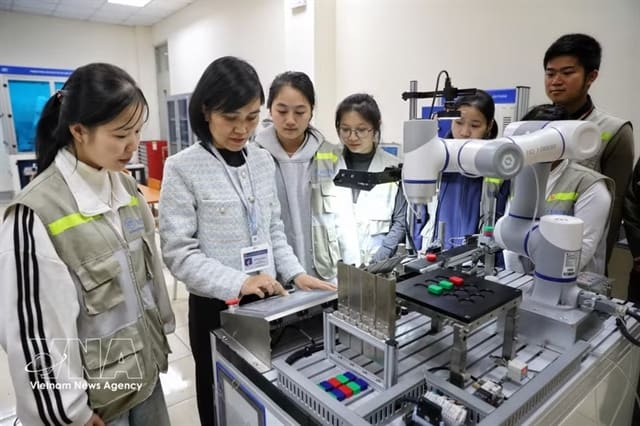
Beyond manufacturing, Vietnam has become home to engineering and research operations for several leading chip design firms. Synopsys, Cadence, Marvell, and Qualcomm have all established centers in the country, tapping into a growing pool of electrical engineers and software developers trained in semiconductor technologies. These facilities focus on chip architecture, electronic design automation, and system-on-chip development, activities that require specialized technical expertise and close collaboration with global teams.
Building the Foundation
The semiconductor and electronics sector in Vietnam has evolved over two decades, beginning with contract manufacturing for consumer electronics and gradually moving up the value chain. Government policy has supported technical education programs aligned with industry needs, while special economic zones offer infrastructure tailored to high-tech manufacturing. Proximity to established supply chains in Taiwan, South Korea, and China provides logistical advantages for companies managing complex, time-sensitive production schedules.
Labor costs remain competitive compared to other regional hubs, but the attraction increasingly centers on engineering talent and operational stability. Universities in Hanoi, Ho Chi Minh City, and Da Nang produce thousands of engineering graduates annually, many with training in fields directly applicable to semiconductor design and manufacturing. Companies report that retention rates for technical staff compare favorably with other Southeast Asian markets.
Regional Competition and Positioning
Vietnam competes with Malaysia, Thailand, and the Philippines for semiconductor investment within ASEAN. Malaysia has long hosted back-end assembly and testing operations for major chipmakers, while Thailand has focused on automotive and industrial electronics. Vietnam's advantage lies in its combination of scale, improving technical capabilities, and political stability, factors that matter when companies plan facilities with lifespans measured in decades.
The timing of Vietnam's semiconductor buildout aligns with broader industry efforts to diversify production away from heavy concentration in Taiwan and China. Geopolitical tensions and supply chain disruptions during the pandemic accelerated corporate strategies to establish manufacturing and design footprints in multiple countries. Vietnam benefits from this recalibration, particularly as US firms seek locations that balance cost, capability, and regulatory alignment.
Next Phase of Expansion
Participation in ITSI and related frameworks may accelerate technology transfer and open access to more advanced processes. Current operations in Vietnam focus primarily on assembly, testing, and mature-node design work. Moving into more sophisticated chip fabrication or cutting-edge design would require additional infrastructure investment, including specialized clean rooms, advanced equipment, and deeper partnerships with equipment suppliers and materials providers.
The government has signaled interest in moving beyond assembly to capture more value from the semiconductor chain. Achieving that goal will depend on continued investment in technical education, infrastructure upgrades, and incentives that make capital-intensive projects economically viable. For US companies, Vietnam offers a platform that has already demonstrated operational success at scale, reducing the risk associated with greenfield expansions in untested markets.
Vietnam's semiconductor trajectory reflects broader shifts in how global technology companies approach manufacturing and innovation in Asia. The country has built credibility through execution, hosting facilities that meet the exacting standards of industry leaders. Whether it can advance to the next tier of semiconductor sophistication will shape its role in the region's technology landscape for years to come.
RELATED STORIES

Vietnam's Small Businesses Move Beyond Storefronts to Build Full Digital Operations
Priyanka V. Rao · 4 min

Hanoi Pivots to High-Tech FDI as Capital Bets on Innovation Over Volume
Tran Quoc Bao · 4 min
Shein Retreats From Vietnam Warehouse Bet as China Manufacturing Proves Irreplaceable
Cheng Wei-Lun · 4 min
Shein Scales Back Vietnam Expansion, Reinforces China Manufacturing Base
Cheng Wei-Lun · 3 min
Spot something wrong? Email editor@briefasia.com. We log every correction publicly.