Asia · Business
Hanoi Pivots to High-Tech FDI as Capital Bets on Innovation Over Volume
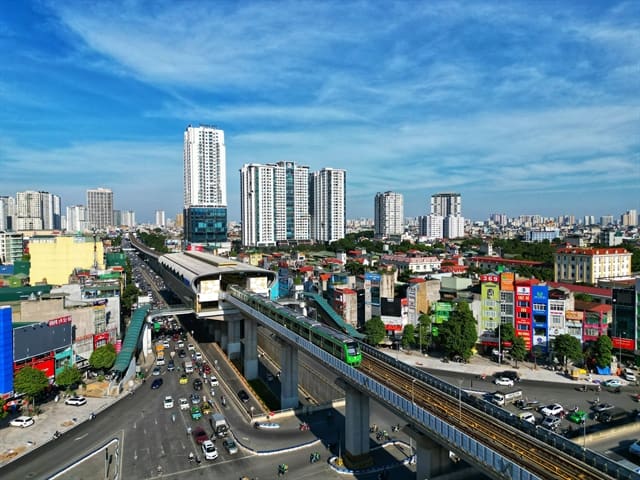
After decades of manufacturing-led foreign investment, Vietnam's capital city is recalibrating its strategy toward technology-intensive projects that promise deeper economic transformation.
KEY TAKEAWAYS
- ·Hanoi is recalibrating its foreign investment strategy to prioritize technology-intensive and innovation-driven projects over traditional manufacturing.
- ·The city licensed three semiconductor-related investments worth USD 1.2 billion in the first half of 2026, signaling early traction in high-tech sectors.
- ·Hanoi targets USD 8 billion to USD 10 billion in annual high-tech FDI by 2030, contingent on infrastructure upgrades and skilled labor availability.
A Strategic Recalibration
Hanoi is rewriting its playbook for foreign capital. For years, the Vietnamese capital has leaned on foreign direct investment to underpin its expansion, welcoming a steady stream of manufacturing plants, assembly lines, and export-oriented facilities. That era is giving way to a more selective approach: the city now wants foreign partners who bring advanced technology, research capacity, and innovation ecosystems rather than simply labor-intensive operations.
The shift reflects both ambition and necessity. As wage costs rise and regional competition intensifies, Hanoi's leadership recognizes that sustaining growth will require moving up the value chain. The city is home to over 6,300 active FDI projects spanning electronics, automotive, and services, yet officials acknowledge that much of this capital has clustered in lower-margin segments. The new strategy aims to attract investors in semiconductors, artificial intelligence, biotechnology, and advanced materials, sectors that generate higher productivity and deeper technology transfer.
What the Capital Is Offering
Hanoi's pitch to prospective investors centers on infrastructure upgrades and streamlined approvals. The city has committed to expanding industrial zones with dedicated power grids, fiber-optic connectivity, and logistics links to Noi Bai International Airport and the port of Hai Phong. Local authorities are also piloting faster licensing procedures for projects that meet innovation criteria, including commitments to local R&D spending or partnerships with Vietnamese universities.
Tax incentives remain part of the package, though officials stress they are calibrating these to favor quality over quantity. Projects classified as high-tech or contributing to strategic industries can access corporate income tax rates as low as 10 percent for 15 years, plus exemptions on import duties for research equipment. Land lease terms have been extended for investors willing to co-locate production with training centers or innovation labs.
Regional Context and Competition
Hanoi's recalibration comes as Southeast Asian capitals vie for a similar pool of foreign capital. Singapore has long dominated the region's high-tech FDI landscape, while Malaysia and Thailand have rolled out semiconductor-focused incentive schemes in the past two years. Vietnam as a whole attracted USD 36.6 billion in registered FDI in 2025, but a significant portion still flowed into garment and footwear manufacturing, sectors facing margin pressure and automation risk.
The capital's advantages include a large, young workforce, proximity to China's southern industrial belt, and improving transport links. Yet challenges persist: skilled labor shortages in advanced manufacturing, bureaucratic bottlenecks at the provincial level, and intellectual property enforcement gaps that some multinationals cite as concerns. Hanoi's strategy hinges on addressing these friction points while differentiating itself from coastal manufacturing hubs like Hai Phong and Da Nang, which continue to court volume-driven investment.
Early Signals and Sector Focus
Recent project announcements suggest the strategy is gaining traction. In the first half of 2026, Hanoi licensed three semiconductor-related investments totaling USD 1.2 billion, including a chip packaging facility and two electronic component plants. A South Korean battery materials company committed USD 400 million to a cathode production line in the city's northern industrial corridor, citing access to university research talent and government co-investment in testing infrastructure.
Biotechnology and medical devices are also emerging as priority verticals. The city has designated land in the Hoa Lac Hi-Tech Park for pharmaceutical R&D, and officials are in talks with European and Japanese firms about clinical trial partnerships. Software and digital services remain a longer-term ambition; Hanoi is home to a growing startup scene, but attracting large-scale foreign tech campuses will require deeper reforms in data regulation and cross-border digital payments.
Execution Risks
Translating policy ambition into tangible results will test Hanoi's administrative capacity. The city's track record on FDI is strong, but its experience with innovation-driven projects is thinner. Coordinating incentives across municipal, provincial, and national agencies has historically been slow, and investors report that approval timelines can stretch beyond official guidelines when projects involve novel technologies or require inter-ministerial sign-offs.
Labor supply is another variable. While Hanoi's universities produce tens of thousands of engineering graduates annually, industry surveys indicate gaps in specialized skills such as process engineering, clean-room operation, and advanced robotics programming. The city has launched training partnerships with foreign investors, but scaling these programs to meet demand will take years. Meanwhile, competition for talent with Ho Chi Minh City and regional hubs like Bangkok and Kuala Lumpur is intensifying.
What Comes Next
Hanoi's bet is that a smaller number of higher-value projects can deliver more durable growth than a larger volume of low-margin manufacturing. The city is targeting USD 8 billion to USD 10 billion in high-tech FDI annually by 2030, a figure that would represent roughly one-third of Vietnam's total registered investment if current national trends hold.
Success will depend on execution: whether infrastructure upgrades materialize on schedule, whether bureaucratic reforms translate into faster approvals, and whether the city can cultivate a critical mass of skilled workers and research institutions. For now, Hanoi is signaling a clear intent to foreign investors: the capital is open for business, but it is raising the bar on what kind of business it wants.
RELATED STORIES
Vietnam Business Registrations Jump 17% as Capital Inflows Surge
Priyanka V. Rao · 3 min
Vietnam Pours Capital Into Laos as Vientiane Seeks Relief From Beijing Debt
Priyanka V. Rao · 4 min

Thailand Faces Two Decades in Middle-Income Trap Without Workforce Upgrade
Priyanka V. Rao · 3 min
Shein Retreats From Vietnam Warehouse Bet as China Manufacturing Proves Irreplaceable
Cheng Wei-Lun · 4 min
Spot something wrong? Email editor@briefasia.com. We log every correction publicly.