Asia · Trade
Vietnam Durian Exports Eye $4 Billion Milestone as Harvest Season Approaches
Central Highlands harvest and regulatory approvals could unlock $2 billion in additional revenue through year-end, industry watchers say
KEY TAKEAWAYS
- ·Vietnam's durian exports could surpass $4 billion in 2026 if Central Highlands harvest proceeds smoothly and regulatory approvals accelerate.
- ·The sector faces price pressure as regional supply increases and Chinese buyers grow more cautious amid slower economic growth.
- ·Administrative bottlenecks in orchard and packing-house code issuance remain a constraint on export capacity during peak harvest months.
Recovery Momentum Builds
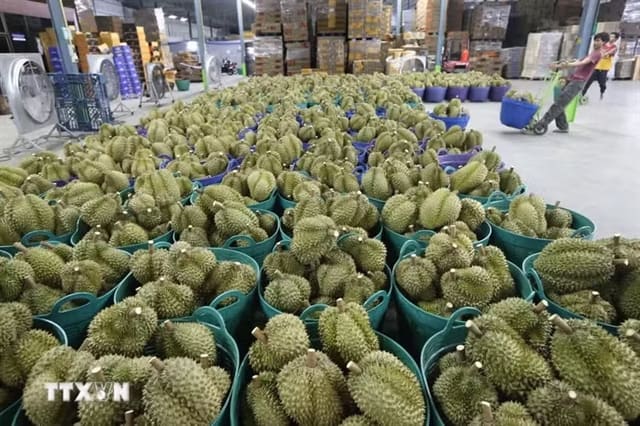
Vietnam's durian export sector is on track to exceed $4 billion in annual revenue if current recovery trends hold through year-end. The projection hinges on two critical factors: a smooth harvest in the Central Highlands and faster regulatory clearances for orchard and packing-facility codes that govern cross-border trade.
Industry observers estimate the remaining months of 2026 could deliver an additional $2 billion in export value, bringing the full-year total past the $4 billion threshold. That would mark a significant rebound for a crop that has become one of Vietnam's fastest-growing agricultural exports over the past three years.
Central Highlands in Focus
The Central Highlands region, which accounts for a substantial share of Vietnam's commercial durian acreage, enters its main harvest window in the third and fourth quarters. Weather patterns and labor availability will determine whether growers can pick and pack fruit at the pace needed to meet international demand, particularly from China, which absorbs the majority of Vietnamese durian shipments.
Timely harvest operations matter because durian has a narrow window of peak ripeness. Delays can lead to overripe fruit that fails export quality standards or undersupply during periods of strong buyer interest. Growers in Dak Lak and Lam Dong provinces have expanded plantings in recent years, but infrastructure for post-harvest handling remains uneven across the region.
Administrative Approvals Hold Key
Equally important are the administrative processes that grant orchards and packing houses the official codes required for export. These codes, issued by Vietnam's plant protection authority and recognized by importing-country customs agencies, certify that facilities meet phytosanitary and traceability standards.
Backlogs in code issuance have periodically constrained export volumes, even when fruit is available. Farms and packing houses awaiting approval cannot ship to markets that demand full documentation, leaving fruit stranded or forcing sales into lower-value domestic channels.
Regulatory officials have pledged to accelerate reviews, but the pace of approvals will determine how much additional capacity comes online before the peak harvest period. Faster turnarounds would allow more growers to capture premium pricing in international markets, while delays would cap the revenue upside.
Price Pressure Emerges
The optimistic export forecast comes against a backdrop of mounting price pressure. Increased planting across Southeast Asia, particularly in Thailand and Malaysia, has lifted regional supply. At the same time, Chinese buyers have become more price-sensitive as domestic economic growth moderates.
Wholesale prices for premium Vietnamese varieties have softened in key Chinese markets over recent weeks, reflecting both ample inventory and cautious buyer sentiment. Growers who expanded acreage in response to earlier price spikes now face tighter margins, and the question of whether volume growth can offset per-unit price declines will shape profitability for the season.
Vietnam's durian sector has grown rapidly since gaining official access to the Chinese market in 2022. Fresh whole-fruit exports, which command higher prices than frozen or processed durian, have driven much of the revenue growth. The country's proximity to southern China and investment in cold-chain logistics have given Vietnamese exporters an advantage over more distant suppliers.
What Comes Next
Whether the $4 billion target materializes will depend on execution in the field and in government offices. A smooth harvest requires favorable weather, sufficient labor, and logistics capacity to move fruit from orchards to packing houses and onward to ports. Regulatory agencies, meanwhile, must clear the queue of pending code applications to ensure maximum participation in the export pipeline.
Market dynamics in China will also play a role. Sustained demand from importers and distributors, even at lower price points, would support volume-driven revenue growth. Any disruption in cross-border trade flows or shifts in buyer preferences could alter the outlook quickly.
For now, the Vietnamese durian industry is betting that scale and speed can carry it past the $4 billion mark, turning what began as a niche crop into a major agricultural export earner.
RELATED STORIES
Vietnam Ships 1.7 Million Tonnes of Coffee as Brazil Delays and EU Rules Reshape Trade
Tran Quoc Bao · 3 min
Chinese Brands Capture Vietnam's $92 Million Robot Vacuum Market
Siti Nuraini · 3 min
Five ASEAN Members Back Regional Oil Stockpile as Study Nears Completion
Tran Quoc Bao · 3 min
Vietnam's Trade Turnover Hits $770 Billion as Imports Surge Past Exports
Jun-ho Seo · 2 min
Spot something wrong? Email editor@briefasia.com. We log every correction publicly.