Asia · Trade
Vietnam Courts Mexican Manufacturers Ahead of Major Sourcing Expo
Trade officials target Veracruz business community as Hanoi positions itself as alternative supply chain hub for Latin American buyers
KEY TAKEAWAYS
- ·Vietnam's Trade Office has invited businesses in Veracruz, Mexico, to attend the Vietnam International Sourcing Expo 2026, hosted by the Ministry of Industry and Trade.
- ·The outreach targets Veracruz as a Gulf Coast logistics hub for sectors including textiles, electronics, and agribusiness where Vietnamese exporters seek Latin American partners.
- ·Vietnam has expanded trade offices across Latin America since 2022, with exports to the region doubling as buyers seek alternatives to China-centric supply chains.
Vietnam Pitches Manufacturing Ties to Mexico
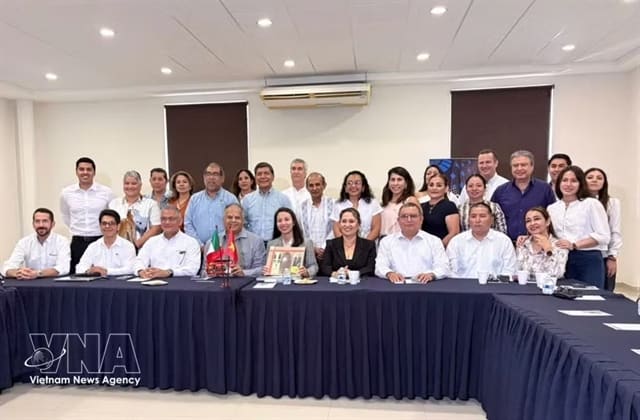
Vietnam's commercial diplomats are making a direct pitch to Mexican industry, inviting businesses in the Gulf Coast state of Veracruz to attend the Vietnam International Sourcing Expo 2026. The outreach marks a fresh chapter in Hanoi's effort to position the country as a manufacturing and export partner beyond its traditional markets in North America, Europe, and Northeast Asia.
The Trade Office extended the invitation to Veracruz-based companies, according to Vietnam's Ministry of Industry and Trade, which organizes the annual sourcing expo. The event is designed to connect Vietnamese manufacturers and exporters with international buyers seeking alternatives to China-centric supply chains.
Veracruz is Mexico's busiest cargo port and a hub for petrochemicals, automotive parts, and agribusiness. The state's location on the Gulf of Mexico makes it a natural gateway for goods moving between Latin America and global markets. By targeting Veracruz specifically, Vietnamese trade officials are signaling interest in sectors where the two economies overlap: textiles, electronics components, processed foods, and light manufacturing.
The Asia-Latin America Corridor
Vietnam's outreach to Mexico reflects broader ambitions to diversify export destinations. While the United States remains Vietnam's largest single market, Hanoi has been steadily building trade corridors into Latin America, where rising middle classes and nearshoring strategies are reshaping procurement patterns.
Mexico itself has become a magnet for manufacturers relocating production closer to U.S. consumers. Vietnamese firms, many of which already serve American retail chains, see potential in partnering with Mexican distributors or co-producing goods that benefit from both countries' trade agreements. Vietnam holds a Comprehensive and Progressive Agreement for Trans-Pacific Partnership (CPTPP) membership, while Mexico benefits from the United States-Mexico-Canada Agreement (USMCA). Together, these frameworks offer exporters layered access to North American demand.
The sourcing expo, typically held in Ho Chi Minh City or Hanoi, draws thousands of buyers annually. Past editions have featured pavilions for garments, footwear, furniture, electronics, and agricultural products. The 2026 event is expected to expand its Latin American participation, with Vietnam's trade promotion agencies funding buyer delegations from several countries in the region.
What Veracruz Brings to the Table
For Mexican businesses, the invitation is less about one-way procurement and more about exploring two-way trade and investment. Veracruz companies export coffee, citrus, vanilla, and seafood, categories where Vietnamese processors and distributors have scale and technical expertise. There is also interest in machinery and industrial inputs: Vietnam's electronics and automotive component sectors are growing rapidly, and Mexican suppliers of precision parts and tooling could find new customers.
The port of Veracruz handles more than 30 percent of Mexico's maritime cargo, and direct shipping links between Veracruz and Southeast Asian ports have expanded in recent years. That logistical backbone reduces the friction that has historically limited Asia-Latin America trade, which often required goods to transit through U.S. or European hubs.
Vietnam's trade office has not disclosed how many Veracruz firms have confirmed attendance, but the invitation itself underscores a shift in strategy. Rather than waiting for foreign buyers to discover Vietnam, Hanoi is actively curating its buyer base and targeting regions where its competitive advantages align with local demand.
Broader Trade Strategy at Play
The Mexico outreach fits into a larger pattern. Over the past two years, Vietnam has opened or expanded trade offices in Colombia, Chile, Brazil, and Argentina. It has negotiated preferential trade terms with the Mercosur bloc and is exploring a bilateral free trade agreement with several Central American nations.
Vietnamese exports to Latin America remain modest compared to flows into the U.S., EU, and China, but growth rates are steep. Shipments of electronics, textiles, and processed foods to the region have doubled since 2022, driven in part by Latin American retailers seeking cost-effective alternatives to Chinese suppliers amid geopolitical uncertainty.
The sourcing expo is one tool among many. Vietnam also hosts sector-specific trade missions, sponsors pavilions at international fairs, and offers financing support for exporters entering new markets. The Ministry of Industry and Trade has earmarked budget increases for trade promotion in emerging markets, with Latin America and Africa receiving priority funding.
For now, the invitation to Veracruz is a test case. If Mexican participation at the 2026 expo is robust, expect Vietnam to deepen its commercial presence across Mexico's industrial corridors, from Monterrey's manufacturing belt to the automotive clusters around Guanajuato and Puebla. The logic is straightforward: as supply chains fragment and regionalize, Vietnam wants a seat at multiple tables.
RELATED STORIES

Viettel Opens Dominican Republic Operations as Military Telco Eyes Caribbean Expansion
Cheng Wei-Lun · 3 min

Vietnam Ships 1.7 Million Tonnes of Coffee as Brazil Delays and EU Rules Reshape Trade
Tran Quoc Bao · 3 min
Vietnam's Trade Turnover Hits $770 Billion as Imports Surge Past Exports
Jun-ho Seo · 2 min
Samsung's Vietnam Operations Post 23% Profit Jump to $2.3 Billion
Tran Quoc Bao · 3 min
Spot something wrong? Email editor@briefasia.com. We log every correction publicly.