Asia · Trade
Vietnam-Australia Trade Jumps 22% in First Half as Bilateral Ties Deepen
Two-way trade reached $8.2 billion in H1 2026, with Vietnamese exports growing faster than imports amid strengthening economic partnership
KEY TAKEAWAYS
- ·Vietnam-Australia bilateral trade reached $8.2 billion in H1 2026, up 21.9 percent year-on-year, with Vietnamese exports growing 25.1 percent to $3.8 billion.
- ·Australia shipped $4.3 billion in goods to Vietnam, a 19.1 percent increase, driven by demand for raw materials, agricultural commodities, and energy products.
- ·The trade expansion supports Vietnam's target of exceeding 10 percent economic growth this year and reflects deepening cooperation between the two governments.
Strong Growth Across Both Directions
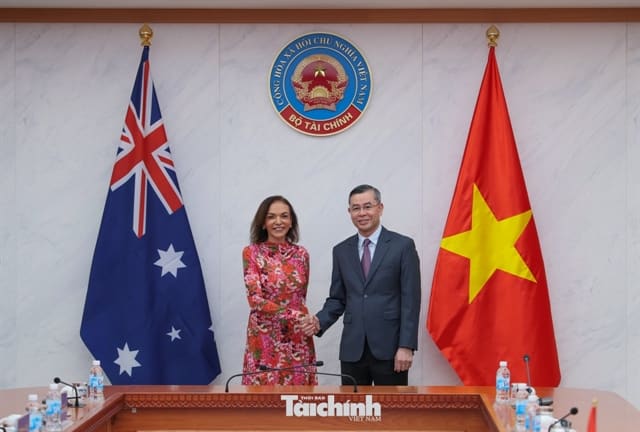
Trade between Vietnam and Australia posted robust gains in the first half of 2026, with total bilateral commerce climbing to $8.2 billion, a 21.9 percent increase from the same period last year. The momentum reflects deepening economic ties between the two countries as Hanoi pursues a growth target exceeding 10 percent for the year.
Vietnamese exports to Australia grew 25.1 percent to reach $3.8 billion during the six-month period, outpacing the growth rate of imports. Australia shipped $4.3 billion worth of goods to Vietnam, marking a 19.1 percent rise year-on-year. The trade flow left Vietnam with a modest deficit of $500 million, though the gap narrowed compared to previous periods as export growth accelerated.
The expansion comes as both governments work to enhance cooperation across multiple sectors, from agriculture and minerals to education services and digital infrastructure. Australia has emerged as a significant source of raw materials and agricultural inputs for Vietnam's manufacturing base, while Vietnamese manufacturers have gained market share in Australian consumer and industrial segments.
Vietnam's Export Momentum
The 25 percent surge in Vietnamese exports to Australia signals strong demand for goods ranging from electronics and textiles to processed foods and furniture. Vietnamese producers have benefited from preferential tariff arrangements under the ASEAN-Australia-New Zealand Free Trade Agreement and the Comprehensive and Progressive Agreement for Trans-Pacific Partnership, both of which Vietnam and Australia are party to.
Australian importers have increasingly turned to Vietnam as a reliable manufacturing hub, particularly as supply chains diversify across Southeast Asia. The country's competitive labor costs, improving infrastructure, and proximity to major shipping routes have made it an attractive partner for Australian retailers and distributors seeking alternatives to traditional sourcing markets.
Vietnamese seafood, coffee, cashews, and garments have seen particularly strong uptake in Australia, where demand for affordable consumer goods remains steady despite broader economic headwinds. Electronics components and parts assembled in Vietnam have also found their way into Australian supply chains, supporting local industries from telecommunications to automotive.
Australian Exports Hold Steady
Australia's 19 percent export growth to Vietnam reflects sustained Vietnamese demand for raw materials, agricultural commodities, and education services. Coal, iron ore, wheat, and dairy products form the backbone of Australian shipments, feeding Vietnam's industrial expansion and growing middle-class consumption.
Australian wheat has become a staple in Vietnam's food processing industry, while dairy imports support the country's expanding bakery and beverage sectors. Energy commodities, particularly coal, remain critical to Vietnam's power generation as the country works to balance industrial growth with energy security.
Education services, though not captured in merchandise trade figures, represent another pillar of the bilateral relationship. Thousands of Vietnamese students enroll in Australian universities each year, contributing to services trade that complements the goods flows tracked in official statistics.
Policy Alignment and Future Trajectory
Both governments have signaled intent to push bilateral trade beyond current levels, with Vietnam targeting double-digit economic growth and Australia seeking to diversify export markets across Asia. Canberra has identified Vietnam as a priority partner in its Indo-Pacific economic strategy, while Hanoi views Australia as a stable source of commodities and investment.
The 21.9 percent growth rate in the first half positions the relationship on track to exceed $16 billion in full-year trade, assuming the momentum holds through the second half. That would represent a significant jump from prior years and move Australia higher on Vietnam's list of trading partners.
Infrastructure cooperation is likely to play a larger role going forward, with Australian firms eyeing opportunities in Vietnam's transport, energy, and logistics sectors. Vietnamese companies, meanwhile, are exploring Australian markets for agricultural products and processed goods as they seek to reduce dependence on traditional export destinations.
The trade figures underscore a broader pattern across Southeast Asia, where economies are leveraging regional partnerships to sustain growth amid global uncertainties. For Vietnam, maintaining export momentum is essential to hitting its ambitious GDP target, and Australia has become a key market in that equation.
RELATED STORIES
Five ASEAN Members Back Regional Oil Stockpile as Study Nears Completion
Tran Quoc Bao · 3 min

Southeast Asian Firms Overlook Digital Pact Worth USD 2 Trillion
Lim Hui Ying · 4 min
Vietnam's Trade Turnover Hits $770 Billion as Imports Surge Past Exports
Jun-ho Seo · 2 min

Philippine Water Operator Earmarks $400 Million for Southeast Asia Expansion
Mariel D. Santos · 2 min
Spot something wrong? Email editor@briefasia.com. We log every correction publicly.