Asia · Trade
US Shifts Trade Enforcement to Section 301 Tariffs Covering 60 Economies
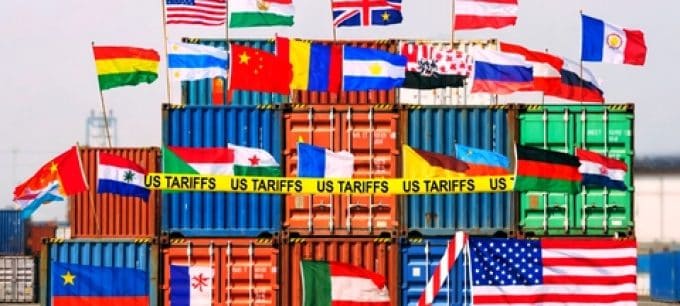
The new forced-labor tariff regime adds complexity to an already layered customs landscape as importers navigate overlapping trade restrictions
KEY TAKEAWAYS
- ·The US replaced its Section 122 import surcharge with Section 301 tariffs covering 60 economies, effective July 24, focusing on forced-labor enforcement.
- ·Customs specialists identify the interaction between new Section 301 duties and existing tariff layers as the primary compliance challenge for importers.
- ·Asian manufacturing hubs face heightened documentation requirements and potential supply-chain shifts as cumulative tariff burdens reshape cost calculations.
A New Layer in Trade Enforcement
The United States implemented a new tariff framework on July 24, ending a temporary import surcharge and replacing it with Section 301 duties that span 60 economies. The shift, which took effect at 12:01 AM Eastern Time, marks a pivot in Washington's trade enforcement strategy, focusing on forced-labor concerns while adding another dimension to an already complicated customs regime.
For importers across Asia and beyond, the immediate question is not simply what rates apply, but how these new measures interact with tariffs already in place. Trade compliance specialists point to this layering effect as the primary operational challenge, one that requires mapping multiple duty regimes simultaneously.
The Forced-Labor Focus
The Section 301 tariffs center on labor practices, a policy angle that differs from the temporary Section 122 surcharge they replaced. While Section 122 functioned as a broad-based import fee, the new regime targets specific economies where supply-chain labor standards have drawn scrutiny from US authorities.
The duty rates themselves vary, though customs professionals note that understanding the applicable rate is only part of the puzzle. Importers must now cross-reference Section 301 obligations with pre-existing tariffs, including those from earlier rounds of Section 301 actions, antidumping and countervailing duties, and any bilateral or multilateral trade agreement terms still in force.
Asia's Export Lanes Under Pressure
Several major Asian manufacturing hubs fall within the 60-economy scope. This creates immediate friction points for electronics, textiles, and consumer goods shipments that have historically moved through established logistics corridors.
Vietnam, for instance, has emerged as a key production base for footwear and apparel destined for US retail chains. Cambodia and Bangladesh occupy similar roles in garment supply chains. The addition of forced-labor tariffs to these flows means importers must now verify both the origin classification and the labor-compliance status of goods, a dual burden that extends lead times and raises documentation requirements.
In Southeast Asia, where regional supply chains often involve multiple countries contributing components or assembly stages, determining which tariff applies to a finished product becomes a multi-step analysis. A smartphone assembled in one ASEAN nation using parts from three others, for example, may trigger different duty treatments depending on how customs authorities classify its substantial transformation.
Compliance Complexity Multiplies
Customs brokers and trade lawyers describe the new environment as a compliance minefield. The Section 301 framework does not replace older tariff structures; it adds to them. An importer bringing in steel products from a country subject to Section 232 national-security tariffs, Section 301 duties from previous trade disputes, and now the new forced-labor Section 301 measures faces a three-tier duty calculation.
Each layer carries its own product classifications, exemption rules, and documentation standards. Errors in any one dimension can result in shipment delays, penalty assessments, or even seizure. For smaller importers without dedicated trade-compliance teams, the risk of miscalculation rises sharply.
Trade data platforms are rushing to update their systems to reflect the new tariff codes and interaction rules. Some have flagged inconsistencies in how different US ports of entry are interpreting the overlap between old and new Section 301 measures, a variance that adds uncertainty to cross-border planning.
Strategic Responses Taking Shape
Larger importers are accelerating supply-chain audits, seeking to identify which suppliers and origin countries carry the highest cumulative tariff burden. Some are exploring shifts to production bases outside the 60-economy list, though capacity constraints and quality-control considerations limit how quickly such moves can happen.
Others are investing in advanced classification software and hiring additional customs specialists. The calculus is straightforward: the cost of a compliance error under the new regime often exceeds the expense of preventive expertise.
For Asian exporters, the pressure is mounting to provide granular labor and sourcing documentation. US importers are demanding certifications that go beyond traditional commercial invoices, including detailed factory audits and worker-interview records. This documentation burden flows upstream, requiring manufacturers to formalize practices that may have operated informally in the past.
What Comes Next
Trade attorneys expect a wave of classification disputes and requests for binding rulings from US Customs and Border Protection. As importers test the boundaries of the new tariff structure, case law will begin to clarify how overlapping duties should be applied.
Meanwhile, the 60 affected economies are weighing their responses. Some may seek to negotiate exclusions or demonstrate compliance improvements that could lead to tariff relief. Others may consider retaliatory measures, though the asymmetry in trade volumes limits leverage for many smaller nations.
The forced-labor angle also introduces a political dimension that differs from purely economic trade disputes. Labor advocacy groups in the United States are likely to push for expanded enforcement, while industry coalitions will lobby for clearer rules and exemption processes.
For now, the reality facing importers is one of heightened complexity and cost. The shift from Section 122 to Section 301 is not a simple substitution; it is an expansion of the tariff landscape, one that requires navigating multiple legal frameworks simultaneously. In the short term, that means longer clearance times, higher compliance budgets, and a steep learning curve for companies that have not yet invested in sophisticated trade infrastructure.
RELATED STORIES
US Imposes 10-12.5% Tariffs on 60 Economies Over Forced Labor Enforcement
Cheng Wei-Lun · 3 min

Honda and Nissan Face Supply Chain Disruption as US Tariffs Target Canadian Auto Exports
Aiko Nakamura · 3 min
Seoul Convenes Industry Leaders to Address US Polysilicon Tariff Impact
Cheng Wei-Lun · 3 min
China Routed Solar Exports Through 32,000 Kilometers to Dodge US Tariffs
Cheng Wei-Lun · 4 min
Spot something wrong? Email editor@briefasia.com. We log every correction publicly.