Asia · Trade
US Prepares Wave of Forced Labor Tariffs as Global Duty Expires
Trade envoy signals imminent action against 60 trading partners, with duties ranging from 10 to 12.5 percent set to replace temporary measures ending Friday
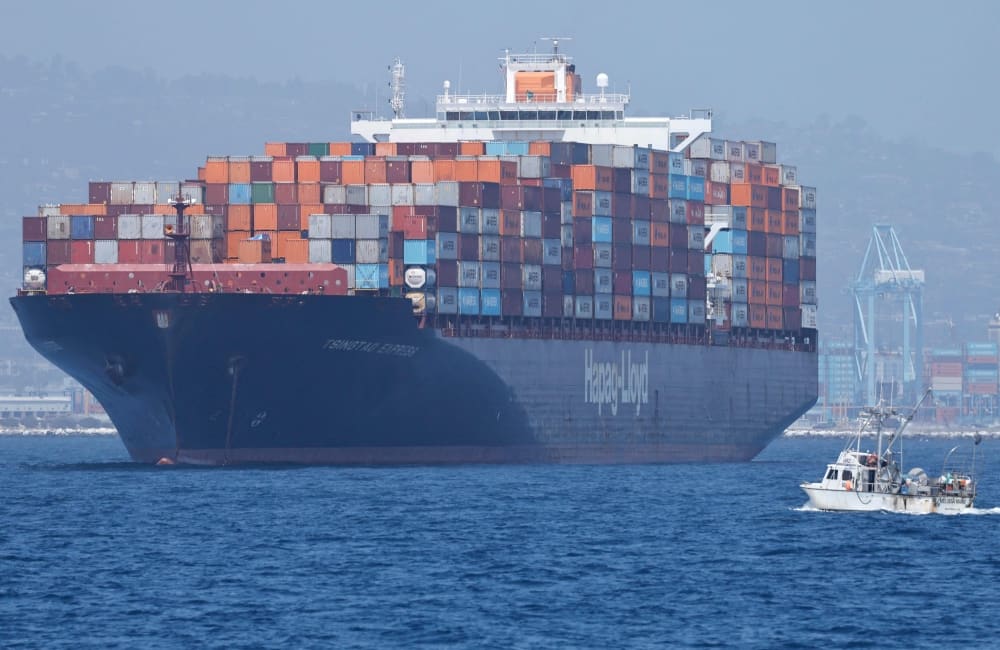
KEY TAKEAWAYS
- ·The US is preparing forced labor tariffs on 60 countries at 10 to 12.5 percent, replacing the expiring 10 percent global duty on Friday.
- ·Asian economies face split treatment, with Taiwan qualifying for 10 percent while China, India, and Japan face 12.5 percent rates.
- ·Canada confronts a separate 50 percent tariff in 30 days, seen as leverage in USMCA renegotiations, while Brazil faces 25 percent duties effective immediately.
New Tariff Architecture Takes Shape
Washington stands ready to roll out fresh tariffs targeting 60 trading partners over alleged failures to combat forced labor, according to US Trade Representative Jamieson Greer. The move comes as the administration's temporary 10 percent global duty expires Friday, creating space for a more targeted approach that could affect the majority of American trade flows.
"We expect to see some action soon," Greer told CNBC, declining to specify an exact timeline. The new framework divides countries into two tiers based on their anti-forced-labor efforts, with rates set at 10 percent for those deemed cooperative and 12.5 percent for others.
The tiered structure reflects an attempt to rebuild the administration's trade strategy following Supreme Court setbacks in February that struck down earlier tariff measures. Trump imposed the expiring global duty as a stopgap after those legal defeats, but officials have since developed what they characterize as a more defensible legal foundation centered on forced labor concerns.
Asia in the Crosshairs
Under the proposed structure, major Asian economies face divergent treatment. Taiwan qualifies for the lower 10 percent rate alongside Canada, the European Union, Mexico, and the United Kingdom, reflecting Washington's assessment that these partners have taken substantive steps against forced labor.
China, India, and Japan fall into the higher 12.5 percent category along with more than 40 other economies. The distinction carries significant implications for supply chains across the region, particularly in sectors where Asian manufacturers compete directly with each other for US market access.
The forced labor rationale draws on Section 338 of the Tariff Act of 1930, an untested legal provision that trade lawyers view as offering the administration broader authority than the statutes invalidated by the Supreme Court. Whether courts will accept this justification remains an open question, but the White House appears prepared to test the boundaries.
Parallel Pressure Campaigns
The forced labor tariffs arrive alongside aggressive moves targeting specific countries. Washington announced a 25 percent duty on certain Brazilian goods last week, set to take effect immediately, covering more than $11 billion in exports according to the American Chamber of Commerce for Brazil. Beef, coffee, and select aircraft parts received exemptions, as did products the US does not manufacture domestically.
Canada faces even steeper measures, with a 50 percent levy on many products scheduled to activate in 30 days. Prime Minister Mark Carney said he is examining "all options" and that he and Trump agreed to intensify discussions on a possible deal. The Canada tariffs notably exclude no products under the US-Mexico-Canada Agreement, a departure from past practice that trade lawyer Dave Townsend of Dorsey & Whitney interprets as leverage in USMCA renegotiations.
Greer is traveling to Mexico this week for talks linked to the joint review of USMCA, which Washington recently declined to extend in its current form. Negotiations with Canada have moved more slowly, and Carney gave no indication he would visit Washington for parallel discussions.
Pharmaceutical Pivot
In a separate announcement, Trump unveiled sector-specific tariffs on imported generic drugs, starting at 100 percent in August 2028 and rising to 200 percent the following year. The administration is cutting the generic drug tariff to zero from August this year through mid-2028, creating what officials describe as a window for pharmaceutical companies to relocate production to the United States.
The pharmaceutical measure reflects a broader ambition to use tariff policy not just for revenue or retaliation but as industrial strategy, incentivizing reshoring in sectors the White House deems critical. Whether manufacturers will commit capital to new US facilities based on tariff timelines that could shift with future administrations remains uncertain.
Regional Fallout
The European Union has already signaled it considers forced labor tariffs "unjustified," previewing potential retaliation. Brazil's response to its own 25 percent duty has been sharp, with the timing particularly sensitive months before the country's presidential election. The American Chamber of Commerce for Brazil warned the measures place Brazil among nations "facing the most restrictive conditions for access to the US market."
For Asian economies, the forced labor tariffs compound existing uncertainty around US trade policy. The tiered approach creates incentives for governments to demonstrate anti-forced-labor enforcement, but the criteria for moving between tiers remain opaque. That ambiguity gives Washington negotiating leverage while leaving exporters unable to plan with confidence.
Trump told reporters the Canada tariffs were unrelated to earlier threats over wildfire smoke drifting into the United States, but the statement did little to clarify the administration's broader objectives. Trade lawyers warn the risk of a "cycle of escalation and retaliation" is rising as partners weigh their responses.
The expiration of the temporary global duty and its replacement with forced labor tariffs marks a shift from blunt instrument to surgical tool, at least in theory. In practice, the new measures still cover most US trade and maintain pressure across multiple fronts simultaneously. Whether the legal foundation proves more durable than its predecessor, and whether trading partners accept the forced labor justification, will shape the trajectory of US trade relations for months to come.
RELATED STORIES
Washington Targets 60 Economies With Forced Labor Tariffs
Priyanka V. Rao · 3 min
Washington Imposes Fresh Tariff Round on 60 Nations Under Labor Rules
Priyanka V. Rao · 4 min
New US Tariff Wave Targets 60 Trading Partners as Global Levy Expires
Priyanka V. Rao · 3 min
Sri Lanka Adopts US Forced-Labor Import Ban to Secure Lower Tariff Rate
Priyanka V. Rao · 3 min
Spot something wrong? Email editor@briefasia.com. We log every correction publicly.