Finance · Deals
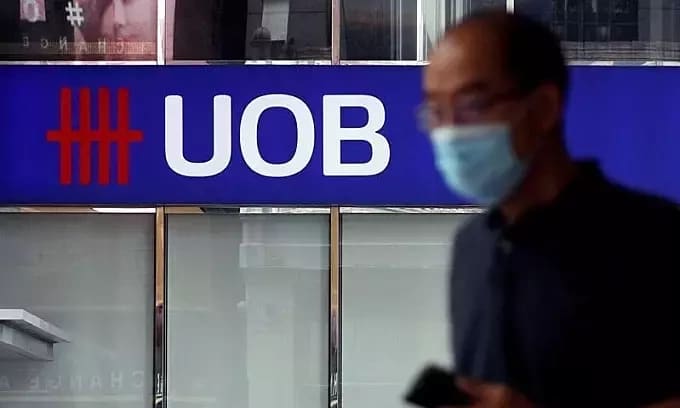
UOB Exits Asset Management With $434 Million Sale to Allianz
Singapore's third-largest bank divests fund unit to German insurer, retaining distribution rights across five Southeast Asian markets while booking a $330 million gain
KEY TAKEAWAYS
- ·United Overseas Bank is selling its asset management division to Allianz Global Investors for $434 million, divesting a unit managing $42 billion in client assets across eight Asian markets.
- ·The transaction allows UOB to exit fund manufacturing while retaining a ten-year distribution agreement to sell investment products through its branch network in Singapore, Indonesia, Malaysia, Thailand, and Vietnam.
- ·UOB expects a pre-tax gain of $330 million and a 14-basis-point boost to its capital ratio, with the deal anticipated to close in 2027 following regulatory approvals.
Strategic Pivot From Manufacturing to Distribution
United Overseas Bank has agreed to exit the asset management manufacturing business, selling its fund division to Allianz Global Investors for S$555 million, or approximately $434 million. The transaction transfers ownership of UOB Asset Management, which oversees roughly S$42 billion in client assets as of the end of 2025, to the German insurer's investment arm.
The Singapore-based lender, which ranks as the third-largest bank in Southeast Asia by total assets, announced the divestment as part of a broader strategy to concentrate on wealth management advisory and product distribution rather than proprietary fund manufacturing. Under the terms disclosed by both parties, UOB retains the commercial relationship with its customers through a decade-long distribution agreement that preserves its ability to offer investment products across its regional network.
AllianzGI will acquire all shares in the asset management subsidiary, which maintains operations in eight markets: Singapore, Brunei, Indonesia, Japan, Malaysia, Taiwan, Thailand, and Vietnam. The purchase includes excess capital currently held on the fund manager's balance sheet, though the exact amount was not disclosed in the announcement.
Allianz Doubles Down on Singapore
The acquisition represents the second significant transaction Allianz has announced in Singapore within a fortnight. On July 24, the Munich-based insurance and asset management group revealed plans to purchase HSBC's life and health insurance operations in the city-state for S$2.7 billion, a deal that underscored the company's appetite for expanding its presence in one of Asia's wealthiest per-capita markets.
With the addition of UOB Asset Management, AllianzGI will manage more than €170 billion, equivalent to roughly $196 billion, in client assets across the Asia-Pacific region. The firm characterized the transaction as a platform acquisition that provides immediate scale and long-term access to UOB's retail banking customers throughout Southeast Asia, a region where rising incomes and growing middle classes are driving demand for investment products.
The distribution partnership covers five countries: Singapore, Indonesia, Malaysia, Thailand, and Vietnam. UOB will continue to offer unit trusts, mutual funds, and other investment vehicles branded under both UOB Asset Management and AllianzGI labels through its branch network and digital channels. The arrangement allows the bank to maintain product diversity and customer touchpoints while shedding the operational complexity and regulatory capital requirements associated with running a licensed fund manager.
Employment Continuity and Regional Footprint
All 500 employees currently working for UOB Asset Management across the region will transfer to AllianzGI as part of the transaction. UOB stated that the German buyer has committed to maintaining their employment, a pledge aimed at ensuring business continuity and preserving institutional knowledge within the fund management operation.
Until regulatory approvals are secured and the deal closes, which both companies expect to occur sometime in 2027, UOB Asset Management will continue operating under its existing structure and branding. The prolonged timeline reflects the multi-jurisdictional nature of the business, which requires clearance from financial regulators in each of the eight markets where the unit holds licenses.
The asset management division has built a diversified book of mandates spanning retail mutual funds, institutional portfolios, and specialized investment strategies tailored to local market conditions. Its presence in Vietnam and Indonesia, two of Southeast Asia's fastest-growing economies by GDP, adds particular strategic value for AllianzGI, which has been seeking to deepen its footprint in frontier and emerging markets across the region.
Capital and Profitability Impact
UOB expects to record a pre-tax gain of approximately S$330 million from the sale, excluding one-time transaction costs such as legal fees, advisory expenses, and employee retention bonuses. The bank also projects a 14-basis-point improvement in its common equity tier 1 ratio, a key measure of financial strength that regulators use to assess a lender's ability to absorb losses.
The CET1 ratio improvement stems from the removal of capital allocated to support the asset management subsidiary's operations and regulatory requirements. By divesting the unit, UOB frees up capital that can be redeployed into higher-return lending activities, share buybacks, or dividend payments, all of which align with management's stated goal of optimizing capital efficiency.
The transaction also simplifies UOB's organizational structure, allowing senior management to focus resources on core banking operations and wealth advisory services, where margins tend to be more stable and regulatory burdens less onerous than in asset management. The bank has been investing heavily in digital wealth platforms and private banking capabilities, areas it views as better aligned with its competitive advantages in relationship management and regional distribution.
Market Reaction and Broader Trends
Shares of UOB traded down half a percent by midday on the day of the announcement, a move that mirrored the broader decline in Singapore's benchmark equity index rather than reflecting investor concern specific to the transaction. The muted market response suggests investors view the divestment as a rational capital allocation decision rather than a distress sale.
The deal fits within a broader pattern of regional banks reassessing their asset management operations in light of rising compliance costs, intensifying competition from global players, and the difficulty of achieving scale in a fragmented market. Several Southeast Asian lenders have opted to partner with or sell to larger international asset managers in recent years, preferring to capture economics through distribution fees rather than bearing the full operational risk of fund manufacturing.
For Allianz, the transaction accelerates its Asia strategy at a time when European asset managers face sluggish growth in their home markets. The combination of HSBC's insurance book and UOB's asset management platform gives the German group a significantly enlarged presence in Singapore, a hub for cross-border wealth flows and a gateway to the wider Southeast Asian market.
The transaction awaits approval from regulators in each jurisdiction where UOB Asset Management operates, a process that can take twelve to eighteen months given the complexity of transferring fund management licenses and ensuring compliance with local ownership and governance rules. Both parties expressed confidence that clearances will be obtained and the deal will close within the stated 2027 timeframe.
RELATED STORIES

Allianz Acquires HSBC Singapore Insurance Operations in $2.3 Billion Deal
Priyanka V. Rao · 3 min
Allianz Commits $3.3 Billion to Build Singapore Wealth Hub Through Dual Acquisitions
Priyanka V. Rao · 3 min
Singapore's Big Three Banks Post Solid First-Half Gains as Wealth Offsets Margin Pressure
Priyanka V. Rao · 3 min
UOB Raises Quarterly Profit 10% on Record Wealth Fees
Cheng Wei-Lun · 2 min
Spot something wrong? Email editor@briefasia.com. We log every correction publicly.