Technology · AI
Unitree Projects First-Half Revenue Jump Above 35% as Humanoid Orders Accelerate
The Hangzhou-based robotics company expects H1 2026 sales to reach CNY 1.1 billion, driven by rising demand for embodied AI platforms across industrial and consumer segments.
KEY TAKEAWAYS
- ·Unitree Technology expects first-half 2026 revenue of CNY 1.1 billion, a year-on-year increase of 35.6% to 45.4%.
- ·The growth reflects rising demand for embodied AI platforms in logistics, healthcare, and service industries across China.
- ·Declining component costs and new municipal subsidies are accelerating commercial deployment of humanoid robots.
Hangzhou Robotics Maker Posts Double-Digit Growth
Unitree Technology, one of China's prominent humanoid robotics manufacturers, expects to post first-half 2026 revenue of approximately CNY 1.1 billion (USD 155.8 million), according to the company. The forecast represents a year-on-year increase in the range of 35.6% to 45.4%, reflecting accelerating adoption of embodied AI systems and the company's expanding operational footprint.
The Hangzhou-based firm has positioned itself at the intersection of two rapidly converging trends: the maturation of large language models capable of spatial reasoning, and the declining cost of actuators and sensors that make humanoid platforms commercially viable. Unitree's revenue trajectory suggests that embodied AI, long confined to research labs and pilot programs, is beginning to find traction in real-world deployments.
Embodied AI Moves from Concept to Deployment
Embodied AI refers to systems that integrate perception, reasoning, and physical action in a single platform. Unlike software-only models, these systems must navigate unstructured environments, manipulate objects, and respond to dynamic conditions. The technology has applications spanning warehouse automation, elderly care, hospitality, and manufacturing quality control.
China's robotics sector has seen a wave of investment over the past eighteen months, with venture capital flowing into startups developing humanoid platforms for logistics, healthcare, and service industries. Unitree competes in a crowded field that includes Beijing-based Fourier Intelligence, Shanghai's Kepler Robotics, and state-backed projects emerging from research institutes in Shenzhen and Guangzhou.
The company's revenue guidance comes as several Chinese municipalities roll out subsidies and pilot zones designed to accelerate humanoid adoption. Shenzhen announced a CNY 500 million fund in late 2025 to support robotics deployment in manufacturing and logistics, while Beijing's Haidian district launched a 10,000-square-meter testing ground for embodied AI applications in public services.
Scale and Supply Chain Dynamics
Unitree's projected growth also reflects improvements in supply chain efficiency and component costs. Servo motors, LIDAR sensors, and battery packs have all seen price declines over the past year, driven by scale effects in the electric vehicle and drone industries. The company sources most of its actuators domestically, insulating it from tariff risks that have affected competitors reliant on imported components.
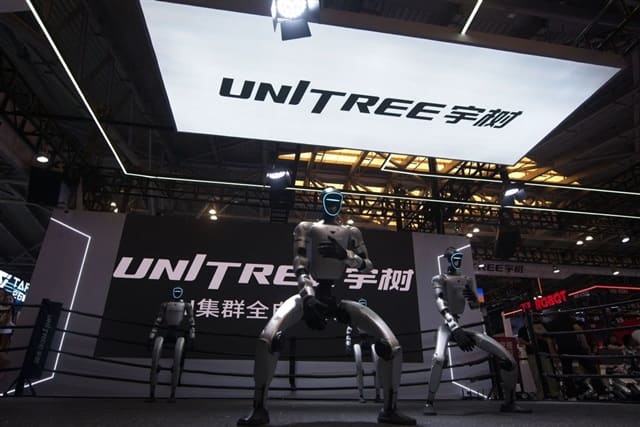
The firm's product lineup includes both quadruped and bipedal robots, with recent emphasis on humanoid designs optimized for indoor environments. Its G1 model, introduced in mid-2025, features a modular torso design that allows customers to swap end-effectors depending on task requirements. Early adopters have included logistics operators in the Pearl River Delta and hospitality groups piloting front-desk assistance roles.
Unitree's revenue range suggests some uncertainty around order conversion rates and project timelines. The 10-percentage-point spread between the low and high ends of the forecast likely reflects variability in enterprise procurement cycles, as buyers evaluate return-on-investment metrics and integration complexity before committing to volume orders.
Competitive Pressures and Market Outlook
The Chinese humanoid robotics market remains fragmented, with no single player commanding dominant share. Unitree's growth rate, while robust, is not an outlier. Competitors have reported similar momentum, indicating broad-based demand rather than market-share gains by individual firms.
Pricing remains a key battleground. Unitree's G1 model is positioned in the mid-market segment, with list prices starting around CNY 80,000 per unit for basic configurations. That undercuts some international rivals but sits above the entry-level offerings from newer Chinese startups aiming for volume over margin.
Regulatory clarity will also shape the sector's trajectory. China's Ministry of Industry and Information Technology is expected to release updated safety and interoperability standards for humanoid robots by the end of 2026, which could accelerate enterprise adoption by reducing liability concerns and simplifying procurement processes.
Unitree's H1 performance will offer one of the first concrete data points on whether the humanoid robotics market is transitioning from early-stage experimentation to sustained commercial scale. If the company meets the upper end of its guidance, it would signal that embodied AI is beginning to deliver on its long-promised potential, at least within China's fast-moving innovation ecosystem.
RELATED STORIES
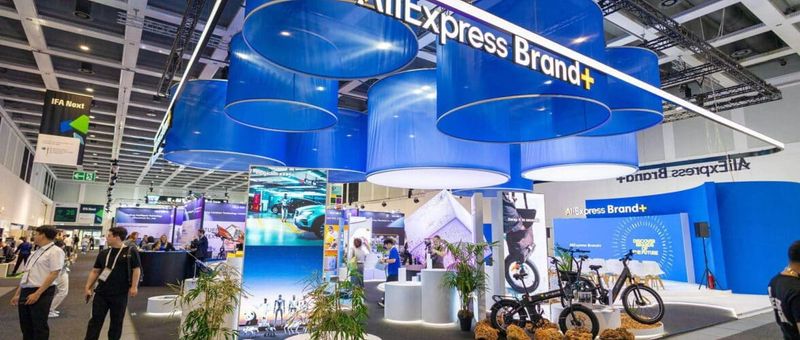
AliExpress Shifts Focus to Brand Building as AI Hardware Sales Surge Overseas
Cheng Wei-Lun · 2 min

Ant Group's Health Platform Logs 150 Million Users as Digital Wellness Gains Traction
Siti Nuraini · 3 min
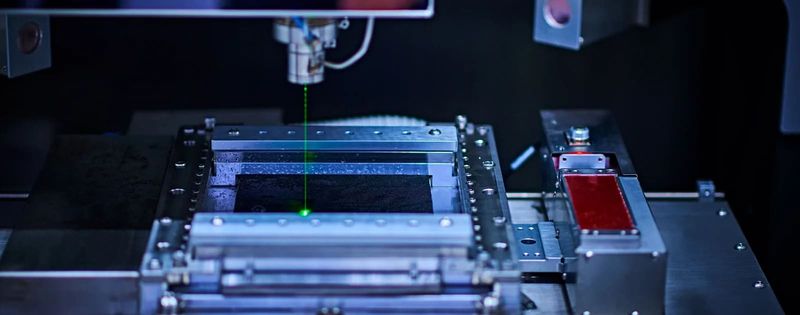
Lithuania's Laser Industry Powers Taiwan's Chip Manufacturing Edge
Cheng Wei-Lun · 2 min

LG Pivots to AI-Defined Vehicle Platform as Korea Chases China's Self-Driving Lead
Jun-ho Seo · 3 min
Spot something wrong? Email editor@briefasia.com. We log every correction publicly.