Asia · Politics
UK, Italy and Japan Commit $6.14 Billion to Next-Generation Fighter Jet Program
Trilateral contract marks largest investment milestone yet for GCAP combat aircraft, with production targeting early 2030s deployment across three allied air forces
KEY TAKEAWAYS
- ·Britain, Italy and Japan awarded a $6.14 billion contract to develop the GCAP sixth-generation fighter jet, with operational deployment planned for the early 2030s.
- ·The trilateral program divides work by technological domain, with Britain leading airframe design, Italy managing sensors and Japan overseeing materials science and production.
- ·Japan committed to procuring at least 90 GCAP aircraft as part of a strategic shift away from reliance on licensed U.S. fighter designs.
Historic Defense Partnership Takes Shape
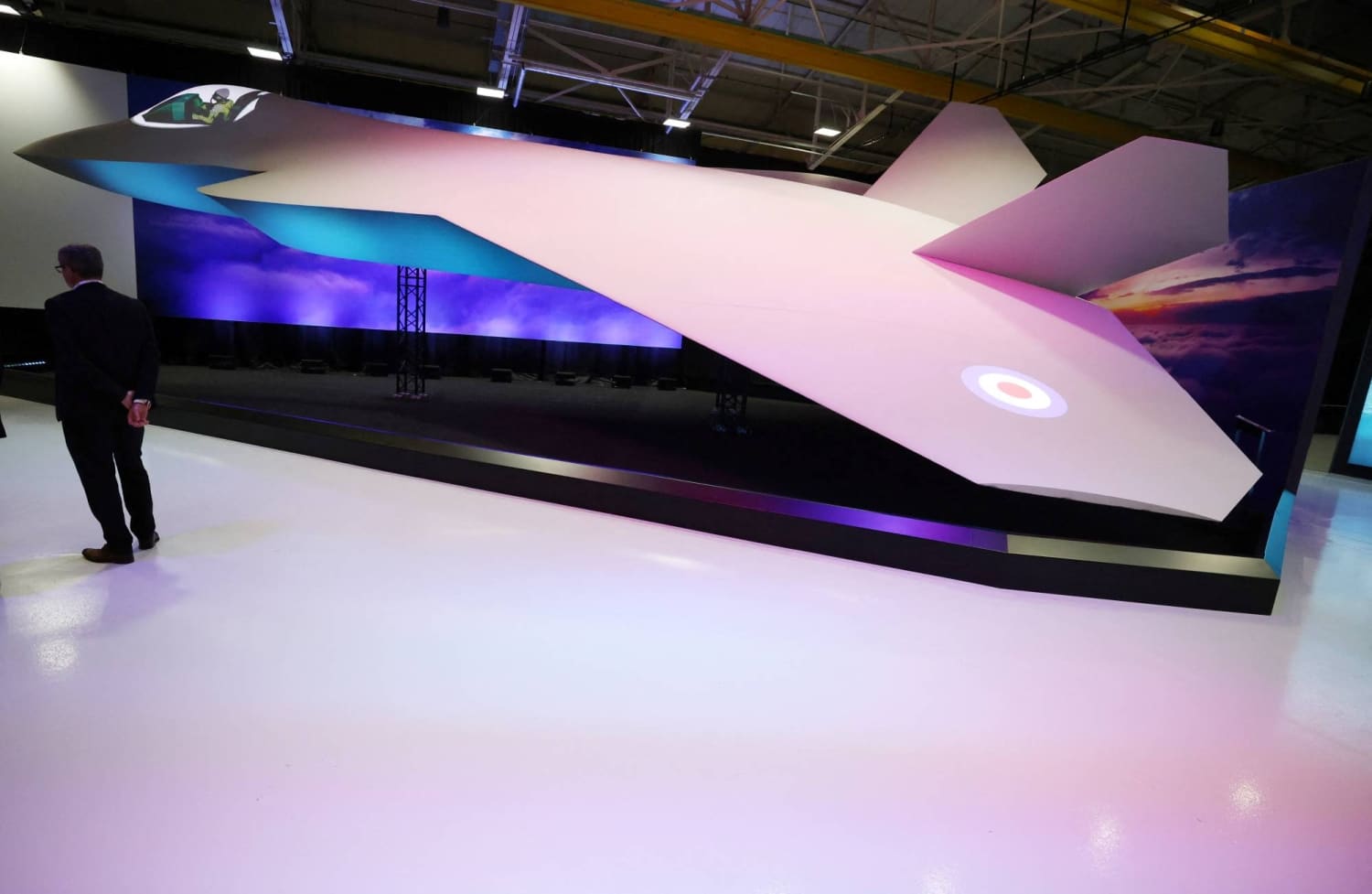
Britain, Italy and Japan have formalized a $6.14 billion contract to push forward development of the Global Combat Air Programme, a sixth-generation fighter jet that represents one of the most ambitious defense collaborations in recent history. The award consolidates engineering work across three continents and sets the stage for operational aircraft to enter service in the early 2030s.
The contract encompasses design integration, systems architecture and prototype development for a platform intended to replace aging fleets in all three nations. Japan's Air Self-Defense Force currently relies on F-2 fighters scheduled for retirement, while Britain's Royal Air Force and Italy's Aeronautica Militare operate Eurofighter Typhoons nearing end-of-life.
BAE Systems in Britain, Leonardo in Italy and Mitsubishi Heavy Industries in Japan form the industrial backbone of the program. Each company brings distinct capabilities: BAE contributes stealth airframe expertise honed on the F-35 partnership, Leonardo supplies sensor fusion and avionics, and Mitsubishi applies composite manufacturing techniques developed for civilian and military aircraft.
Stealth, Speed and Network Integration
The GCAP fighter is designed around three core attributes. First, advanced stealth characteristics will reduce radar cross-section through shaping and materials. Second, sustained supersonic cruise without afterburners will extend operational range and reduce fuel consumption. Third, network-centric warfare architecture will allow the jet to serve as a node in a broader battlespace management system, coordinating with unmanned platforms and ground stations.
Engine development falls to a separate consortium: Rolls-Royce, Avio Aero and IHI Corporation are jointly engineering a powerplant capable of generating thrust in excess of 20,000 pounds while supporting onboard directed-energy weapons. The engine program received its own funding tranche in 2025, and initial ground tests are scheduled for late 2027.
Unlike previous multinational fighter programs that struggled with workshare disputes, GCAP governance allocates responsibilities by technological domain rather than rigid percentage splits. Britain leads airframe and mission systems, Italy oversees sensors and electronic warfare, and Japan manages materials science and production scalability. Final assembly lines will operate in all three countries to meet domestic industrial requirements and simplify logistics.
Regional Security Calculations
The investment arrives as East Asia faces a shifting security environment. China has expanded its fifth-generation fighter production, with the J-20 now operational in significant numbers and the carrier-capable J-35 entering sea trials. North Korea continues missile development, and tensions over Taiwan remain unresolved.
Japan's participation in GCAP represents a departure from decades of defense procurement policy that favored licensed production of U.S. designs. Tokyo views the program as a hedge against supply-chain vulnerability and a means to preserve domestic aerospace expertise. The Defense Ministry has committed to procuring at least 90 GCAP aircraft, though final numbers will depend on budget cycles through the 2030s.
For Britain and Italy, GCAP offers a path to maintain sovereign combat air capability without bearing the full cost of an independent program. European defense budgets have grown since 2022, but fiscal constraints remain. Sharing development expenses across three economies makes advanced fighter technology accessible while sustaining industrial capacity.
Timeline and Technical Hurdles
The $6.14 billion contract covers work through 2029, when a production decision is scheduled. If approved, low-rate initial production would begin in 2030, with first operational squadrons forming between 2032 and 2035. That timeline is ambitious given the technical complexity: integrating artificial intelligence for pilot assistance, ensuring interoperability across three distinct air forces, and certifying new weapons systems all present risks.
Previous multinational programs offer cautionary lessons. The Eurofighter Typhoon, a four-nation project, encountered repeated delays and cost overruns tied to divergent national requirements. GCAP architects have attempted to streamline governance by establishing a joint program office in London with equal representation and binding arbitration mechanisms for disputes.
The three governments have also committed to align export policy, a frequent friction point in collaborative defense projects. Any sale to a third country will require unanimous consent, and technology transfer rules are codified in treaty-level agreements signed in late 2024.
Industrial and Economic Stakes
Beyond operational capability, GCAP carries significant industrial implications. Britain's aerospace sector employs over 100,000 workers, many in regions with limited alternative opportunities. Italy's defense industry is concentrated in Lombardy and Lazio, where Leonardo facilities anchor local economies. Japan's participation sustains a technical workforce at a time when the country faces demographic headwinds.
Subcontractor networks extend across all three nations. More than 600 companies are involved in component supply, materials research and testing services. The program is structured to ensure technology diffusion: intellectual property developed under GCAP will be jointly owned, and licensing terms allow each partner to apply innovations to other defense and civilian projects.
The contract also includes provisions for upgrading existing aircraft with GCAP-derived technology. Eurofighter Typhoons and F-2s could receive new radar, electronic warfare suites or cockpit systems as those components mature, extending service life and spreading development costs across a larger installed base.
What Comes Next
With the contract in place, attention shifts to meeting technical milestones. A full-scale demonstrator is expected to fly in 2028, validating aerodynamics and control systems. Concurrently, sensor and weapons integration trials will proceed on ground testbeds. Each partner nation will conduct independent evaluations to certify the aircraft meets national requirements before committing to production.
Funding beyond 2029 is not yet secured. Britain's defense budget is under review, Italy faces coalition government negotiations, and Japan's procurement priorities must balance air, maritime and missile defense needs. The $6.14 billion represents roughly one-third of estimated total program cost, with the remainder contingent on parliamentary approvals in all three countries.
If the program proceeds on schedule, GCAP will join a small group of sixth-generation fighters in development worldwide. The United States is pursuing its own Next Generation Air Dominance platform, while France, Germany and Spain are collaborating on the Future Combat Air System. How these programs interact, whether through interoperability agreements or competition for export markets, will shape air combat for decades to come.
RELATED STORIES

Berkshire Hathaway Eyes Larger Stakes in Japan's Top Trading Houses
Cheng Wei-Lun · 3 min

Malaysia's Rare Earth Deposits Draw Foreign Interest Ahead of China Export Controls
Priyanka V. Rao · 3 min

Honda Demands 30% Price Cuts From Suppliers in $9.4 Billion Cost Plan
Cheng Wei-Lun · 3 min
Mitsubishi Motors Brings Back Pajero SUV With Thailand Launch
Cheng Wei-Lun · 3 min
Spot something wrong? Email editor@briefasia.com. We log every correction publicly.