Technology · Dev
Tungsten Hexafluoride Prices Rise as AI Memory Boom Strains Specialty Gas Supply
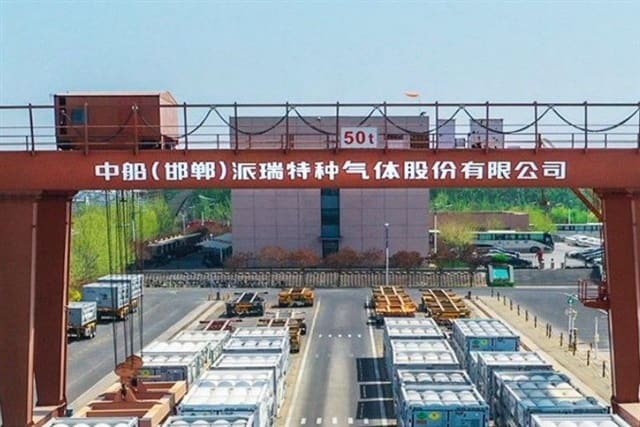
PERIC Special Gases shifts to market-based pricing amid tight WF6 availability driven by surging AI server and advanced memory production
KEY TAKEAWAYS
- ·PERIC Special Gases has shifted to market-based pricing for tungsten hexafluoride as AI server production drives tight supply of the critical memory fabrication gas.
- ·WF6 serves as an essential precursor in advanced memory manufacturing, with AI-driven HBM3E demand requiring substantially more tungsten metallization than conventional products.
- ·New specialty gas capacity will not reach full output until late 2027, creating potential memory wafer start constraints during peak AI infrastructure buildout.
Supply Tightness Hits Critical Semiconductor Input
The semiconductor industry faces mounting pressure on tungsten hexafluoride (WF6) availability as artificial intelligence infrastructure accelerates memory chip production across Asia. PERIC Special Gases has transitioned to market-based pricing for the specialty gas, reflecting broader supply constraints that mirror the region's rapid AI buildout.
WF6 serves as an essential chemical vapor deposition precursor in advanced memory fabrication, particularly for the high-bandwidth memory stacks that power AI accelerators. The compound enables tungsten metallization in DRAM and NAND flash manufacturing, making it indispensable as chipmakers race to meet data center orders.
Memory Capacity Race Drives Industrial Gas Demand
AI server deployments have reordered memory procurement priorities throughout 2026. Hyperscalers in North America and cloud providers across Singapore, Tokyo, and Seoul are absorbing record volumes of HBM3E modules, each requiring substantially more tungsten metallization layers than conventional memory products.
The pricing shift at PERIC Special Gases signals that specialty gas producers can no longer absorb cost volatility in long-term contracts. Market-based pricing mechanisms allow suppliers to adjust rates in line with feedstock availability and production constraints, a departure from the fixed-price agreements that previously dominated industrial gas sales in the semiconductor sector.
Taiwan's memory supply chain has felt the impact most acutely. Packaging houses handling advanced memory integration report extended lead times for specialty gases, with some facilities adjusting production schedules to align with allocated WF6 volumes rather than customer demand.
Asia's Semiconductor Gas Infrastructure Under Strain
The WF6 supply situation reflects broader challenges in Asia's semiconductor materials ecosystem. Specialty gas production requires high-purity tungsten ore, multi-stage fluorination processes, and stringent quality controls that limit the number of qualified global suppliers. Capacity expansions typically require 18 to 24 months, creating a structural lag between demand surges and supply response.
China's domestic memory manufacturers have accelerated their own procurement efforts, adding another demand vector to an already tight market. Indigenous DRAM and NAND production ramps in Wuhan, Hefei, and Chengdu require the same specialty gases as operations in Taiwan, South Korea, and Japan, fragmenting available supply across more fabrication sites.
Japan's industrial gas majors have signaled capacity investments in fluorine chemistry facilities, but new production lines will not reach full output until late 2027. In the interim, memory manufacturers face allocation scenarios that could constrain wafer starts at precisely the moment AI demand requires maximum throughput.
Downstream Implications for Memory Pricing
Specialty gas costs represent a small fraction of total memory production expenses, but supply shortages introduce risk beyond simple cost pass-through. Fabrication facilities operate on tightly calibrated process flows; interruptions in specialty gas delivery can idle expensive toolsets and disrupt customer commitments.
Memory spot prices have shown resilience through the first half of 2026, supported by AI-driven demand that has offset traditional cyclicality. If specialty gas constraints begin to limit wafer output, the resulting supply tightness could reinforce pricing power for memory manufacturers while delaying capacity additions that the AI infrastructure buildout requires.
The pricing adjustment from PERIC Special Gases may prompt similar moves across the specialty gas sector. Competitors supplying silane, ammonia, and other critical precursors face comparable feedstock and capacity pressures, and market-based pricing offers a mechanism to manage volatility without halting deliveries.
Regional Supply Chain Adjustments Ahead
Memory manufacturers are responding with dual strategies: securing long-term specialty gas allocations and investing in on-site gas generation where feasible. Some Taiwan packaging houses have explored partnerships with gas suppliers to co-locate production, reducing logistics risk and ensuring priority access during tight markets.
South Korea's memory giants have intensified engagement with domestic specialty gas producers, seeking to diversify away from reliance on any single supplier. These moves echo broader supply chain localization trends that have reshaped semiconductor materials procurement since 2024.
The WF6 situation underscores the material bottlenecks that accompany rapid technology transitions. As AI infrastructure demands continue to reshape semiconductor production priorities, the specialty gas sector's ability to scale will directly influence how quickly Asia's memory manufacturers can meet data center requirements. PERIC Special Gases' pricing shift represents an early adjustment to a market reality that is likely to persist through 2027.
RELATED STORIES

Xiaomi Unveils 3nm Mobile Processor to Challenge Qualcomm and MediaTek
Cheng Wei-Lun · 3 min
Taiwan Indicts Nvidia Manager in Chip-Smuggling Investigation
Cheng Wei-Lun · 4 min
AI Demand Tightens Memory Markets as HBM4 Production Strains Supply
Cheng Wei-Lun · 3 min
Eurasian Security Bloc Convenes as Shein Prices Hong Kong IPO
Cheng Wei-Lun · 3 min
Spot something wrong? Email editor@briefasia.com. We log every correction publicly.