Asia · Trade
Trump Polysilicon Rules Shift Clean Energy Supply Chains Away From China
New US import restrictions on silicon materials and solar products trigger pricing adjustments and sourcing realignments across Asia's semiconductor and energy sectors.
KEY TAKEAWAYS
- ·The Trump administration introduced import restrictions on polysilicon, silicon ingots, wafers, and solar products, directly targeting Chinese suppliers who dominate global production through aggressive pricing.
- ·South Korean and Japanese polysilicon producers gain competitive ground as the rules narrow the price gap with Chinese competitors and create incentives for non-Chinese capacity expansion.
- ·The restrictions affect both solar and semiconductor supply chains, since high-purity polysilicon serves as a foundational material for chips, prompting fabs across Asia to reassess sourcing strategies.
A Trade Barrier That Reaches Beyond Borders
The Trump administration's latest import restrictions on polysilicon, silicon ingots, wafers, and finished solar products have set off a chain reaction across Asian manufacturing hubs. While the rules formally apply only to goods entering the United States, their effects are already visible in pricing negotiations, investment plans, and competitive positioning from Seoul to Singapore.
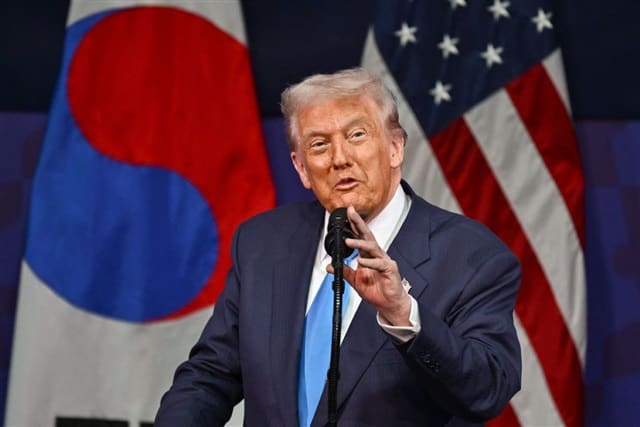
South Korean manufacturers have publicly welcomed the measure. Their enthusiasm reflects years of pressure from Chinese suppliers who dominate global polysilicon production and have consistently undercut rivals on price. The new US rules effectively raise the floor on Chinese imports, creating breathing room for producers in South Korea, Japan, and other non-Chinese jurisdictions that have struggled to compete on cost alone.
Who Wins When China Loses Market Access
The immediate beneficiaries are polysilicon and wafer producers operating outside China. South Korea's solar and semiconductor material suppliers, in particular, stand to capture orders from US buyers who must now source from higher-cost but compliant suppliers. This shift does not happen overnight. Supply agreements, quality certifications, and logistics networks take months to reconfigure. But the direction is clear: buyers are already reaching out to alternative suppliers.
Industry analysts note that the restrictions target the heart of China's cost advantage. Chinese polysilicon producers have scaled production to levels that allow razor-thin margins, a strategy that has pushed Western and regional competitors to the edge of viability. By blocking or taxing these imports, the US is effectively subsidizing non-Chinese capacity without writing a check.
The semiconductor industry is watching closely. Polysilicon is not only a solar input but also a foundational material for chip manufacturing. Any disruption in polysilicon supply or pricing affects the economics of wafer production, which in turn influences fab costs. While the immediate focus is on solar products, the overlap with semiconductor materials means chipmakers in Taiwan, South Korea, and Japan are recalculating their sourcing strategies.
Pricing Pressure and Investment Signals
Pricing is already adjusting. Non-Chinese polysilicon suppliers have room to raise quotes without losing competitiveness, since Chinese alternatives now carry tariff or compliance penalties. This does not mean prices will spike. The global polysilicon market remains oversupplied, and buyers have leverage. But the gap between Chinese and non-Chinese pricing has narrowed, and that changes the economics of investment.
South Korean and Japanese firms that shelved expansion plans during the period of Chinese price dominance are revisiting those decisions. New capacity in polysilicon refining and wafer production becomes viable when the competitive landscape no longer assumes Chinese suppliers can always undercut by 20 or 30 percent. Early signals suggest capital expenditure in non-Chinese polysilicon capacity will tick upward over the next 18 months.
For Chinese producers, the US market was never their largest customer, but it was a high-value one. Losing direct access forces them to either absorb tariff costs, reroute exports through third countries, or redirect volume to other markets. All three options compress margins. The third option, flooding non-US markets with excess supply, could depress prices in Europe, India, and Southeast Asia, creating secondary effects that complicate the picture for non-Chinese suppliers.
Semiconductor and Solar Sectors Converge
The overlap between solar and semiconductor supply chains is not widely understood outside the industry, but it matters here. High-purity polysilicon is a shared input. Wafer production techniques, while specialized, draw on similar capital equipment and engineering expertise. Firms that produce both solar and semiconductor wafers are now in a stronger position than pure-play solar manufacturers.
This convergence is particularly visible in South Korea, where conglomerates have long maintained operations in both sectors. The new US rules give these integrated players an advantage. They can shift capacity between solar and semiconductor applications depending on where margins are better, and they can negotiate with US buyers from a position of diversified supply.
Taiwan's wafer producers, heavily focused on semiconductors, are less directly affected but still attentive. Any policy that reshapes polysilicon sourcing has downstream implications for chip costs. If US trade policy continues to favor non-Chinese materials, Taiwanese fabs may need to adjust procurement to align with customer preferences, especially for chips destined for US defense or infrastructure projects.
What Comes Next
The immediate question is whether other jurisdictions follow the US lead. The European Union has debated similar measures but has not committed. India, which is building domestic solar capacity, has its own tariff structure but remains reliant on Chinese materials for now. If Brussels or New Delhi adopt comparable restrictions, the pressure on Chinese suppliers multiplies, and the advantage for South Korean and Japanese producers grows.
Another variable is China's response. Beijing has options, including export controls on refined polysilicon or rare materials used in semiconductor production. Any retaliatory measure would complicate supply chains further and could accelerate the decoupling trend that has defined US-China trade policy since 2018.
For now, the US rules are a clear signal: the era of unchallenged Chinese dominance in polysilicon and solar materials is under pressure. South Korean producers are positioning to capture the opportunity. Semiconductor firms are monitoring for spillover effects. And the rest of Asia is recalculating where the next wave of clean energy and chip investment will land.
RELATED STORIES
Washington's Polysilicon Tariffs Set to Squeeze Korean Solar Producers
Cheng Wei-Lun · 3 min

SK Hynix Eyes Stake Sale in $3 Billion China Packaging Facility
Cheng Wei-Lun · 2 min

Asian Tech Stocks Surge as Weak US Jobs Data Dims Rate Hike Outlook
Cheng Wei-Lun · 4 min

South Korea's Food Costs Surge as Summer Heat Ravages Farms
Jun-ho Seo · 5 min
Spot something wrong? Email editor@briefasia.com. We log every correction publicly.